
 E-Paper



Haryana govt allows registry of fourth floor in houses
House owners in Gurugram would benefit from the decision of the government as many had constructed fourth floors but non-registration of the property had left them in a lurch.


The Haryana government has allowed the construction of four-storey residential buildings in the state, the chief minister said on Thursday.
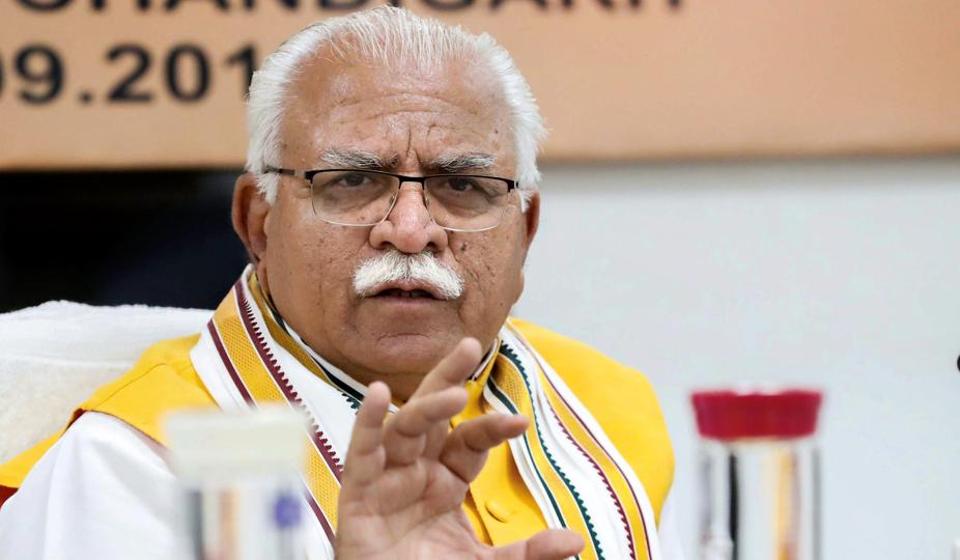
The state government has framed a policy in this regard and the registration process will follow, said chief minister Manohar Lal Khattar, while addressing a press conference in Chandigarh.
He said that the changes to the Haryana Building Code – 2017 has been made in order to remove variations and bring uniformity in building by-laws adopted by different development agencies. The four-storey building means stilt plus three floors. Earlier, the fourth floor was not allowed to be registered as a separate unit.
House owners in Gurugram would benefit from the decision of the government as many had constructed fourth floors but non-registration of the property had left them in a lurch. “This move is going to benefit a large number of people,” said Pankaj Tomar, who is constructing a four-storey property along Sohna road.
Khattar said that self-certification of all residential plot building plans and occupation certificates would be done. Also, self-certification has been implemented for building plans of properties on commercial plot up to an area of 2,000 square metres.
Similarly, self-certification has been implemented for building plans and occupation certificates with regard to industrial plots. The floor-area ratio (FAR) for institutional and educational buildings has been increased from 100% to 150%.
It has been made mandatory to provide car bays in every residential plot.
Khattar said that use of basement in residential plots has also been allowed for residential purpose, provided they fulfil provision of fire, lighting and ventilation. He said that a provision of green building has been made, under which the building owner is provided with the benefit of additional FAR of three to 15%.
“Fourth floor was allowed to be constructed, but was not considered a unit. However, with this decision, the fourth floor will now be considered a separate unit that can be registered. Details regarding payment of fees, purchasable FAR would become clear once the notification comes in,” a DTCP official said.
If the building owner sets up a solar photovoltaic plant and solid waste management plant for management of water, electricity and waste, additional FAR would be provided.

Stay updated with all the Breaking News and Latest News from Mumbai. Click here for comprehensive coverage of top Cities including Bengaluru, Delhi, Hyderabad, and more across India along with Stay informed on the latest happenings in World News.


