E-Paper



Watch out for stroke, keep your body and brain active

 Prefer HTon Google


A healthy lifestyle can halve the risk of stroke in women, a new study has found. Particularly after menopause, it is crucial to eat right, exercise, maintain a healthy weight- and watch out for warning signs.
Four years ago, while driving to her father's house, Namita Dhar* developed sudden numbness in her right arm and leg. Soon after, her speech started to slur.
"When I got to my dad's home, I told him I was feeling uneasy," says Dhar, a 37-year-old Delhi resident.
"He said I looked fine, but I was feeling really unwell." So Dhar decided to head back home. By the time she finished her ten-minute drive there, she was completely disoriented. She quickly got out, hailed a cab and went to a homeopath in her neighbourhood.
"The homeopath assessed the situation immediately and told me to rush to a neurologist," says Dhar. At the emergency unit of Max Hospital in Saket, Dhar was told that she was among the fortunate 25% of stroke patients who make it to a hospital within that critical first hour.
Typically, stroke strikes when either the blood supply to the brain is blocked or a blood vessel in the brain ruptures, causing brain tissue to die. In Dhar's case, she had a clot in the blood vessels of her brain, stopping blood flow.
"Namita was given clot-busting medicines within an hour of having the stroke," says Dr JD Mukherji, director and head of neurology at Max Hospital.
"She has not experienced any more symptoms of strokes since then." Dhar, who retains a slight limp from the brain attack, still goes to the hospital for a follow-up check every three months.
"I am very careful with what I eat. I have been told to include lots of fruits and vegetables in my diet. To ensure my body and brain stay active I go for regular walks and also spend time solving puzzles," she says.
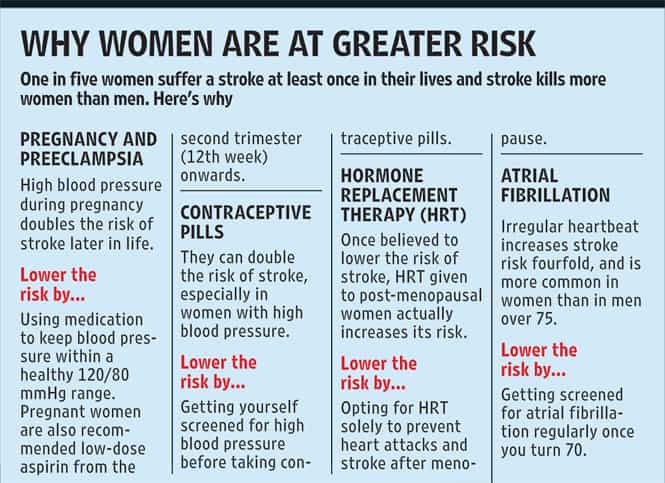
While India-specific data is unavailable, globally, stroke is the third biggest cause of death for women, after heart disease and cancer. In men, it's the fourth-biggest cause of death. In India, say medical experts, postmenopausal women, especially those who consume excessive tobacco and alcohol, are at a higher risk of suffering a stroke.
Women also share the same risk factors for stroke as men, but have added risks that come with pregnancy complications, hormone replacement therapy and smoking. According to Dr Mukherji, the combination of smoking and use of birth control pills puts women at a 50% higher risk of stroke.
"Add to this unhealthy eating habits, hypertension, increased levels of fat in the blood, obesity and diabetes, and the odds are very heavily stacked," he adds. A healthy lifestyle, however, can halve the risk of stroke in women, according to a study whose results were published in the journal Neurology, and in which 31,696 Swedish women were followed for 10 years.
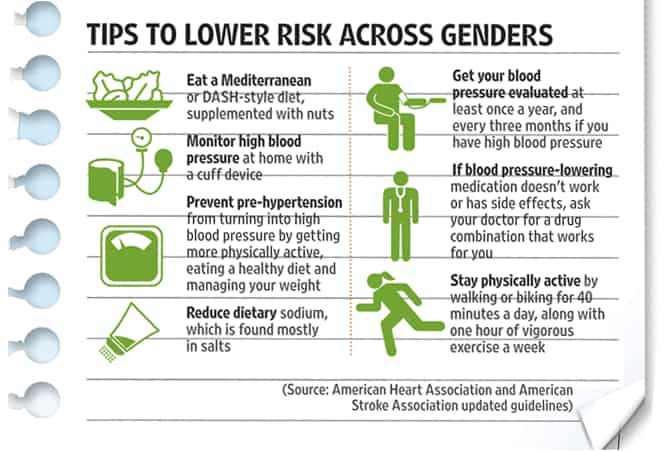
The study recognises five contributory factors to a healthy lifestyle- a balanced diet, moderate consumption of alcohol (3 to 9 drinks per week), no smoking, physical activity (walking or biking for 40 minutes a day, vigorous exercise for one hour a week), and maintaining a healthy weight.
Compared with women who didn't pay attention to these five factors, women who did had a 54% lower risk of cerebral infraction, a type of stroke triggered by a blockage in the blood vessels supplying blood and oxygen to the brain, which accounts for 80% to 85% of all strokes.
A healthy lifestyle had no effect on the risk of haemorrhagic stroke, which is caused by bleeding in and around the blame, according to the same study. By and large, the signs of stroke in women are similar to those in men- drooping of the face, sudden numbness or weakness in one arm, sudden difficulty speaking, etc.
"In women, however, the symptoms maybe more subtle and diffused because of smaller blood vessels, which is why one needs to pay attention to any sudden changes in movement and behaviour," says Dr Vipul Gupta, head of interventional neuroradiology at Gurgaon's Medanta Hospital.
The American Stroke Association's latest guidelines, released on Wednesday, recommend checking blood pressure regularly and eating a diet high in fruits, vegetables, whole grains and nuts to lower first-time stroke risk.
"We have a huge opportunity to improve how we prevent new strokes, because risk factors that can be changed or controlled- especially high blood pressure- account for 90% of strokes," James Meschia, lead study author and chairman of neurology at The Mayo Clinic in Jacksonville, Florida, said in the guidelines.
(* Name changed on request)