E-Paper



17 months after abeyance: Why India’s Indus treaty freeze has yet to move more water its way
India put the Indus Waters Treaty in abeyance in April 2025, yet it can use little more of the western rivers without reservoirs.

 Prefer HTon Google


More than a year after India put the Indus Waters Treaty in abeyance, it has yet to draw sizeable volumes of water from the three western rivers that the pact had reserved largely for Pakistan, experts say.
"No additional water India has used in this period," Himanshu Thakkar, coordinator of the South Asia Network on Dams, Rivers and People (SANDRP), told HT.
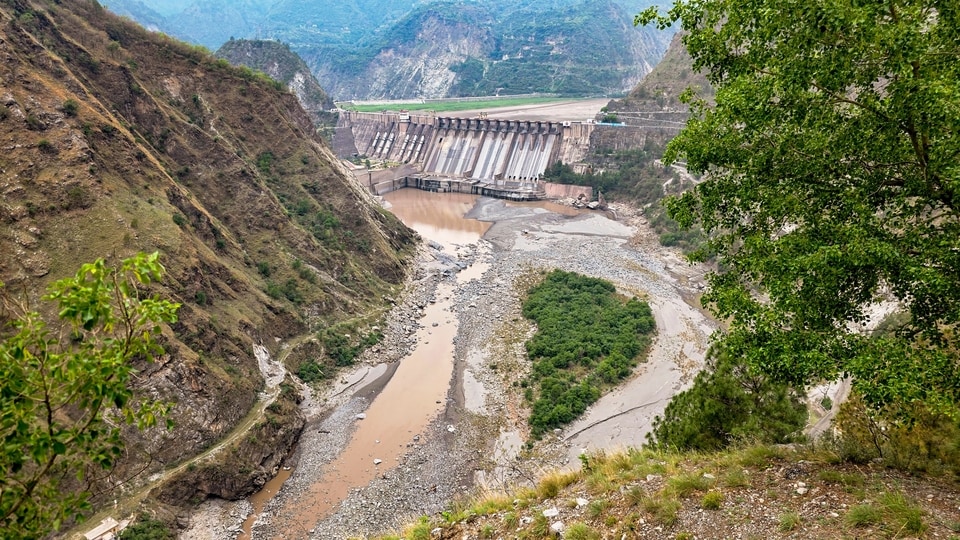
Drawing more from the Indus, Jhelum and Chenab requires reservoirs, canals and diversion works, Thakkar said, explaining that India would need years of new infrastructure before it could substantially increase its use of the three rivers.
What did India do?
India announced the decision on April 23, 2025, a day after a terror attack in Kashmir’s Pahalgam killed 26 people. Foreign secretary Vikram Misri said the treaty would be held in abeyance until Pakistan “credibly and irrevocably abjures its support for cross-border terrorism”.
A Court of Arbitration in The Hague last month ruled that the treaty remains in force. India rejected the ruling, and the Ministry of External Affairs (MEA) called the tribunal “illegally constituted”.
What does the treaty say?
The treaty, signed in Karachi on September 19, 1960, with the World Bank as broker, divides the six rivers of the Indus system into two groups. India has unrestricted use of the eastern rivers, the Ravi, Beas and Sutlej. The western rivers go to Pakistan. Under Article III, India must "let flow" all their waters, with exceptions for domestic use, non-consumptive use, limited irrigation and hydropower.
The three western rivers carry about 135 million acre-feet (MAF) of water a year and the eastern rivers about 33 MAF, according to government data. One MAF is about 1.23 billion cubic metres.
The treaty also lets India create up to 3.6 MAF of storage on the western rivers, about 4.4 billion cubic metres. It sets design rules for Indian dams on these rivers as well, limiting how much water they can hold and how their gates and outlets work.
Why hasn’t abeyance added water?
Thakkar estimates India's existing storage on the western rivers at around 1 MAF, well short of the 3.6 MAF the treaty allows. At the current pace of project preparation, he said, India is unlikely to reach the limit even by 2030.
“If India wants to increase the water use from the western rivers, it will take a lot of time,” he said.
Holding a treaty in abeyance creates no reservoirs and does not change how much water a river carries. A project has to pass through studies, clearances, financing and construction before it can store or divert water, Thakkar said. "We haven't taken too many steps in that direction," he said.
The seasons add another constraint. The Chenab and Jhelum carry most of their water in summer, as snow and glaciers melt and the monsoon rains set in, and far less in winter. Summer flows are far larger than any planned Indian dam could hold back, so storage matters most in the lean months, and India has little of it.
Also read: Pakistan thanks Trump for 'timely intervention' in Op Sindoor, renews Indus Waters Treaty warning
What are the projects India is building?
India has stepped up work on several projects in Jammu and Kashmir since the abeyance. They include the 1,000 MW Pakal Dul project on the Marusudar, a tributary of the Chenab, and the 624 MW Kiru, 540 MW Kwar and 850 MW Ratle projects in Kishtwar district.
But these are estimated to add electricity faster than they can add storage. A run-of-river plant generates power as water flows through its turbines and holds back little of it, while a storage project keeps water in a reservoir for use months later.
"One of them is a big storage project. But the rest don't have huge storage," Thakkar said. "They have some storage, so it will increase.”
What about the eastern rivers?
India has made more progress on the eastern rivers, which the treaty never restricted.
The Shahpurkandi project on the Ravi is nearing completion and is expected to improve the use of Ravi waters for irrigation and power. The Centre has also revived the Ujh multipurpose project in Jammu and Kashmir, which is expected to generate about 186-212 MW of power and irrigate nearly 90,000 hectares in Jammu and Kashmir and Punjab.
Could water be moved across rivers?
One proposal would carry water from the Chenab towards the Beas, moving western-river water into the eastern system.
But Thakkar questioned whether enough groundwork had been done.
"The vendor notice by National Hydroelectric Power Corporation is surprising because there were no earlier studies about this project," he said.
He said the notice appeared to have been withdrawn or suspended, and questioned whether the link was feasible given the difficult mountain terrain. For now, he said, the project cannot be counted as evidence that India will draw more water in the near term.
The Jal Shakti Ministry did not respond to HT’s requests for comment via e-mail till Tuesday morning.
Also read: Muddied legal waters of the Indus Treaty
What happens next?
The legal dispute remains open. Pakistan maintains that India's suspension violates the treaty, a position the Court of Arbitration has backed, while India says the pact stays in abeyance and the tribunal has no jurisdiction over its decisions. On Thakkar's estimate, any real change in how much water India draws from the western rivers depends on reservoirs that are still years from completion.