
 E-Paper



Hubble looked. Webb zoomed. Roman will sweep — meet Nasa’s newest telescope that’ll map secrets of the universe
The $4.3 billion observatory, built from a repurposed spy satellite, will map dark matter, dark energy and thousands of new exoplanets.

 Prefer HTon Google


Nasa on Sunday launched the Nancy Grace Roman Space Telescope, a $4.3 billion observatory built around a repurposed spy satellite that will scan the universe in wide, panoramic sweeps in an effort to unlock the nature of dark matter and dark energy.
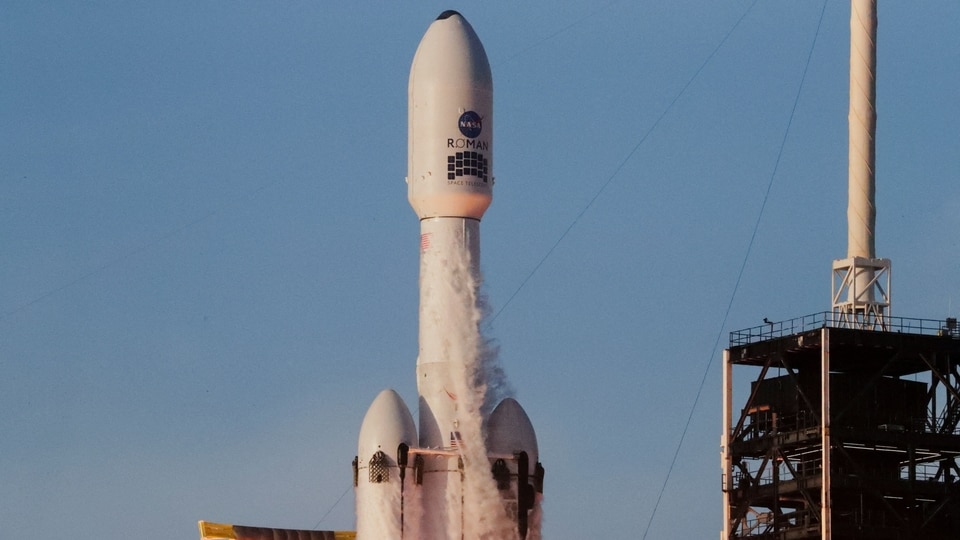
The telescope lifted off from the Kennedy Space Center in Cape Canaveral, Florida, at 7:26 am local time, riding a SpaceX Falcon Heavy rocket through clear skies. The mission is designed to run for five years, though Nasa has said it carries enough fuel to potentially double that lifespan. The spacecraft is also engineered to be refuelled in orbit, an option that could extend its working life further if a robotic tanker becomes available in the coming decade.
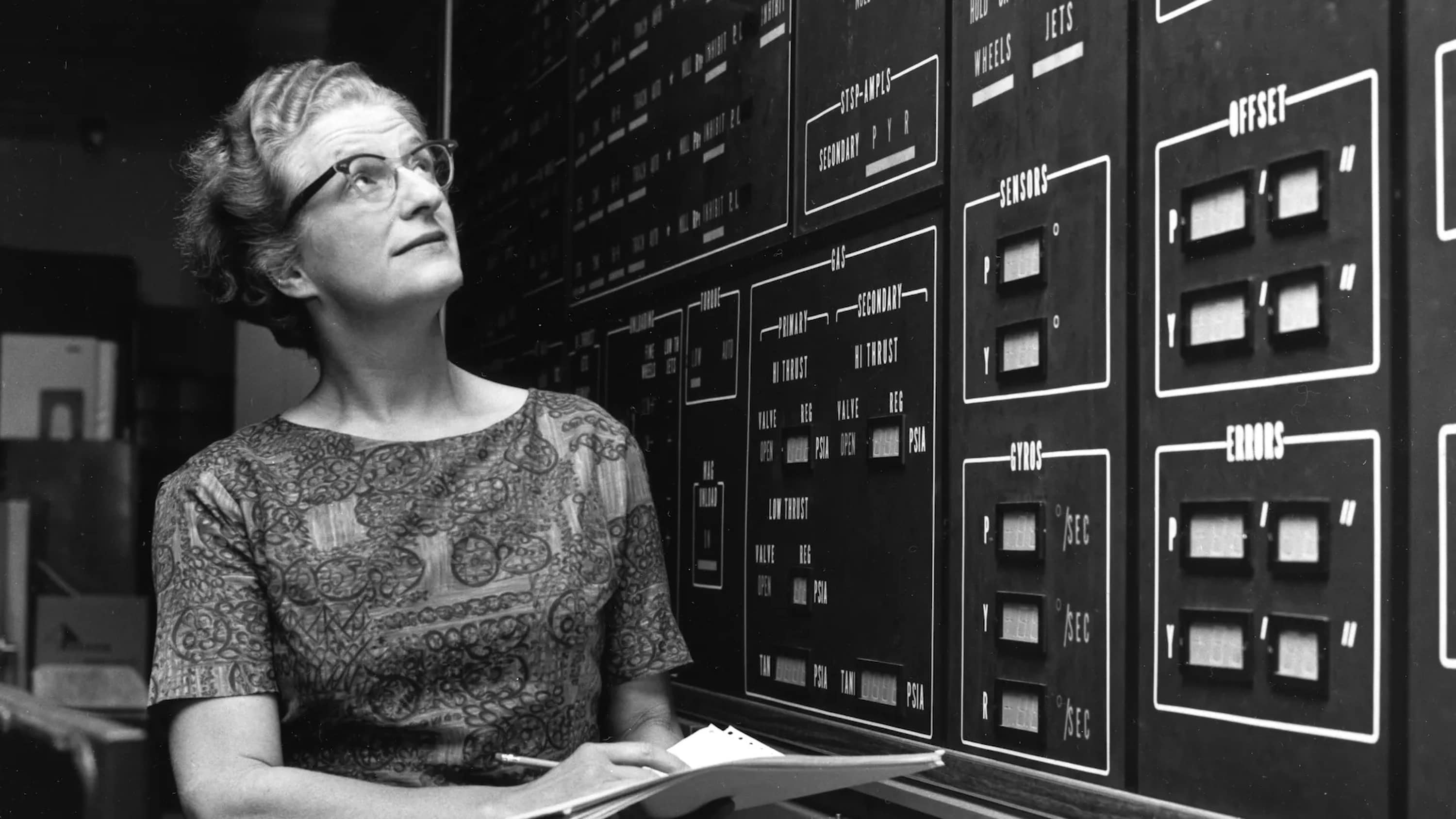
The observatory is named after physicist Nancy Grace Roman, Nasa’s first chief astronomer in the 1960s and its first female executive. Widely called the "mother of Hubble", she was instrumental in persuading the US Congress to approve the Hubble Space Telescope and championed the science that underpins much of modern astronomy. The nickname was coined by retired Nasa scientist Ed Weiler, whom Roman hired in 1978, he told the Associated Press. She joined Nasa in 1959 and died in 2018, aged 93. Roman is Nasa’s first space telescope to be named after a woman.
Why it was built
Roman was designed to take on some of cosmology’s stubborn questions, mainly the nature of dark energy and dark matter. Ordinary matter — the stuff of stars, planets and people — accounts for just about 5% of the cosmos. Dark matter, detectable only through its gravitational pull, makes up roughly 27%. The remaining 68% is dark energy, the mysterious force driving the universe’s accelerating expansion since the Big Bang 13.8 billion years ago.
By stitching together a 3D map of more than two billion galaxies, the observatory aims to measure this cosmic push and pull with new precision, bringing scientists closer to explaining what these invisible components actually are. The main survey is expected to take more than a year to complete, Reuters reported.
The science stakes go beyond cataloguing. “There might be something fundamentally missing from physics as we understand physics, and so Roman has the potential to shed light on that," Kristen McQuinn, who heads the Roman mission office at the Space Telescope Science Institute, told Bloomberg before the launch. "It has the ability to measure this dark energy, this mysterious force, back to the very beginning of the universe.”
Recent observations have also hinted that the standard model of cosmology may itself need revision, Roman senior project scientist Julie McEnery told a pre-launch briefing. Roman, she said, “will definitively say, ‘Yeah, the model works, or it doesn’t.’ And if it doesn’t, it’s going to provide us with the precision and quality of data that will allow us to start to distinguish between those options."
The mission was also conceived as a wide-angle companion to the James Webb Space Telescope. Where Webb works like a high-zoom lens trained on distant, early galaxies, Roman functions as a wide-angle camera. That broader sweep will allow it to run one of the most comprehensive exoplanet searches ever attempted, potentially discovering thousands of new worlds and mapping planetary systems similar to our own. Its findings will feed into a wider network of surveys, including the European Space Agency’s Euclid probe and the US National Science Foundation’s Vera C Rubin Observatory in Chile.
Also Read: Rescue mission is called off for NASA's aging Swift space telescope
How it works
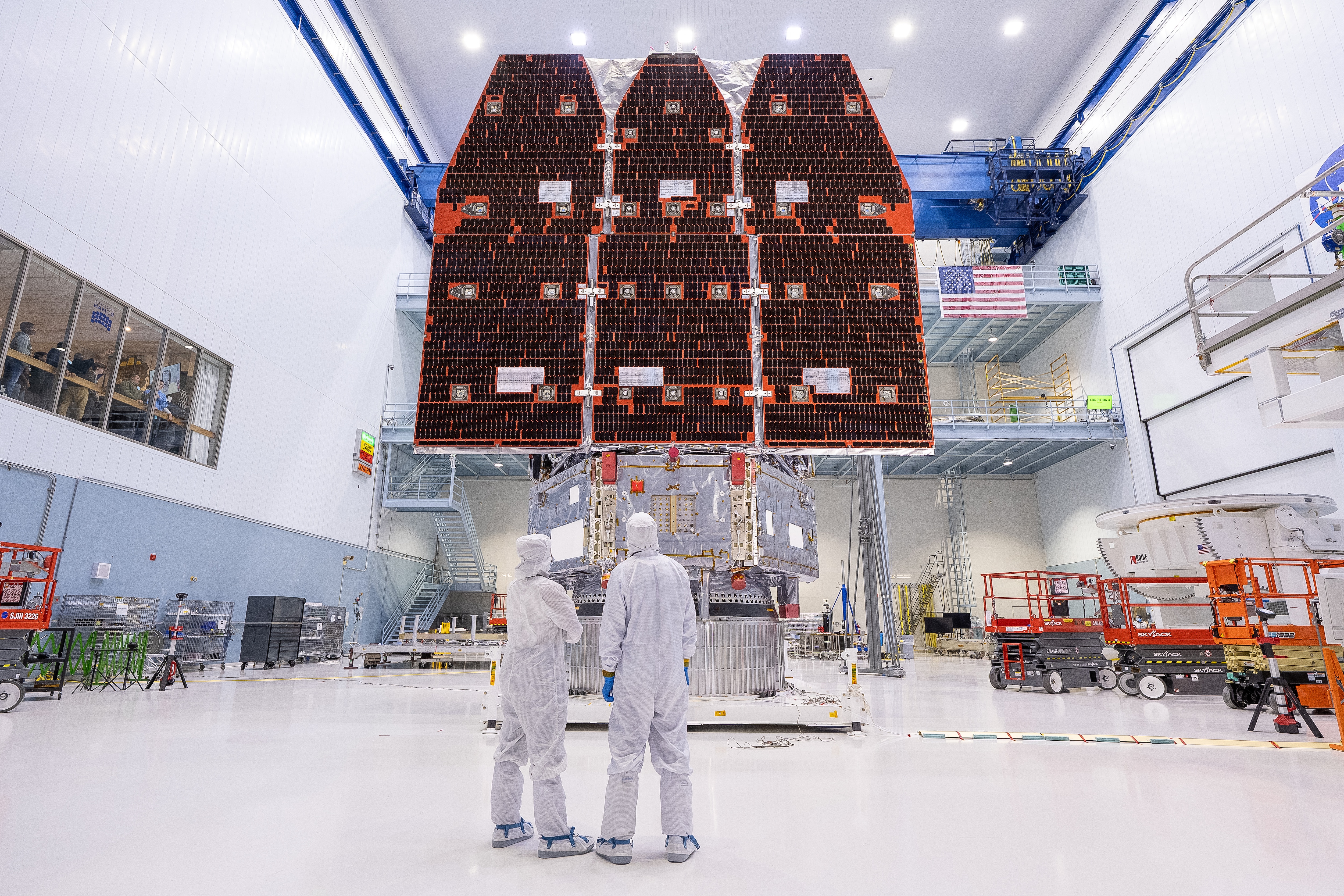
Roman’s hardware goes back to a spy satellite programme originally run by the US National Reconnaissance Office (NRO), which handles the country’s most powerful spy satellites. That programme ran over budget and was terminated, and in 2012, the NRO donated the assets to Nasa, which repurposed them for cosmic exploration, according to Reuters. A second mirror from the donation is still in storage.
Roman’s primary mirror is 2.4 metres in diameter — the same size as Hubble’s. The Falcon Heavy that carried it off the pad is bound for Lagrange Point 2, a gravitationally stable spot roughly one million miles (1.6 million kilometres) from Earth, where the telescope will settle into its working orbit after a journey of about three months.
Once fully commissioned, Roman will combine Hubble-level optical sharpness with a survey speed no earlier telescope has matched. Its visual sensitivity is comparable to Hubble’s, but its wide field will allow it to survey the entire Milky Way in a single month — work that would take Hubble a century. “It can map the sky about 1,000 times faster than Hubble can,: McQuinn told Bloomberg. “Or if you flip that in other ways, every 10 months we’ll be getting the equivalent of roughly 1,000 years of Hubble data.”
Unlike Hubble, Roman will gather images primarily in infrared light — heat radiation invisible to the human eye but capable of piercing cosmic dust and reaching back billions of years in time, a technique Webb also relies on. It carries a further experimental instrument called a coronagraph, which blocks out the light of a target star to reveal any faint planet that might be orbiting it.
Mission scientists will spend the next 90 days commissioning the telescope, with the first high-resolution images expected “before the winter holidays”, project manager Jackie Townsend told Reuters. Full science images are expected in 2027.
Roman is expected to generate about 1.3 terabytes a day, technical manager Dave Content told AFP. All observations will be made publicly available.
Also Read: NASA once sent chicken eggs to space with funding from KFC
Why it matters
Roman is expected to reshape how astronomers map and monitor the cosmos. Its 300-megapixel Wide Field Instrument offers a field of view at least 100 times larger than Hubble’s, bridging the gap between individual deep-target discoveries and the broad statistical surveys that cosmology increasingly relies on. “It's going to find thousands of supernovae, tens of thousands of planets, billions of galaxies and tens of billions of stars,: Nasa science mission director Nicky Fox told AP. “It's going to be able to do things that we've never been able to do before with its massive field of view.”
Roman also arrived on the launchpad nine months ahead of schedule and within budget, Nasa said, in an outcome scientists have partly attributed to its spy-satellite lineage, which spared the agency the cost of building a new primary mirror and support hardware from scratch. The Trump administration tried during both of its terms to cancel or defund Roman, Reuters reported, but the US Congress preserved the project each time.
“I have no doubt that Roman will become a household name alongside those great instruments of discovery,” Nasa administrator Jared Isaacman told reporters after Sunday's launch. If it delivers, Roman is likely to sit alongside Hubble and Webb among the defining observatories of its generation.


