Sign in

A statesman, Vajpayee showed the way for India and Pakistan to resolve dispute

It was under Vajpayee that the two sides began back-channel diplomacy on Jammu & Kashmir.

Published on: Aug 16, 2018, 23:29:29 IST
Hindustan Times, New Delhi | By
Share
Share via
  • facebook
  • twitter
  • linkedin
Copy link
  • copy link

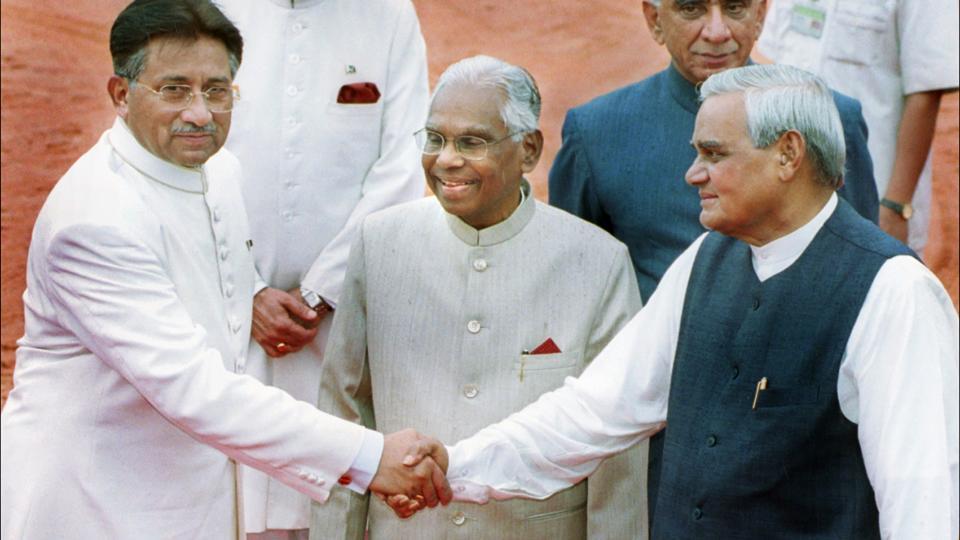
I have very fond memories of Atal Bihari Vajpayee, and all of them are very vivid. I remember the tense negotiations that went into the drafting of a joint statement to be issued on January 6, 2004 after talks between Pervez Musharraf and Vajpayee. Vajpayee was not very comfortable at the beginning of the meeting at Aiwan-e-Sadr, the official residence of the Pakistan president. But the fact that he was in Pakistan, for attending a South Asian summit, indicated the importance he gave to India’s ties with Pakistan.

No future leaders could ignore what had begun under Vajpayee and carried forward by Manmohan Singh. (Prakash Singh / HT Archive)

He also knew how to lighten such moments. He spoke about the great achkans the Pakistani tailors make. We immediately ordered two sets of achkans from top Pakistani designers that were sent to him later. He sent his autographed photographs to these designers later.

It was under Vajpayee that the two sides began back-channel diplomacy on Jammu & Kashmir. When Vajpayee lost power in 2004, we were worried about the future of these talks. But to his credit, his successor continued the process that was begun by Brajesh Mishra (Vajpayee’s principal secretary and national security advisor) through J N Dixit (the NSA under PM Manmohan Singh) and SK Lambah.

Read - Gently into the Valley: How Vajpayee won over Kashmir

These discussions were initiated under Vajpayee and the solutions we proposed were a win-win for all three-- first for the people of Pakistan and then for both India and Pakistan.

No one can better them. No future leaders could ignore what had begun under Vajpayee and carried forward by Manmohan Singh. India and Pakistan need to resolve their differences. Vajpayee, a statesman, showed the way.

(As told to Jayanth Jacob)

(Khurshid Mahmud Kasuri, is a Pakistani politician and writer who served as the Minister of Foreign Affairs of Pakistan between November 2002 until November 2007)

  • HT News Desk
    ABOUT THE AUTHOR
    HT News Desk

    Follow the latest breaking news, major developments and agenda-setting stories from India and around the world with the newsdesk at Hindustan Times. Operating round the clock, the desk brings together experienced editors, reporters and correspondents to deliver fast, accurate and contextual reporting across subjects that influence public policy, governance, business, society and international affairs. The HT News Desk covers politics, elections, government policies, the economy, business and markets, science and technology, the environment, law and order, infrastructure, education, climate issues and geopolitics, while closely tracking developments across states, institutions and global capitals. The team also leads coverage of major breaking news events, policy announcements, court proceedings, natural disasters, public emergencies and significant international developments. Reports published by the newsdesk are based on information gathered from reporters on the ground, official statements, government agencies, court records, regulatory filings, recognised institutions and other authoritative sources. Stories undergo editorial scrutiny and verification processes to ensure accuracy, fairness and relevance, and are updated as events evolve and additional information becomes available. Whether covering a key political decision in New Delhi, an economic policy shift affecting millions, a landmark court ruling or a major global event, the HT News Desk aims to provide readers with reliable, fact-based journalism that delivers not only the latest developments but also the context and analysis needed to understand their wider implications.Read More