E-Paper



Centre gives thermal plants new deadlines to meet emission norms
The notification dated March 31 replaces the Environment (Protection) Rules, 1986, with the Environment (Protection) Amendment Rules, 2021.

 Prefer HTon Google


The Union environment ministry has amended rules allowing thermal power plants within 10 kilometres of the National Capital Region (NCR) and in cities with more than 1 million population to comply with new emission norms by the end of 2022, official notification has said.
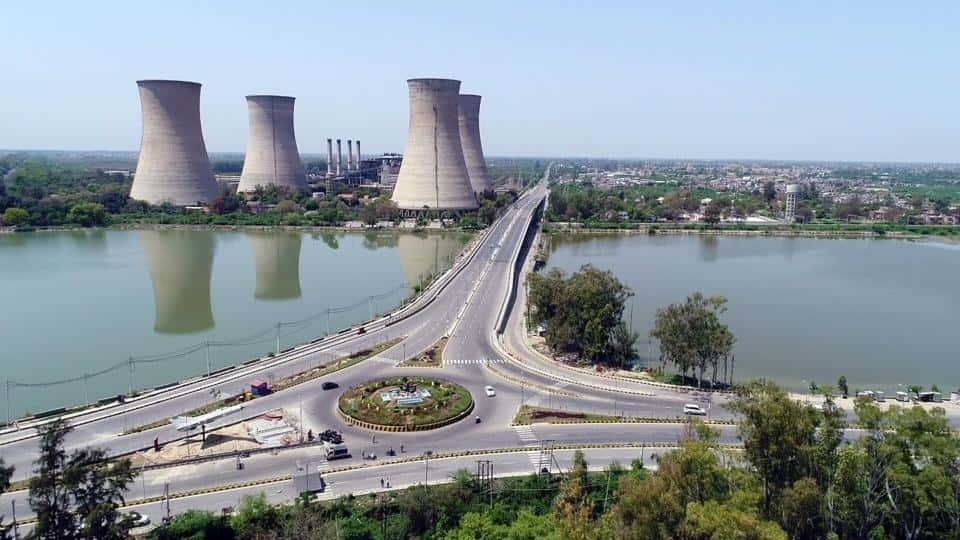
The notification dated March 31 replaces the Environment (Protection) Rules, 1986, with the Environment (Protection) Amendment Rules, 2021.
Thermal power plants within 10 km radius of critically polluted areas or non-attainment cities (that did not meet the annual national standard for particulate matter emissions from 2011 to 2015) will have to meet the standards by December 31, 2023, the notification said. HT has seen the notification.
The environment ministry joint secretary Naresh Gangawar confirmed that the notification has been issued but did not divulge details on why the deadlines were deferred.
The plants that do not fall in these two categories and are not scheduled for retirement will have to meet the norms by December 31, 2024, the notification said.
The ministry notified superior emission standards for thermal power plants in December 2015 for implementation by the end of 2017. The deadline, however, was pushed to 2022 due to resistance from the thermal power industry.
The environment ministry agreed to extend the deadline to 2022, and approached the Supreme Court, which also ordered for an extension.
Later, the power ministry approached the environment ministry last year seeking a further delay in the deadline citing the Covid-19 associated economic slowdown. The power ministry also said that the Atmanirbhar Bharat campaign made it difficult to procure systems for flue gas desulphurization (FGD) that help to control SO2 emissions from thermal power plants.
“Power ministry has approached us. They are finding it difficult to meet the 2022 deadline both because of Covid-19 and curbs on imports from China. We are considering the matter. We may have to give the thermal power plants time to deliver on the deadline,” RP Gupta, secretary, environment ministry said in August last year.
Environmental experts said that the ministry was only favoring the power industry by delaying the deadline.
“It is very unfortunate that MoEFCC sides with the polluters and law offenders time and again to give them extensions and dilutions rather than with the common public who is suffering from severe pollution and health impacts, whose interest MoEFCC is duty bound to protect. It’s not even a day since the extension and we can confidently say that many plants will not meet even the new deadline given that they are yet to even award any contracts to install pollution control equipment which would take three years to build by the power company’s own admission. Given that this is the third time this notification has been extended, MoEFCC needs to clarify what commitments they have received from power companies and ministry of power, which ensures the implementation at least this time around, otherwise it merely seems that the role of MoEFCC is just to extend deadlines and not to regulate their own laws and pollution,” said Sunil Dahiya, Centre for Research on Energy and Clean Air (CREA) said in a statement on Friday.
“This notification in one stroke has delayed the deadline for majority of the power plants in the country as there are only a few plants within 10 km radius of million plus cities that have been prioritised to meet the standards by 2022. While the plants that have already taken steps to meet the standards have not been incentivised, the laggards who have not acted on time, have been rewarded. This will perpetuate locking in of pollution and carbon when we are expected to accelerate our roadmap for clean air and low carbon growth path. Moreover, the effectiveness of the proposed penalty will have to be examined carefully,” said Anumita Roychowdhury, executive director, Centre for Science and Environment.
A 2017 paper in the journal Nature warned against rising SO2 levels in India. The paper, India Is Overtaking China as the World’s Largest Emitter of Anthropogenic Sulfur Dioxide, said that India and China are on opposite trajectories for sulphurous pollution.
Since 2007, emissions in China have declined by 75% while those in India have increased by 50%. With these changes, India has been surpassing China as the world’s largest emitter of anthropogenic SO2, the paper said.