
 E-Paper



Chandrayaan-2 India’s first robotic space exploration: Ex-ISRO chief
Chandrayaan 2 Launch Mission: India has mastered the complex technologies and achieved self-reliance in access to the outer space, ex-ISRO chief said, noting that barring few heavy communication satellites, all other Indian satellites were lofted by the Indian launchers.

 Prefer HTon Google


India’s second moon mission - Chandrayaan-2 - is the country’s first step in robotic space exploration and hence more “complex” and “intricate”, Indian Space Research Organisation’s (ISRO) former Chairman K. Radhakrishnan said on Saturday.
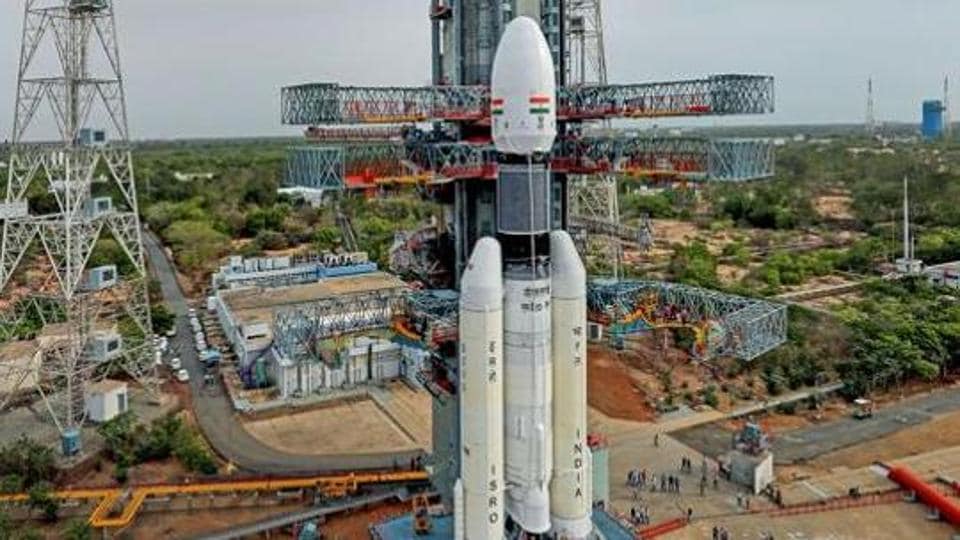
“Chandrayaan-2, with an Indian Lander-Rover (Vikram-Pragyaan) combine, is India’s first step in robotic space exploration and the mission is on the anvil. Obviously, this mission is more intricate,” Radhakrishan, who is now Chairman, Board of Governors, IIT Kanpur, said.
Speaking at the seventh convocation at the Indian Institute of Information Technology Design and Manufacturing (IIITDM), Kancheepuram, he said lunar orbiter Vikram with be orbiting the moon at a speed of around 6,000 kmph and must have the autonomous capability to brake its speed and steer itself for a soft and safe landing in an uncharted terrain of moon, precisely at a designated site.
“Moreover, all these operations would happen within 16 minutes and the landing site also has to be ascertained by itself while on its descent. The entire nation is looking towards it,” Radhakrishnan said.
Radhakrishnan, who became head of the India space agency in 2009 - a year after the first Chandrayaan mission - and held the post till 2014, said that the accomplishments signify India’s capabilities to conceive, design, manufacture and deploy complex and large high technology systems on an end-to-end basis, and the confluence of ISRO and Indian space industry for enhancing capability and capacity.
Pointing out to the opportunities in the space sector, he said: “India is on the threshold of human spaceflight and complex interplanetary exploration which will open up enormous challenges and host of opportunities to the new generation.”
India has mastered the complex technologies and achieved self-reliance in access to the outer space, he said, noting that barring few heavy communication satellites, all other Indian satellites were lofted by the Indian launchers.
India has launched close to 300 satellites for 33 countries on a commercial basis, Radhakrishnan said.
A total of 288 students graduated on the occasion. Of these, 118 are B. Tech, 116 are dual degree, 41 are M. Tech, and 13 are Ph.D students. As many as 32 percent of the graduates of this batch were girl students.
(This story has been published from a wire agency feed without modifications to the text. )


