
 E-Paper



Congress responds to EC with a ‘cow milk’ question-answer, more pointed charges after poll panel rubbishes ‘chori’
The Kerala Congress handle on X deployed sarcasm, seeking to describe the EC's press conference “in a coconut shell”

 Prefer HTon Google


The Congress responded by repeating some pointed questions, and some mirth, after the Election Commission rubbished its charges of “vote chori (theft)” on Sunday.
The Kerala Congress handle on X deployed sarcasm, seeking to describe the EC's press conference “in a coconut shell”.
It posted a question: “Why is cow’s milk considered nutritious?”
And posted a winding, absurd answer, attributing it to the poll panel. “ECI: Cow is beautiful. The moment it wakes up, it’s milked and tied to a coconut tree. The coconut tree grows 70 feet tall. When coconuts ripen, they fall, husk is removed, dried in the sun, then milled for oil. From that oil, banana chips are fried. Chips come in many varieties, but the unripe ones taste best. That’s what we serve with evening tea at office,” the post read.
Party spokesperson Pawan Khera was more pointed, when asked to respond to the EC's argument that it could not share data such as CCTV footage of polling stations as that would “breach voter privacy”.
Khera said, “If you do not intend to share the footage, why do you event record it?”
He cited the EC's recently-revised rules to keep the footage for 45 days and then destroy it. “Why isn't privacy hampered in those 45 days?” Khera argued, speaking to reporters in Sasaram, Bihar.
Also read | 'CCTV video of mothers, sisters…': EC cites voter privacy for not sharing data after Rahul Gandhi's ‘chori’ charge
Khera was in Sasaram as the Opposition led by the Congress and RJD held a ‘Voter Adhikaar Rally’ against the ongoing Special Intensive Revison (SIR) in poll-bound Bihar.
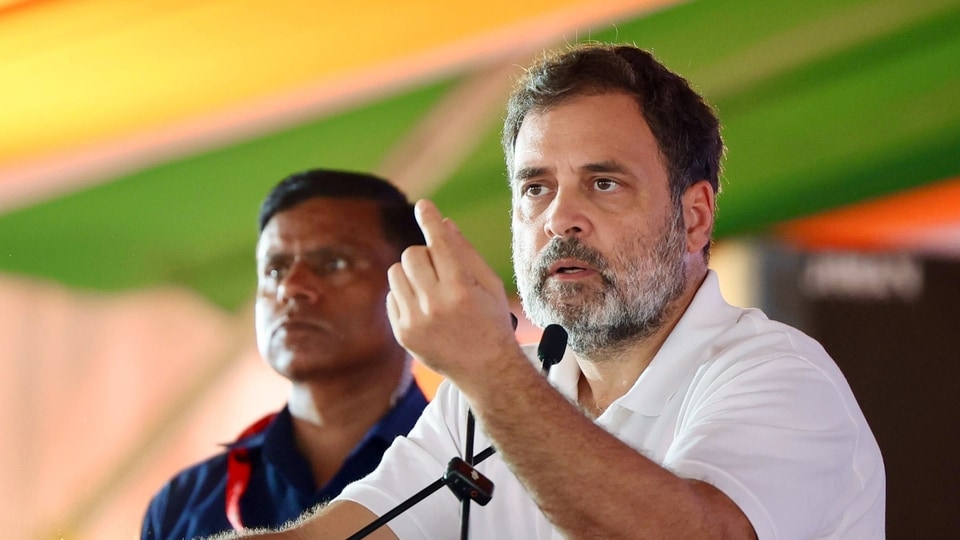
At the rally, Rahul Gandhi repeated the charge that the EC was “colluding” with the BJP.
Khera, too, said “We had hoped that today he (CEC Gyanesh Kumar) would answer our questions... (but) he was speaking like a BJP leader.”
He also accused the CEC of not giving any response on the allegations of 1 lakh fake voters in Mahadevapura segment in the Bangalore Central Lok Sabha constituency. This was one of the major “examples of vote chori” cited by Rahul Gandhi at his press conference on the subject earlier this month.
The CEC was asked about fake voters, and responded: “Should we just randomly send letters to around 1.5 lakh voters and call them and harass them, and say ‘you are fake so we need an oath’?”
On privacy, the CEC centered his argument around women, and said, "Should the Election Commission share CCTV videos of anyone's mother, daughter-in-law, sister, or of anyone else? Only those who have their names on the voter lists can vote in an election.”
Also read | Jairam Ramesh hits back at Election Commission: 'Laughable, didn't answer anything'
Congress leader Kanhaiya Kumar took a jibe at the EC officials, too, saying: “The EC should stop conducting and start contesting elections themselves.”


