E-Paper



Delhi Metro records highest-ever footfall of 82.4 lakh amid DTC bus strike
Celebrating the record footfall, DIG of the CISF Unit at DMRC Santosh Chalke said the milestone reflected the joint efforts of CISF and DMRC.

 Prefer HTon Google


The Delhi Metro Rail Corporation (DMRC) on Friday said around 82,44,903 passengers travelled on its network on September 17, recording its highest-ever single-day passenger footfall.
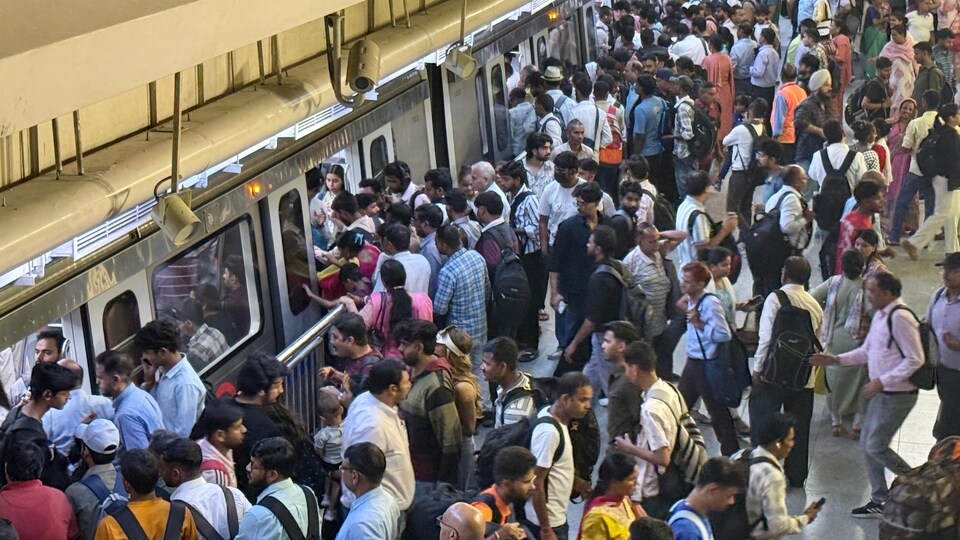
In a post on X, the DMRC said, “DMRC Records Highest-Ever Passenger Boardings of 82,44,903 on 17th September 2026 #DelhiMetro.”
Also Read | Delhi contends with costlier commutes as bus drivers continue strike for third day
Record amid DTC bus strike
The record comes amid an ongoing strike by private agency drivers employed with the Delhi Transport Corporation (DTC), who are in the fourth day of their protest over demands including wage hikes and medical and social security benefits.
With thousands of buses remaining off the roads, drivers from multiple depots, including Rani Khera, Rajghat, Nehru Place, Burari, Wazirpur, Ghumanhera and Sarita Vihar, joined the demonstration, leading to increased pressure on alternative modes of public transport.
Celebrating the record footfall, DIG of the CISF Unit at DMRC Santosh Chalke said the milestone reflected the joint efforts of the Central Industrial Security Force (CISF) and the DMRC to maintain security and facilitate the smooth movement of passengers across the National Capital Region, according to an ANI report.
“Handling 82,44,903 passenger boardings in a single day is not just a milestone number; it is a true reflection of the joint commitment of the CISF and the DMRC in providing seamless security and passenger facilitation across the National Capital Region. Our personnel work day in and day out to continuously elevate security standards and enhance the overall commuter experience at one of the world's busiest transit systems,” said Chalke.
Also Read | Outstation patients left in lurch as DTC drivers’ strike enters fourth day
DMRC's additional measures
The record passenger volume came a day after the DMRC announced additional measures to manage the expected rush caused by the DTC bus strike.
On September 16, the DMRC said it had increased 20 train trips across its operational network and deployed eight additional trains based on passenger demand. The measures were aimed at accommodating the increased rush, particularly during peak hours, and ensuring smoother travel for commuters.
In a post on X, the DMRC stated that eight extra trains were deployed based on operational demand, aiming to accommodate the increased rush, particularly during peak hours, and facilitate smoother transit for passengers.
“Delhi Metro Makes Extensive Arrangements to Manage Additional Crowd amid Ongoing DTC Bus Strike The Delhi Metro Rail Corporation (DMRC) today put in place extensive arrangements to manage the anticipated surge in passenger footfall on its network due to the ongoing Delhi Transport Corporation (DTC) bus strike. To ease pressure on the system, DMRC has increased 20 train trips across its network. A total of eight additional trains were operated today as per requirement. These measures are aimed at accommodating a higher number of passengers, particularly during peak hours, and ensuring smoother travel for commuters. The same enhanced arrangements will continue tomorrow, 17 September 2026. Eight extra trains will be inducted and operated between 08:00 hrs and 20:00 hrs, as per operational requirements. DMRC remains committed to providing reliable and efficient services and requests passengers to plan their journeys accordingly,” said DMRC.
Established on May 3, 1995, the Delhi Metro Rail Corporation is a joint venture between the Union Government and the Government of the National Capital Territory of Delhi. It operates the rapid transit system across New Delhi and the wider National Capital Region.
The DMRC manages a network spanning about 416 kilometres with 303 stations, including the Noida-Greater Noida corridor and Gurugram's Rapid Metro line.
Beyond Delhi-NCR, the organisation also manages the operations and maintenance of metro networks in other cities, including Mumbai Metro Line 3, Chennai Metro Phase 2 and Patna Metro, reflecting its expanding role in metro projects across the country.