E-Paper



'Democracy still flexible': Tharoor praises India's response to Gen Z protest, draws parallels with other countries
Praising the government's decision to accept the students' demand for a big resignation, Shashi Tharoor said that the “system bent, but didn't break”.

 Prefer HTon Google


India's response to the Gen Z protest shows that democracy here still has “flexibility and receptivity”, Congress MP Shashi Tharoor said as he spoke at length about how South Asia has been experiencing youth-led uprisings over the past decade and drew parallels with the response to the student protest in India.
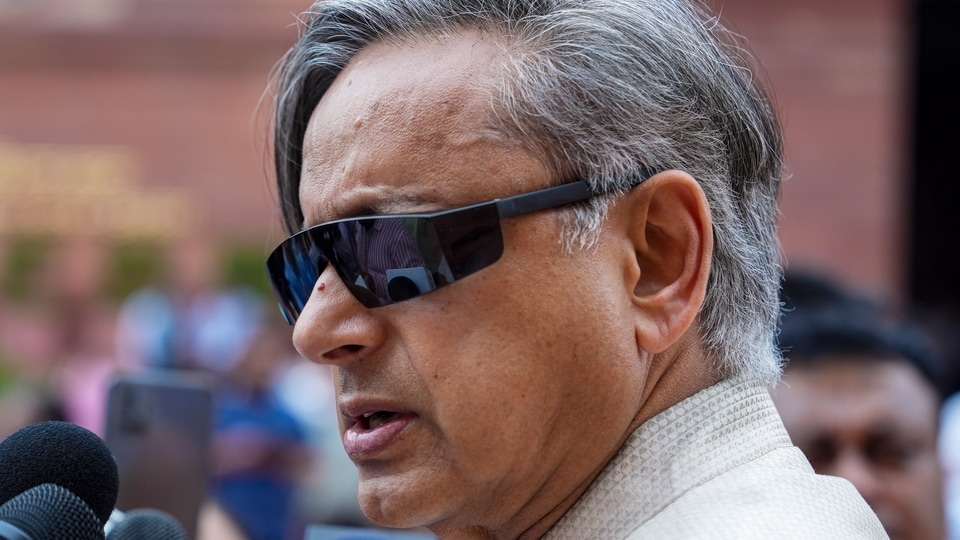
Heaping praise on the government's decision to accept the students' demands for a big resignation, Tharoor said that the “system bent, but didn't break”. He was referring to the recent student protests against the NEET-UG paper leak and the subsequent resignation of Dharmendra Pradhan as Union education minister.
Diving deep into how six countries in the region - Myanmar, Sri Lanka, Pakistan, Bangladesh, Nepal and India, saw students and other youth expressing their frustrations, Tharoor commended India's democracy in the wake of the recent protests in Delhi and other cities.
"The difference amongst them (protests in different countries) is a reflection of the political system in these countries and the attitude with which governments attempted to face or refuse these situations," Tharoor said at an NDTV event.
Further expanding on how the countries' responses differed, Tharoor gave examples of Bangladesh and Sri Lanka, where rulers were forced to relinquish power and leave. Nepal also saw a change in government, but unlike the first two, "structures still remained intact" here, Tharoor said.
"In Pakistan, the military which had been playing behind the scenes came forward and established what is known as a puppet government. Similarly, the military took control in Myanmar," Tharoor said.
What was different in India?
Coming to India, Shashi Tharoor said that the mechanism here was “self-correcting” and the democratic system adapted itself to the new reality with “astonishing speed”.
“No one expected the BJP government, which has been impervious to public demands for resignations, to respond,” Tharoor said, recalling how demands for resignations of senior officials had been raised many a times by the Opposition but there was no response, but things changed this time.
Without naming Dharmendra Pradhan, Tharoor said: “Somebody has resigned. The recognition that democracy needs to be nimble enough to turn around and recognise a public reality, that I think has been a tribute to the Indian system."
Also Read: Shashi Tharoor's son asks for ‘boomers’ to be banned on WhatsApp, Congress MP outwits him
He also said that India's response to the student protest showed that India's system “bent, but didn't break”. "The Indian example gives me encouragement as an opposition leader that our democracy has flexibility and receptivity to respond to popular currents," he said at the NDTV event.
Cong's paper leak protest didn't resonate as much: Tharoor
Earlier this month, Shashi Tharoor had reflected on how the Gen Z protest, led by the Cockroach Janta Party (CJP) played out and said that similar issues were part of the Congress's student outreach ‘Chhatron ki Goonj’, which failed to resonate as much.
“Issues taken up by the CJP at Jantar Mantar had been taken up by us earlier. We had the ‘Chhatron ki Goonj’ thing where Rahul Gandhi was addressing students about the paper leaks,” Tharoor had said during his conversation at the 15th anniversary of India's International Movement to Unite Nations (IIMUN) in Mumbai. “We need to ask ourselves what did we fail to do? Did we fail to listen? Was our finger missing from the pulse of the Gen Z?," he had said.
Massive student protests against the NEET paper leak were witnessed at Delhi's Jantar Mantar last month, with climate activist Sonam Wangchuk sitting on a hunger strike. The protest was called off hours after Dharmendra Pradhan resigned as education minister.