
 E-Paper



'Don't meddle with powers of other agencies': Supreme Court to ED in case against Pinarayi Vijayan
In a special sitting held during the Dussehra break, the Supreme Court allowed Vijayan and others to appeal against the single judge’s October 9 order.

 Prefer HTon Google


The Supreme Court on Wednesday stayed the investigation against former Kerala chief minister Pinarayi Vijayan, his daughter and son-in-law, among others, in the CMRL-Exalogic payoff case. It also reprimanded the Enforcement Directorate (ED), directing it to stay within its statutory limits and not meddle with powers of other agencies.
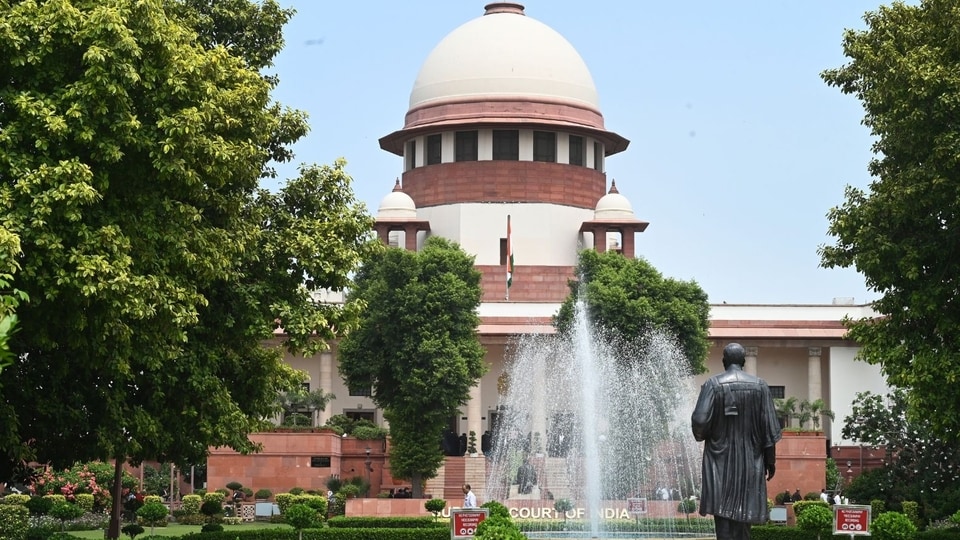
“You (ED) have done your statutory duty. It is for the state to do its statutory duty. You have got a scheduled offence; you file a complaint and go ahead with your prosecution. Don’t extend your hands beyond the statutory limits. We are making it very clear. Don’t use your power to meddle with the statutory powers of other investigation agencies,” Justice Bagchi remarked when the ED defended the high court’s order.
The top court stayed further investigation for seven days, allowing the petitioners to pursue their appeals against the Kerala High Court’s order directing the registration of a criminal case.
Deep Dive

In a special sitting held during the week-long Dussehra break, the Supreme Court allowed Vijayan and others to appeal against the single judge’s October 9 order. The court set aside the Kerala High Court division bench’s October 15 decision dismissing their appeal. The state had registered a first information report (FIR) on October 12 and was proceeding with the investigation.
Also Read: HC order to file FIR passed without hearing me: Pinarayi Vijayan tells SC
A bench comprising Justices Joymalya Bagchi and V. Mohana said, “We direct the investigation in the FIR shall remain stayed for a week. Our order shall not be taken as an opinion expressed on the interim relief that the division bench (of the high court) shall fashion based on facts and the law.”
The court clarified that the registration of the FIR had not been stayed; only further investigation had been halted.
The high court had relied on a communication sent by the ED to the state police on September 22, disclosing a cognisable offence in the CMRL-Exalogic case. It was alleged that the state-owned CMRL paid more than ₹2.78 crore to Exalogic Solutions Pvt Ltd, a company wholly owned by Vijayan’s daughter, Veena T, without receiving any services in return.
The payments were made by CMRL to Exalogic between 2017 and 2020. In January 2017, CMRL engaged Veena as an IT and marketing consultant on a retainership basis. However, tax assessments for the period from 2013-14 to 2019-20, submitted by CMRL, reportedly revealed additional payments to Exalogic for which no services had been rendered.
Vijayan, represented by senior advocates Siddharth Luthra and N. Hariharan, submitted that the dismissal of his appeal had left him without an effective remedy. They argued that even the October 9 order directing the registration of an FIR and further investigation had been passed without hearing Vijayan.
Luthra informed the court that, following the registration of the fresh FIR, the ED had filed a fresh Enforcement Case Information Report (ECIR), alleging money laundering arising from the same set of allegations. In this connection, Vijayan had also been summoned by the ED for questioning on October 23.
The bench observed, “Howsoever high you will be, you cannot be above law. We will not order a stay on the FIR. But on the points of whether cognisable offence is made out, the statutory requirement of continuation of investigation, we have said that you need to be heard by the high court.”
The court left the ED’s proceedings untouched, stating, “We express no opinion on the validity of the fresh ECIR and leave it open to be agitated in an independent proceeding (by the petitioner).”
The state’s actions also came under scrutiny, as the bench noted that the FIR had been registered on the basis of information shared by the ED rather than on the state’s own initiative. It referred to the statutory safeguards under the Prevention of Corruption Act, particularly Section 17A, which requires prior approval from the competent authority before an investigation can proceed against a public servant in circumstances covered by the provision.
The Kerala government, represented by senior standing counsel Ramesh Babu, submitted that the information provided by the ED disclosed a cognisable offence, a finding also made in the single judge’s order.
The bench said, “It needs to be ascertained whether information received from ED under section 66(2) is a mandate. The single judge goes flip-flop on this issue. We want the division bench to apply its mind.”
Vijayan’s lawyers also argued that the high court had erred in entertaining a petition filed by advocate K. M. Shajahan, an outsider to the proceedings. Shajahan had approached the court two days after submitting a representation to the state seeking the registration of an FIR against the former chief minister and others.
They questioned Shajahan’s standing to pursue the matter, particularly when the state had already constituted a nine-member special investigation team (SIT) to conduct a preliminary probe based on the ED’s information. Vijayan and the other petitioners further contended that the high court had issued directions for the registration of an FIR and an investigation without hearing them.
Shajahan’s lawyer submitted that the law did not require potential accused persons to be heard before an FIR was registered. The bench referred to Section 175(4) of the Bharatiya Nagarik Suraksha Sanhita (BNSS), which replaced Section 156(3) of the Code of Criminal Procedure and introduced a requirement to hear a public servant before ordering an investigation into a complaint concerning acts allegedly committed in the discharge of official duties.
Senior advocate Zoheb Hossain, appearing for the ED, argued that this protection applied only to acts performed in the discharge of official duties. The bench observed that whether the acts alleged in the present case fell within the scope of official duties was a matter to be decided on the merits.
The court clarified that these observations should not be construed as an expression of opinion on the merits of the case. They were intended to draw attention to the expanded scope of the BNSS provisions concerning the hearing of potential accused persons before an FIR is registered.
The court directed the petitioners to pursue their appeals before the high court, including their plea


