E-Paper



Explained: ASI, Odisha tussle over Jagannath temple corridor project in Puri
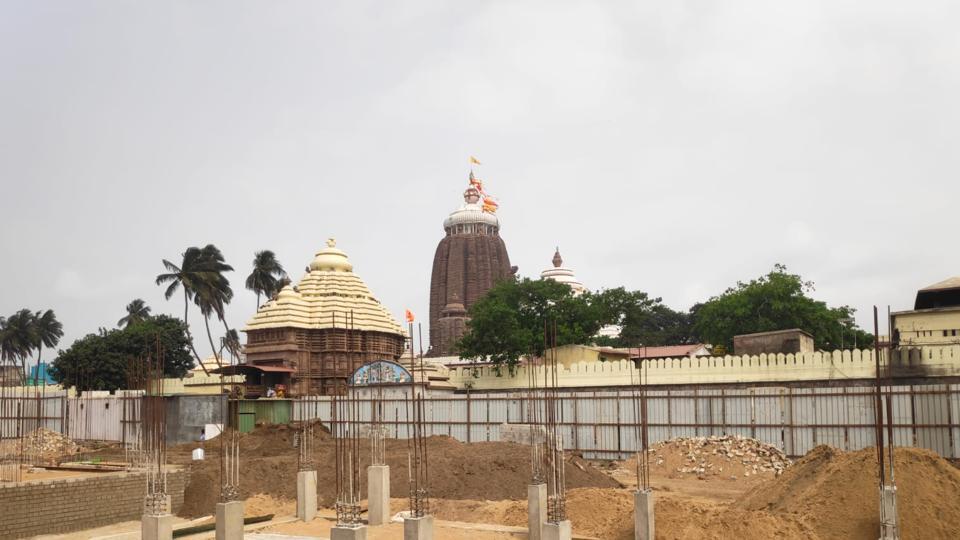
Problems started when the state-run firm, OBCC started excavation work in February this year close to the Jagannath temple to lay concrete foundation for the amenities such as toilets, reception centre and cloakrooms.

 Prefer HTon Google


On Monday, the Archaeological Survey of India told the high court that the Odisha Bridge Construction Corporation, a state PSU, may have destroyed archaeological remains around the 12th century Jagannath temple by carrying out deep excavation to build common facilities such as urinals and cloakrooms around the world heritage site under Srimandir Parikrama Plan. The Archaeological Survey of India, which looks after the maintenance of Odisha’s most popular religious site, submitted a site inspection report after a Puri-based resident petitioned the court that new construction around the temple posed a threat to the structural safety of the structure.
What is the Srimandir parikrama project?
In November last year, Odisha chief minister Naveen Patnaik laid the foundation stone for the ₹800 crore Srimandir Parikrama Plan (or Jagannath Temple corridor project) in which the area within 75-metre perimeter of the Jagannath Temple was to be transformed into a heritage corridor to attract devotees from across the world. Modelled on the Kashi Vishwanath Corridor project of Varanasi, in which a corridor is being built around the iconic Kashi Vishwanath temple and the ghats along the river Ganga for ensuring easy movement of pilgrims and devotees, the Srimandir Parikrama project was designed to have wide terraced green landscape and pedestrian-only pathway giving the devotees an ‘aesthetically delightful’ experience. The project was aimed to be completed by May 2023, with creation of amenities for pilgrims such cloak rooms, restrooms, drinking water fountains, temple reception centre with a queue management facility for 6,000 people, information-cum-donation kiosks, shelter pavilions for shade and rest, multi-level car parking, dedicated shuttle cum emergency lane for accommodating police, fire and emergency vehicles and an integrated command and control centre.
The parikrama project also took into account a 3-bench judgement of the Supreme Court headed by justice Arun Mishra in November 2019 on a petition by Cuttack-based lawyer Mrinalini Padhi and the recommendations of retired Orissa high court judge BP Das, who in 2017 suggested that 75-metre radius around the temple be cleared of all structures for safety, security and improvement of the temple.
How did the controversy begin?
As the temple is a centrally protected monument under the ASI’s care, the 100 metre around its perimeter is considered as inviolate in which no construction can come up as per Ancient Monuments and Archaeological Sites and Remains (Amendment and validation) Act without the nod of National Monuments Authority (NMA), a body set up in 2011 under the Union culture ministry. With increase of urbanisation, development, growth and increasing population, there was growing pressure on land including the area around centrally protected monuments and NMA was supposed to allow some construction activity with suitable checks and balances. As per NMA norms, a heritage impact assessment study is a must for developmental work around any monument of archaeological importance with a built-up area of over 5,000 square metre. The Jagannath temple is spread over 43,301.36 sq metre.
Problems began when the state-run firm, OBCC in February this year started digging up to lay concrete foundation for the amenities such as toilets, reception centre and cloakrooms. Though any construction within the 100 metre prohibited zone was earlier not allowed for such monuments, a 2010 amendment in the Ancient Monuments and Archaeological Sites and Remains (Amendment and validation) Act did provide for construction of amenities such as toilets and cloakrooms but under the active supervision of ASI and in the presence of archaeological officials.
As the excavators started scooping up earth upto 20 ft around the temple, the conservation assistant of ASI in Puri in February sent a letter to the state government asking it to stop since it was violating the archaeological sites law. The ASI also asked the state government to produce approvals to carry out the excavation work.
As protests erupted, Dilip Baral, a resident of Puri, filed a PIL before Orissa high court in March expressing apprehensions that the digging up of the area close to the temple wall may endanger the temple’s structural safety. The high court asked the ASI as well as the state government agencies to conduct a joint inspection of the area and submit a report.
What was the result of the joint inspection?
In its affidavit, the ASI said archaeological remains of the heritage site may have been destroyed during the excavation. It said removal of about 15 to 20 ft. stratified deposit has caused irreparable damage to the heritage site, stressing that the state officials were clueless about the method of soil removal. It also said no heritage impact assessment studies were conducted before commencement of the project and no ground-penetrating radar survey (GPRS) was conducted to ascertain the archaeological and historical importance lying buried in the subsoil of the area within the 75 metre radius of the centrally protected monument. The ASI also added that there were deviations in plan and elevation as well as in the project design with heights of various structural units increased and addition of more units. Besides, the foundation trench for a reception centre has been excavated within the prohibited limit in gross violation of the AMASR Act.
What is the stance of Odisha government?
Odisha government through its top law officer told the high court that the project is being undertaken within the purview of law. It said the ASI in September last year gave a no objection certificate for construction work for lavatories and drains. The state government said the amenities are necessary for lakhs of devotees coming for darshan of Lord Jagannath who face immense difficulties. During the hearing, the state government said as the work of toilets, drains, electrical works do not strictly fall within the definition of construction and can be carried out even in the prohibited area. The state government, however, said the devotee reception center will be moved out of the prohibited area.
Did ASI and NMA add to the confusion?
Some officials do believe that NMA may have added to the confusion over the issue when the authority gave a “NOC” to the state government’s proposal of construction within the prohibited zone last year. As construction within the 100 metre prohibited zone was outside the ambit of NMA, it could have referred the matter to ASI asking the Odisha government to hold wider consultations. But it sent an ‘NOC’ to the state government saying they have ‘no problem’ if ASI agreed to the constructions.
ASI’s director general V Vidyavaati who visited Puri in February this year, also left room for confusion when she wrote a note saying that as construction of cloakrooms and toilet amenities were required for the devotees and may be allowed in the prohibited area of the temple. In her note, the DG said, the ASI would ‘work in coordination with the state government on the design of cloakrooms and toilets’ so that there is no visual impact on the main temple. The ASI chief’s note was in sharp contrast to the letter issued by her own office to the state government a few days earlier asking it to stop work. Though ASI could have initiated actions over violations of several provisions of AMASR Act, it remained silent.
What happens now?
The case in Orissa high court has now been posted for hearing on June 22 with the two judge bench headed by chief justice S Muralidhar asking the state government to file an affidavit. Though the high court has not stayed the ongoing construction work, the ASI’s affidavit that the construction work in the prohibited zone of the temple may have damaged archaeological remains of the heritage sites has given ammunition to the government’s critics. The temple project also could receive a setback if the court arrives at an adverse conclusion about the steps taken before launching the project.