
 E-Paper



From guns to classrooms: Eight former Maoists clear Class 10 exam in Chhattisgarh’s Bastar
Eight surrendered Maoist cadres in Chhattisgarh’s Bastar have cleared the Class 10 exam, with former cadres now pursuing education, nursing, farming and business plans.

 Prefer HTon Google


Eight surrendered Maoist cadres in Chhattisgarh’s Bastar region have cleared the Class 10 examination conducted by the Chhattisgarh State Open School, taking a step towards resuming their education after returning to the mainstream.
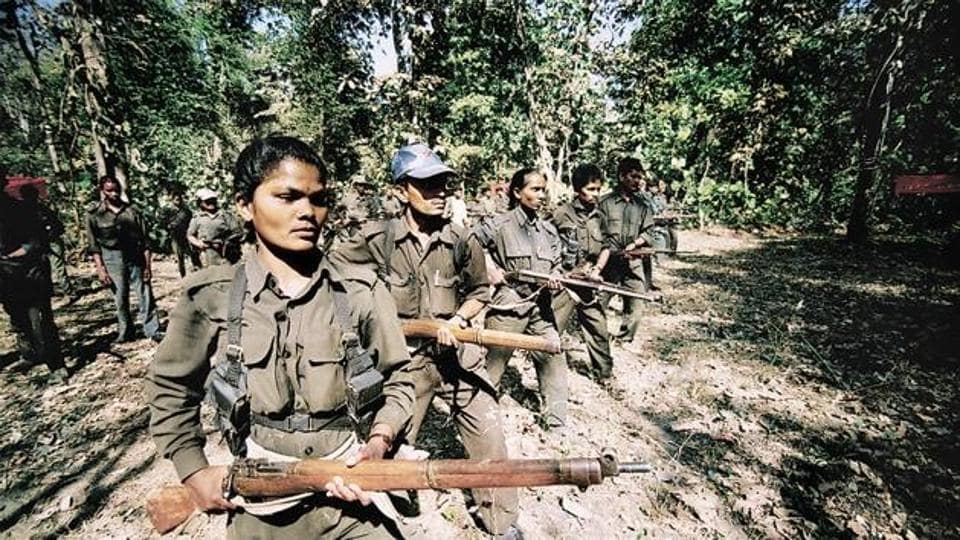
The candidates, who appeared for the examination from Jagdalpur, Bijapur and Kanker, had dropped out of school at different stages before joining the Maoist movement. The Class 10 examination was conducted in August, with the results declared last month.
Bastar Superintendent of Police (SP) Shalabh Kumar Sinha said assistance was provided to the surrendered cadres after they expressed their desire to continue their education. “They are being provided all necessary facilities under the government’s surrender and rehabilitation policy,” Sinha said.
He said education could help surrendered cadres reconnect with society and create opportunities for employment and self-employment.
From Maoist medical team to Class 10
Among them is 36-year-old Geeta Narote, formerly known as ‘Dr Champa’, who now wants to pursue further studies and become a nurse.
Narote, who worked with its medical team and later became a divisional committee member, had dropped out of school after Class 6 following the killing of her father and had to take responsibility for her mother and three younger sisters.
“I am very happy that I got an opportunity to study again. I always wanted to study. I now want to pursue further studies and become a nurse,” Narote told the media.
Narote was among 210 Maoist cadres led by senior cadre Rupesh who surrendered in Jagdalpur in October last year. She said they received ₹50,000 each under the government’s surrender policy and used part of the money to purchase books and other study material.
Former Maoist cadre Setu alias Shyam, a Telangana native who had worked as a teacher within the organisation and surrendered along with them, also helped them prepare for the examination, Narote said.
“We followed a timetable and practised model question papers from previous years to prepare for the examination,” she said.
‘I wanted to sing, dance and give speeches’
Another successful candidate, 31-year-old Santosh Anchla alias Sannu, said he resumed his education after surrendering in October last year.
A resident of Gundul village in Kanker district’s Koyelibeda area, Sannu said he left school after Class 2 because teachers were not regular and he had to take responsibility for his family as the eldest of four brothers.
He said he joined the Maoist movement in 2008 after becoming associated with its cultural wing, Chetna Natya Manch. “I wanted to sing, dance and give speeches,” Sannu said.
He later worked as a teacher within the organisation and taught basic mathematics and Hindi to younger cadres, he said.
‘I always wanted to study’
Ramdhar Kashyap, 34, from Kotmeta village in Kondagaon district, is another successful candidate. He said he had dropped out after Class 2 and later joined the Maoist movement after hearing claims that the proposed Bodhghat project on the Indravati river would submerge villages.
“After hearing all this, I joined the movement,” Kashyap told the media. He surrendered in March this year.
“I always wanted to study. In the organisation, I learnt to read and write. I am very happy that I cleared the examination,” he said.
The other candidates who cleared the Class 10 examination are Yadgiri Kondghatla alias Bhaskar, Madkam Dulla and Navru Poyam, who appeared from Jagdalpur, Arjun Payam alias Vasu from Bijapur, and Ramji Gavde from Kanker.
Officials said Narote, Sannu and Kashyap are currently staying at Triveni Parisar, a police facility in Jagdalpur.
-kW0H-U20214218012MgB-250x250%40HT-Web.jpg)


