
 E-Paper



GST officers lose arrest powers, Council hikes prosecution threshold to ₹5 crore
The council proposed raising the prosecution threshold from ₹1 crore to ₹5 crore, meaning cases involving amounts below ₹5 crore would not lead to prosecution.

 Prefer HTon Google


Scrapping of tax officers' arrest powers, raising the ceiling for initiating criminal prosecution to ₹5 crore, and easier registration - many sweeping reforms were announced by Finance Minister Nirmala Sitharaman at the 57th GST Council meeting in Delhi on Thursday.
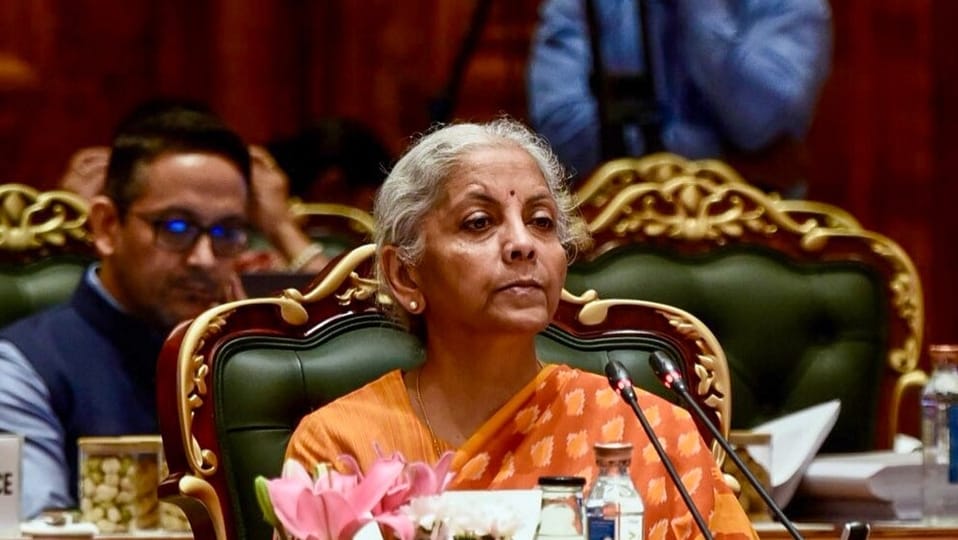
Among the key proposals is a plan to decriminalise parts of the GST law by removing criminal liability for nine offences and easing provisions covering 24 others. The threshold for initiating criminal prosecution is also proposed to be raised from ₹1 crore to ₹5 crore.
GST officers may lose arrest powers
The proposed amendment would remove the arrest powers currently available to GST officers. At present, officers can arrest, with prior authorisation from a Commissioner-level officer, in major cases involving tax evasion, fraudulent input tax credit (ITC) or wrongful refunds exceeding ₹1 crore.
For offences such as delayed return filing, classification disputes and delays in tax payments due to cash-flow constraints, taxpayers would be able to avoid arrest by paying the tax, interest and a proportionate penalty.
Under the proposed approach, GST officers would concentrate on tax recovery, while law enforcement agencies would handle legal proceedings.
No GST notice for demands below ₹10,000
The Council will also discuss a common procedure for GST officers across states when raising tax demands. A mandatory intimation could be sent to taxpayers before a formal notice, giving them an opportunity to respond.
If approved, GST notices would not be issued where the tax demand is below ₹10,000. Such cases currently account for about 20 per cent of all cases by number, while involving only a negligible amount of tax.
To address fake ITC claims and disputes arising from mismatches in credit, the Council will consider an invoice matching system in monthly GST returns. The mechanism would reconcile buyer and supplier invoices so that legitimate tax credit can be claimed.
Easier GST registration for small e-commerce sellers
Small businesses selling through e-commerce platforms could also get a simpler registration process. The Council is likely to consider allowing them to use an e-commerce platform's warehouse as their registered place of business in states where they do not have their own premises.
A small supplier would need to maintain a place of business in only one state, where physical verification and Aadhaar authentication would be completed. Registration in other states would be based on the platform's consent, without the involvement of a tax officer.
The proposed change could allow around 9.5 lakh small sellers to access the national market without setting up physical offices in different states. It would also create tax parity between competing platform business models.
The proposed GST law changes would be introduced in phases beginning early next year.
GST rate changes may be made once a year
The Council is likely to consider limiting GST rate revisions to once a year and making them effective from the beginning of the next financial year. The proposal is aimed at giving businesses greater stability.
Another proposed reform concerns goods in transit. Under an intelligence-led logistics and transit checking system, vehicles would be stopped only after specific prior authorisation from a senior officer and only by the state of origin.
The exception would apply when documents are missing or the buyer is liable to pay the tax. The proposal is expected to remove multi-state road stoppages, reduce transit times and freight costs, and make the movement of domestic and export cargo more predictable.
Registration forms may be redesigned
The Council will discuss redesigning GST registration forms to make them easier to complete, with step-by-step guidance and clear information on documents that need to be uploaded.
Where a taxpayer is already registered in another state, their details could be carried over. This could mean they would need to complete only one form to obtain registration in multiple states.
Proposed changes for exporters
The Council will also consider measures to simplify refund and credit claims for exporters of goods and services.
One proposal seeks to align the definition of exports with commercial activities that earn foreign exchange. The Council will also examine the ambiguity surrounding the export status of services supplied through an Indian company's overseas branch, sources said.
Gold, silver and platinum import exemption
Another proposal involves withdrawing the IGST exemption on imports of gold, silver and platinum by specified banks and nominated agencies.
At present, imports of the three precious metals attract 3 per cent IGST. However, the tax is exempt when they are imported by banks and nominated agencies that are periodically listed by the government.
ITC on employee insurance premiums
The Council will also discuss allowing employers to claim input tax credit on insurance premiums paid for coverage provided to employees.
Under the GST law, individuals buying life or health insurance for themselves or their families are exempt from GST. However, when a company purchases life or health insurance for its employees, the cover attracts 18 per cent GST, and businesses have so far been unable to claim ITC on that amount.
GST officers' committees may be streamlined
The Council is also likely to consider restructuring its tax officers' committees and making the framework leaner, as the indirect tax regime completed nine years since its rollout on July 1, 2017.
The proposed structure would consolidate the existing bodies into three: the Secretariat, the implementation committee and a single standing committee of officers.
Currently, the GST tax officers' committee comprises the Secretariat, an implementation committee, eight standing committees, including the Fitment and Law committees, and 18 sectoral groups.
(With inputs from PTI)


