E-Paper



India declines comment on Sheikh Hasina’s passport request, says travel document needed
External affairs ministry spokesperson Randhir Jaiswal declined to comment when he was asked about Hasina seeking a passport from Bangladeshi authorities

 Prefer HTon Google


India on Tuesday refused to be drawn on the issue of former Bangladesh Prime Minister Sheikh Hasina seeking a passport from the Bangladesh high commission to facilitate her return home next month, with the external affairs ministry only saying that such travel plans will require a “travel document”.
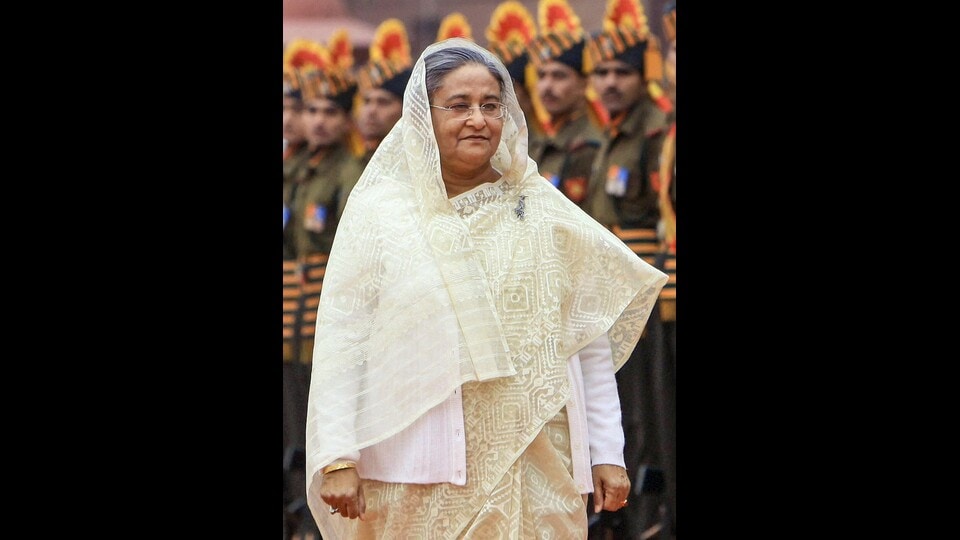
Hasina, who has lived in self-exile in India since her government was toppled in a student-led uprising in August 2024, approached the Bangladesh mission in New Delhi on Monday to seek a passport and a national identity card ahead of her planned return home in December. The request was swiftly dismissed by Bangladesh’s deputy foreign minister Humaiun Kobir, who reiterated Dhaka’s demand for her extradition.
External affairs ministry spokesperson Randhir Jaiswal declined to comment when he was asked about Hasina seeking a passport from Bangladeshi authorities at a regular media briefing.
“The question that you asked is essentially a question that you must pose to the Bangladesh high commission. This is a matter which they would be in a better position to convey to you, what is the sense they have on this particular issue,” he said.
Jaiswal responded to another question on Bangladesh’s demand for Hasina’s extradition by repeating India’s stated position that this is “a legal matter, and it will be dealt with accordingly”.
When Jaiswal was asked specifically whether the extradition of a person will be possible if they did not possess a passport, he replied: “Obviously, for the travel of people, you need a travel document. That is what I understand, but it is a technical matter.”
Hasina’s passport was revoked by Bangladeshi authorities after she fled to India, and the activities of her Awami League party were banned. Her request for a passport and national identity card are being seen as preparations for her return to Bangladesh in December, since possession of the travel document will give her a greater say in deciding the circumstances of her return.
The former PM has said in several recent interviews that she intends to return home next month despite facing the possibility of arrest. Hasina was sentenced to death by Bangladesh’s International Crimes Tribunal in 2025 for crimes against humanity on the ground that she was responsible for ordering a crackdown on student-led protests that left hundreds dead and thousands injured. Hasina denies any wrongdoing and has rejected the tribunal’s verdict and challenged the legitimacy of her trial.
Her presence in India has emerged as a key irritant in relations between New Delhi and the Bangladesh Nationalist Party (BNP) government in Dhaka. Bangladeshi officials have also urged the Indian side not to allow her to air her political views from Indian soil.