
 E-Paper



Judiciary both catalyst and guardian, says CJI B R Gavai
CJI Bhushan R Gavai stressed the judiciary’s duty to uphold constitutional values, drive social reform, and adapt to modern challenges.


Chief Justice of India (CJI) Bhushan R Gavai on Friday underscored the judiciary’s dual role as both a guardian of constitutional values and a catalyst for social reform, stressing that courts are not confined to black-letter law but are tasked with interpreting justice in light of contemporary challenges.
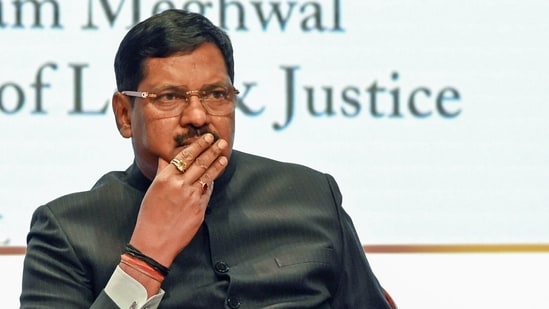
Delivering a keynote address in Kathmandu on the theme “Evolving Role of Judiciary with particular focus on jurisprudential developments and justice sector reforms undertaken by the Supreme Court of India”, CJI Gavai said that the judiciary functions as a bridge between the aspirations of the people and the ideals enshrined in the Constitution.
“It is tasked not only with resolving disputes but also with ensuring that the principles of justice, equality, and human dignity are upheld in practice,” he said.
Tracing the expansion of judicial functions in India, the CJI noted that the traditional role of courts was understood as strict application of statutory provisions. “Today, however, the judiciary is increasingly called upon to go beyond mere textual application, engaging with the deeper purposes and consequences of the law. Over the decades, this proactive role has become central to the judiciary’s identity,” he remarked.
He emphasised that democracy is sustained not merely by institutions but by the values they embody, with courts guiding governance, inspiring public trust, and reinforcing constitutional morality.
CJI Gavai singled out the basic structure doctrine, propounded in Kesavananda Bharati (1973), as a defining contribution of the Supreme Court to constitutional jurisprudence, noting that it has inspired constitutional courts in other countries as well. He also highlighted the court’s recognition of new rights flowing from Article 21, citing its expansion of the right to privacy into domains such as personal autonomy, dignity, marriage choice (Shafin Jahan, 2018), end-of-life care (Common Cause, 2018), and reproductive rights (X Vs Principal Secretary, 2022).
On equality, he pointed to the seven-judge bench ruling in State of Punjab Vs Devinder Singh (2024), which permitted sub-classification among scheduled castes (SCs) to ensure that reservation benefits reach the most backward communities. “Affirmative action must continue to evolve to benefit the most marginalised among the marginalised,” emphasised the CJI, recalling his own judgment in the case that called for excluding the creamy layer within SCs.
The CJI also dwelt on the apex court’s progressive rulings in gender justice, disability rights (with the adoption of “reasonable accommodation” as a constitutional principle), and the right to dignity, which the court has developed since the late 1970s.
Underscoring the Supreme Court’s role as an “environmentally conscious institution,” CJI Gavai said the court shaped environmental jurisprudence to balance development with sustainability. He also referred to electoral reforms jurisprudence, where the court strengthened transparency and integrity in elections, reinforcing citizens’ right to free and fair representation.
CJI Gavai further underlined that the Supreme Court’s role extends beyond judgments to institutional innovation and reforms. He highlighted the ongoing e-Courts Mission Mode Project, under which Phase III (2023–2027) is ushering in paperless courts, e-filing, cloud-based digital infrastructure, virtual courts, and smart systems to promote inclusion and efficiency.
“The role of the judiciary, both on the judicial and administrative side, has thus evolved to address emerging challenges and to promote access to justice,” he said.
Acknowledging the strides made by Nepal’s Supreme Court in gender justice, privacy, environment and indigenous peoples’ rights, CJI Gavai expressed deep appreciation for cross-learning between the two countries’ judiciaries.


