
 E-Paper



Kerala high court pulls up Kerala for not handing over churches to Orthodox faction
The Kerala high court said the government’s continued silence on the Orthodox-Jacobite matter is frightening.


THIRUVANANTHAPURAM The Kerala high court on Monday pulled up the state government over inaction to implement the Supreme Court verdict on the tussle between two warring church denominations and subsequent custody of six churches in the state.
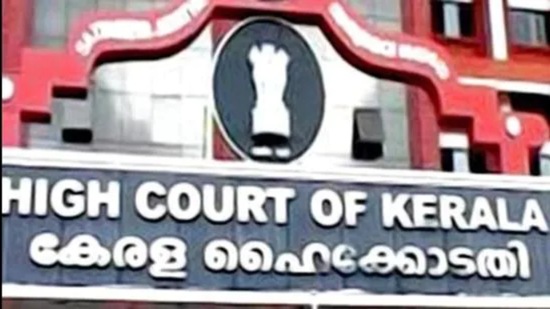
While questioning the delay in handing over these churches to the Orthodox faction, Justice Devan Ramachandran said the government can’t simply cite the law and order problem and delay the takeover. These churches are under the control of Jacobite believers, and they fiercely resist the move of handing them over to the rival faction, as per the situation on ground.
The high court said the SC, in its final verdict in 2017, gave the right to administer 1000-odd churches and parishes to the Orthodox faction and the Jacobites have no ground to occupy these churches. The government again pleaded its helplessness and cited a law and order problem in implementing it. The court observed that it was duty-bound to obey the order of the judiciary.
The court said the government’s continued silence and helplessness are frightening. It reminded the government that it can’t absolve its duty by simply citing law and order. It asked the government to file a detailed reply and posted the plea for further hearing on Sept 29.
A non-Catholic community, the Malankara Syrian Orthodox church has two factions, Orthodox and Jacobites, fighting against each other ever since the split in 1912 across the country. After several rounds of legal battles, the Supreme Court gave a final verdict in favour of the Orthodox faction in 2017. Since then, the Jacobite faction that controlled some of these churches is not ready to give up and still controls 25 churches, while building several new ones to keep its flock together.
Earlier, chief minister Pinarayi Vijayan tried to broker peace between the two factions but failed to make much headway as both sides stuck to their positions. Later, Prime Minister Narendra Modi also intervened at the behest of Goa Governor PS Sreedharan Pillai but failed to break the ice.
“We will go by the law of the land. How can anyone resist the verdict of the highest court citing muscle power?” asked the Orthodox churches spokesman Biju Oommen. “We were denied justice. We still hope we will get justice,” said a Jacobite church trustee Joseph Mar Gregorios.
POSSIBLE GRAPHIC
What is the tussle?
The Malankara Christian church split into two groups in 1912 - Jacobite and Orthodox.
After many years of differences, both reunited in 1959, but the truce lasted till 1972.
Since then, both factions have been flexing muscle, which often spilt over to streets.
The fight is over the control of 2000-odd churches and the huge wealth in the treasury.
The Orthodox Church is headquartered in Kottayam, and Jacobites, who consider the Patriarch of Antioch, based in Beirut, as their supreme leader.
Both factions differ in their leadership but they share the same rites of worship. Usually, they won’t encourage marriage between feuding community members and refuse to bury in their cemeteries.
What does the Supreme Court judgment say?
The Supreme Court in 2017 upheld the 1934 constitution of the Malankara church and gave Orthodox group control over more than 1000 parishes and churches in Kerala.
Orthodox is an indigenous group, but the Jacobites faction has more followers and a majority of churches are under their control.
Out of 1064 churches, whose ownership rights are under dispute, 16 have remained closed for years without any worship.
Why is the government delaying the implementation of the SC order?
Believers, mainly Jacobites, threatened suicide if force was applied to evict them.
At several places, street battles ensued.
Fearing bloodshed, the government was forced to go slow, which angered different courts.
In 2018, the Supreme Court summoned the then chief secretary Tom Jose and threatened to send him to jail if the verdict in the Piravam church case was not implemented.
Later, it was forcibly evicted and given to the Orthodox faction.
Some of the churches, like Mulanthuruthy in Ernakulam, are very old, believed to be built in AD 1200.


