
 E-Paper



KK Venugopal to continue as AG for 3 more months
Venugopal, 91, was initially appointed as Attorney General on July 1, 2017. The 15th person to serve as Attorney General for India, he had succeeded Mukul Rohatgi, who was the Attorney General from June 2014 to June 2017.

 Prefer HTon Google


The Union government on Wednesday extended the tenure of Attorney General KK Venugopal by three months. The notification issued by the Union law ministry stated that Venugopal will continue to hold the post of country’s top law officer for three months from July 1 or until further orders, whichever is earlier.
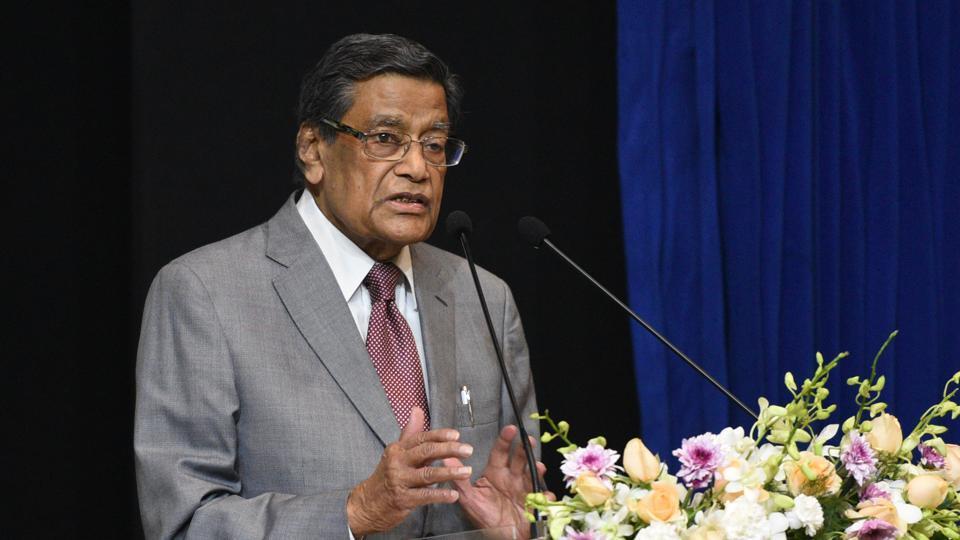
HT had first reported on Monday that Venugopal is likely to continue as the Attorney General with the Centre’s willingness to grant him the extension for the third time.
Venugopal, 91, was initially appointed as Attorney General on July 1, 2017. The 15th person to serve as Attorney General for India, he had succeeded Mukul Rohatgi, who was the Attorney General from June 2014 to June 2017.
While the last two extensions for Venugopal were for a one-year term, the latest extension is only for three months, indicating the government may have to scout for a new Attorney General soon.
The Attorney General is the central government’s top law officer and chief legal advisor who represents the Government of India in crucial cases before the Supreme Court.
Venugopal is a doyen at the Bar and an internationally known jurist who has appeared in many landmark cases in the Supreme Court and different high courts.
He held the office of the additional solicitor general of India during the Morarji Desai government in 1977. He became the oldest person to become the Attorney General when he accepted the position in 2017. He was conferred Padma Vibhushan – the second-highest civilian honour in India – in 2015.
Venugopal appeared in several important cases, including the 2G telecom spectrum litigation in which he was the amicus curiae. He also argued against reservation for OBCs in the Mandal case. He represented veteran BJP leader LK Advani in the Babri masjid demolition case in the Supreme Court.
As Attorney General, Venugopal has successfully defended the central government before the top court in several important cases, including Aadhaar, Rafale, SC/ST Amendment Act, and Char Dham project.
In his next tenure, Venugopal is expected to appear for the Centre in some crucial cases, including electoral bond, abrogation of Article 370, the new tribunal reforms law and challenges to the Places of Worship Act.
Venugopal is particularly known for his deep knowledge and understanding of constitutional law. He has strong views of judicial reforms and has often spoken on the need to usher in more transparency in the process of judicial appointments apart from adopting urgent measures to tackle the ever-mounting pendency.
In December 2020, while arguing a matter before the top court on sensitisation of judicial officers, Venugopal favoured appointment of a woman judge as the Chief Justice of India (CJI).
Incidentally, in August 2021, the collegium recommended elevation of justice BV Nagarathna from Karnataka high court to the Supreme Court. Justice Nagarathna was subsequently appointed as a judge in the top court and is poised to take over as the first woman CJI in 2027.
Venugopal is also a strong proponent of live-streaming of court proceedings across India so as to make court hearings accessible to everyone.



