
 E-Paper



‘No compromise on borders’: PM Modi spells out India’s stance on row with China
PM Modi’s sharply-worded statement was aimed not just at reassuring the country that the government was taking steps to protect India’s sovereignty but was also designed to deliver a stern message to Beijing.

 Prefer HTon Google


India wants peace but is capable of giving a befitting reply if provoked, Prime Minister Narendra Modi said on Wednesday, his first remarks on the border clash between soldiers of the Indian and Chinese army in eastern Ladakh on Monday evening. PM Modi’s sharply-worded statement was aimed not just at reassuring the country that the government was taking steps to protect India’s sovereignty but was also designed to deliver a stern message to Beijing.
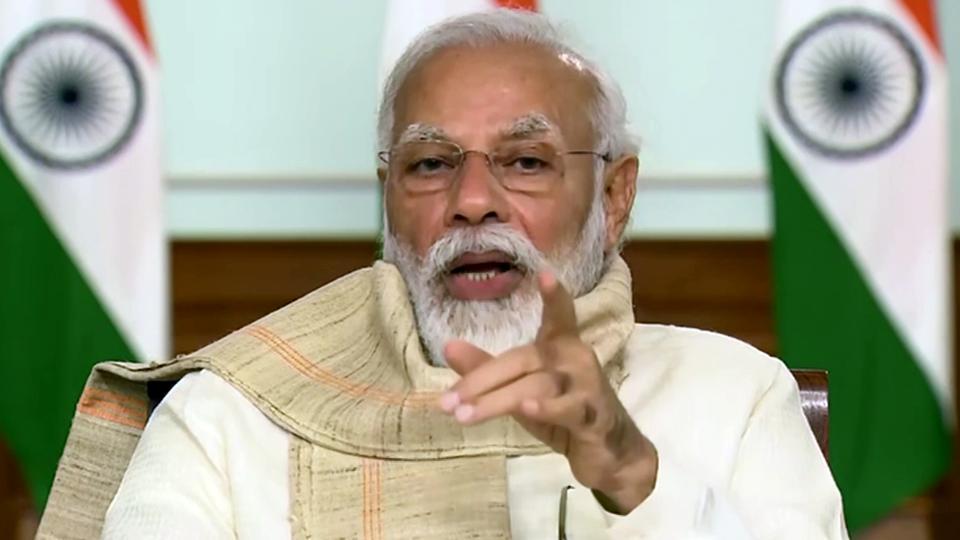
India has always promoted peace among nations, PM Modi said on Wednesday afternoon. PM Modi, who is meeting chief ministers via video conference on the Covid-19 pandemic, started with a reference to the border clash in Galwan Valley that cost 20 lives on the Indian side.
Over the next five minutes, PM Modi summarised his government’s stand on the clash and his determination not to let anyone stop India from retaliation if someone does target the country’s sovereignty.
In our neighbourhood, India’s constant effort has been that differences should not become disputes, PM Modi said a throwback to one of the principles that India and China had pledged themselves to at his meetings with Chinese President Xi Jinping.
India has blamed China for the border clash that New Delhi says could have been avoided had the Chinese soldiers scrupulously followed the agreement and not tried to unilaterally change the status quo in the Galwan region.
Colonel Santosh Babu and his men were outnumbered by the Chinese troops who attacked the Indian soldiers, but they still struck back at their adversary. In the process, Col Santosh, according to one estimate by the army, killed or critically injured over 40 Chinese soldiers including a commander of the People’s Liberation Army.
PM Modi referred to the extraordinary courage that they displayed.
“The country will be proud to know that they died after they killed their adversaries (Desh ko Is baat par garv hoga ki vae maarte, maarte, maren hai),” PM Modi said.
Also read | PM Modi calls all-party meeting on June 19 to discuss India-China border situation
The Chinese military or the foreign office has not made public the casualties suffered by the PLA.
Officials said PM Modi’s statement had omitted any reference to dialogue to signal that the government was not looking for a way out. To the contrary, PM Modi underscored that no one could stop India from hitting back if its sovereignty was targeted.
“I would like to assure the nation that the sacrifice of our jawans will not be in vain. For us, India’s unity and sovereignty is the most important and no one can stop us from protecting it. No one should have a doubt on this point. India wants peace but is capable of a befitting reply in every circumstance,” PM Modi said.
This clear message comes against the backdrop of Chinese PLA’s introducing a fresh claim over the Galwan Valley. This was one of the few areas along the Line of Actual Control where the difference in perception between the two sides was minimal. In New Delhi, the Chinese statement is seen as an effort to create fresh areas of differences even as older differences turn into disputes.
Defence Minister Rajnath Singh, who was also present at the chief minister’s conference along with Home Minister Amit Shah, had earlier in the day described the loss of soldiers “deeply disturbing and painful”.
“The nation will never forget their bravery and sacrifice. My heart goes out to the families of the fallen soldiers. The nation stands shoulder to shoulder with them in this difficult hour. We are proud of the bravery and courage of India’s bravehearts,” the defence minister tweeted.
Shortly after the prime minister’s intervention, Amit Shah also paid rich tributes to the fallen soldiers.
“The pain of losing our brave soldiers while protecting our motherland at Ladakh’s Galwan can not be put in words. Nation salutes our immortal heroes who sacrificed their lives to keep Indian territory safe and secure. Their bravery reflects India’s commitment towards her land,” Shah said.


