E-Paper



Odisha’s melanistic tiger safari, announced by Naveen Patnaik, may open in Oct
Odisha’s Simlipal Tiger Reserve is the only tiger habitat in the world with melanistic tigers, which have broad black stripes running across their bodies

 Prefer HTon Google


BHUBANESWAR: Odisha will soon have a melanistic tiger safari near the Similipal Tiger Reserve in Mayurbhanj district, chief minister Naveen Patnaik said on Wednesday.
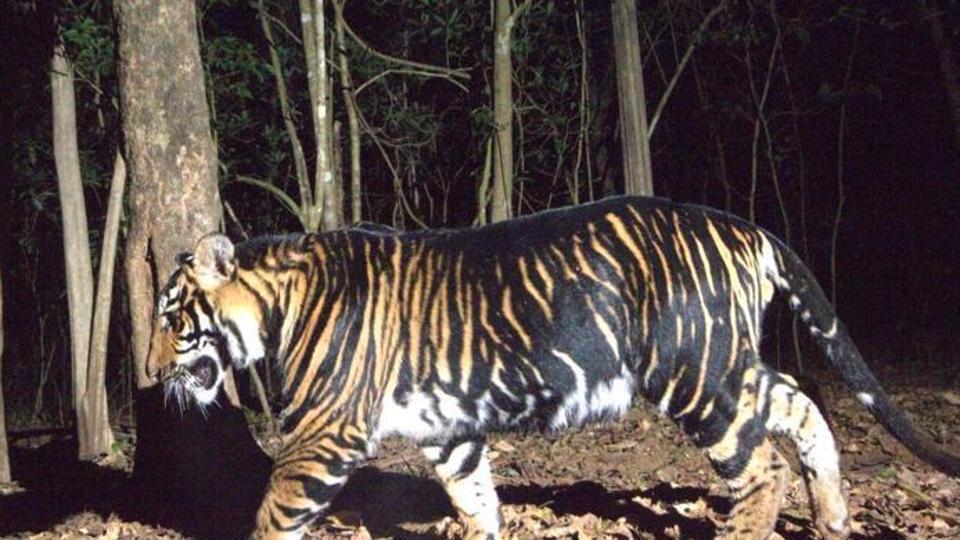
“Glad to announce that Odisha is setting up an exclusive Melanistic Tiger Safari near Similipal Tiger Reserve in Mayurbhanj district. Tourists and visitors can now have a glimpse of the rare and majestic species found only in Odisha,” said Patnaik
Odisha’s Simlipal Tiger Reserve is the only tiger habitat in the world with melanistic tigers, which have broad black stripes running across their bodies and thicker than those seen on normal tigers, so much so that their tawny skin colour is barely visible.
Principal Chief Conservator of Forests (Wildlife) Susanta Nanda said the safari will one-of-its-kind facility.
Nanda said the melanistic tiger safari will come up on around 200 hectares (2 sqkm) near Similipal for which the National Tiger Conservation Authority (NTCA) has given the required approval in this regard.
“The project is likely to be opened for visitors in October this year. The forest department will shift three melanistic or black tigers and two other big cats from Nandankanan Zoological Park in Bhubaneswar to the safari near Similipal. The black tigers born through captive breeding will be kept at the safari,” said Nanda.
Officials said tigers from Nandankanan Zoo and tigers who are not fit for wild shall be moved to the safari in an open enclosure.
According to the 2022 All India Tiger Estimation, 10 of the 16 tigers recorded in Similipal melanistic.
The reserve first reported the presence of melanistic tigers in 2007.
Two and half years ago, researchers, including scientists from the National Centre for Biological Sciences (NCBS), Bengaluru said that a single mutation in the gene Transmembrane Aminopeptidase Q (Taqpep) caused the tigers to develop black stripes and a distinct pattern.
During the study, the researchers identified a genetic variant that causes a or observable trait change (called phenotype) in tigers. The genetic analysis of other tiger populations in the country and computer simulations suggested that the melanistic tigers in Similipal may have arisen from a very small founding population of tigers and are inbred.