E-Paper



Onion prices may ease as fresh kharif supplies boost market availability
The all-India average retail rate was ₹52.99 per kg on October 10, nearly twice the price recorded a year earlier.

 Prefer HTon Google


Onion prices are likely to ease in the coming weeks as the increase in fresh kharif supplies along with the remaining stocks of old-crop will improve availability of the kitchen staple, people familiar with the matter said. The expected cooling of retail prices, which at present remain nearly double the last year’s prices, is likely to bring respite to people ahead of the festive season.
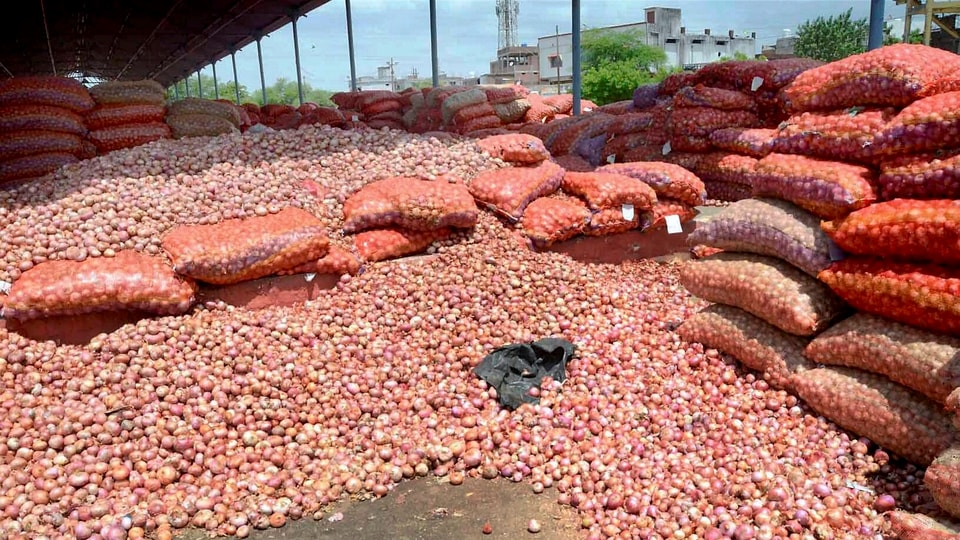
The all-India average retail price of onion stood at ₹52.99 per kg on October 10, marginally lower than ₹53.10 per kg a month ago and significantly higher than ₹26.65 a year ago, according to government data. Similarly, wholesale prices averaged ₹4,591 per quintal, up 2.4% over the past month and 123.3% from a year earlier.
Traders expect increased arrivals from Maharashtra and other growing states to improve availability through November. “Kharif arrivals have begun in many markets,” said Vikas Singh of the Horticulture Produce Exporter Association, adding that domestic demand was weak and exports negligible.
Maharashtra and Madhya Pradesh have sufficient old-crop stocks to meet demand until the third week of November, Singh said. Supplies from Karnataka, Telangana and Andhra Pradesh are expected to continue until the end of November, while Maharashtra’s early kharif crop is likely to begin arriving in small quantities by the end of October, he said.
Singh said Maharashtra’s early kharif crop was expected to be good in both production and quality. “Supplies from Rajasthan’s Alwar region are also expected to reduce north India’s dependence on onions transported from Maharashtra,” Singh said.
Also read: No relief on the chopping board yet: Why onion costs are over ₹50 per kg despite supply push
Government steps up buffer-stock disposal
The Union government has also stepped up its buffer-stock disposal programme to moderate prices. In a statement on October 7, the Centre said it had expanded onion disposal operations to 123 cities and reported that kharif onion acreage was estimated to be 5% higher than last year.
However, the fall in wholesale prices has yet to translate into a meaningful reduction in average retail rates. The all-India retail price declined just 0.2% over the month, consumer affairs ministry data showed.
Also read: Maha orders probe into alleged irregularities in onion procurement from Nashik farmers
Criticism of the stabilisation policy
Deepak Pareek, founder of HnyB, said the numbers indicate that the government’s onion stabilisation policy was not working. Selling buffer stock at ₹35 a kg through select counters might make for good optics, but it completely ignores market scale, Pareek said.
“India consumes roughly 50,000 tonnes of onions daily; releasing a few thousand tonnes into select metro pockets is a drop in the ocean. As long as the wholesale pipeline remains tight ahead of fresh kharif arrivals, token counter sales will never bend the open-market rates of ₹50 to ₹70 that families face at neighborhood stalls,” Pareek said.
Also read: Egyptian onions arrive at Vashi APMC, sold at ₹38/kg as Maharashtra variety prices soar to ₹50/kg
The intervention, he added, also fails on quality. “Months in humid substandard storage leave buffer onions soft, degraded, and sprouted. Everyday shoppers looking for firm, fair-quality bulbs for household cooking will not settle for compromised produce,” Pareek said.
Frequently Asked Questions