
 E-Paper



Palestine recalls Pakistan envoy who attended Hafiz Saeed rally as India objects
India reacted with anger after photos of the Palestinian ambassador to Pakistan, Walid Abu Ali, sharing the stage with Hafiz Saeed and addressing the rally in Rawalpindi were circulated on social media on Friday.

 Prefer HTon Google


Palestine on Saturday recalled its ambassador to Pakistan after India expressed anger and concern over his presence next to Lashkar-e-Taiba founder Hafiz Saeed at a rally organised by extremist and radical groups in Rawalpindi.
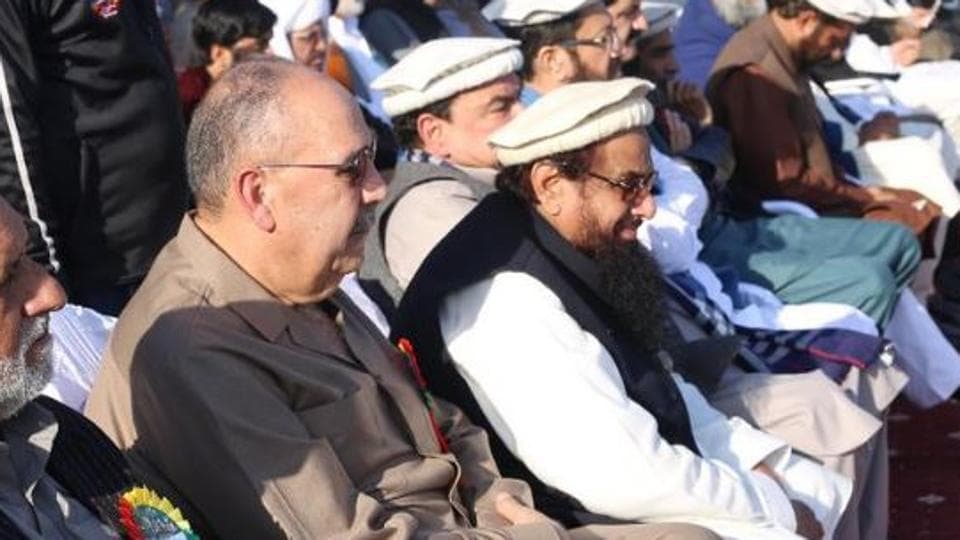
India issued a strongly worded demarche after photos of Walid Abu Ali sharing the stage with Saeed and addressing the rally organised by the Difa-e-Pakistan Council (DPC) were circulated on social media on Friday.
Barely hours after the Indian statement, a Palestinian official told Hindustan Times: “The ambassador has been recalled from Pakistan and asked to report to Ramallah. Palestine is part of the world community and it is committed to fighting terrorism. This shouldn’t have happened.”
The Palestinian ambassador to India, Adnan Abu Al Haij, was quoted as saying that his government supported India “in its fight against terrorism” and had decided to call back its Pakistan envoy.
A statement in Arabic issued by the Palestinian foreign ministry said the envoy in Pakistan was recalled on the “direct instructions” of President Mahmoud Abbas. The envoy’s participation in the rally “in the presence of individuals accused of supporting terrorism is an unintended mistake, but not justified”, it said.
Read: Palestine expresses regret after its Pakistan envoy spotted with Hafiz Saeed
A statement issued by India’s external affairs ministry said the Palestinian side “conveyed deep regrets over the incident and assured the government of India that they are taking serious cognisance of their ambassador’s presence” at the rally. It said that the Palestinian side had conveyed that it “highly values its relationship with India and stands with us in the war against terrorism, and will not engage with those who commit acts of terror against India”.
The envoy’s presence at the rally came barely 10 days after India joined 127 other members of the United Nations to back a resolution criticising US President Donald Trump’s decision to recognise Jerusalem as the capital of Israel. The countries disregarded Trump’s threat to cut aid to the countries that voted for the resolution.
India and Palestine are also discussing a possible visit to Ramallah by Prime Minister Narendra Modi in February – seen by some here as a conciliatory gesture in connection with Israeli Prime Minister Benjamin Netanyahu’s visit to India in January. If Modi’s visit goes ahead, it will be his first to Palestine.
India formally conveyed its concerns about Walid Abu Ali’s “association with terrorist Hafiz Saeed, who is proscribed by the United Nations”, to the Palestinian ambassador in New Delhi and to the minister of foreign affairs in Ramallah.
Saeed used Friday’s “Tahafuz Baitul Maqdas” rally to launch a broadside against India and to rake up the Kashmir issue by linking it to Palestine. “We consider it our prime responsibility to liberate Kashmir from India. We will free Kashmir in fulfilment of Jinnah’s dream,” he said, speaking in Urdu.
Saeed also referred to the controversial meeting between Kulbhushan Jadhav, an Indian national sentenced to death by Pakistan for alleged spying, and his wife and mother in Islamabad on December 25.
“Pakistan let the family of Kulbhushan meet him out of kindness and goodwill, but India sent them with spy devices,” he claimed.
The rally featured several jihadi leaders, including Saifullah Khalid of the Milli Muslim League, a political party formed by Saeed, and Abdul Rehman Makki of the Jamaat-ud-Dawah (JuD) The event was attended by thousands, including members of the JuD.
The DPC is a grouping of some 40 extremist and jihadi groups that was formed by Hafiz Saeed and other extremists in 2012. It has campaigned for long for snapping ties with India and the US.



