
 E-Paper



India-US trade deal in ‘last stage’, says EAM Jaishankar: ‘It’s never done until it’s done’
The trade deal figured in Jaishankar’s meeting with Rubio this week after the secretary of state visited India for the second time in less than five months.

 Prefer HTon Google


The India-US trade agreement is in its “last mile” but “it’s never done till it’s done”, external affairs minister S Jaishankar said on Thursday about efforts by the two countries to find common ground on the deal they have negotiated for more than a year.
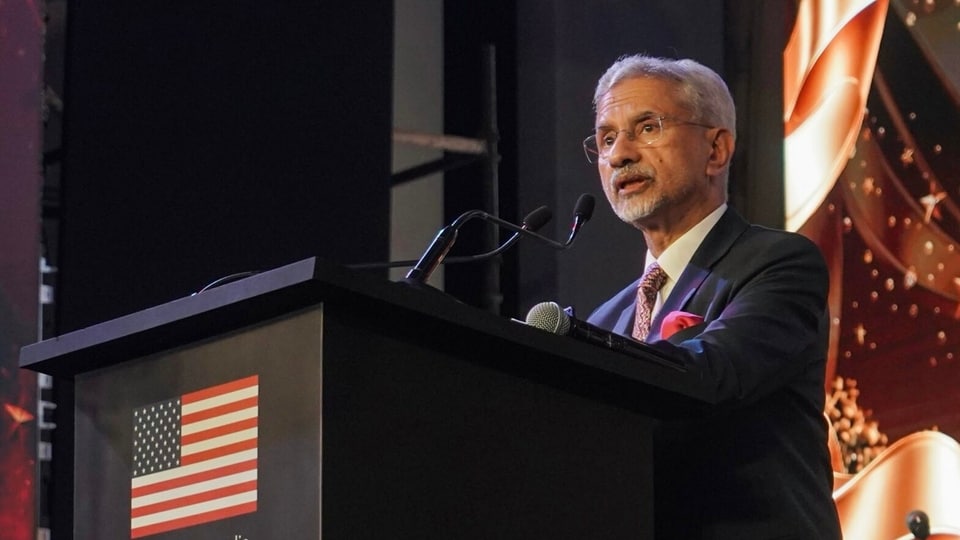
US secretary of state Marco Rubio and commerce minister Piyush Goyal too have spoken of the two sides moving towards the final stages of the trade deal, he said at a session at the NDTV World Summit.
“But…often the last mile or the penultimate miles do pose their challenges. I think the [negotiating] teams are working through them now,” Jaishankar said. “If you’re asking me to tell you what exactly those challenges are, I’m sorry I won’t. That’s for the negotiators to sort out.”
Also Read I US ‘very close’ to India trade deal; energy needs considered in Russia sanctions waiver: Marco Rubio
S Jaishankar addresses India-US ties
The trade deal figured in Jaishankar’s meeting with Rubio in Mumbai this week after the secretary of state visited India for the second time in less than five months. Bilateral ties have been hit by the Trump administration’s unpredictable trade policies, immigration restrictions that have impacted Indian professionals and growing ties between Washington and the Pakistani military leadership.
Jaishankar said he failed to understand criticism by opposition parties of his visit to Mumbai to meet Rubio, which Congress leader Rahul Gandhi had described as a “summoning”.
“They have something against Mumbai. It’s our financial capital, it’s our Bollywood capital. It has got so much going for it. Maybe Mumbai doesn’t like them, I have no idea why they have this reservation,” the minister said.
Jaishankar listed examples of Indian leaders travelling out of New Delhi to meet foreign dignitaries, including two instances involving Congress leaders – former PM Indira Gandhi met Pakistani leader Zulfikar Ali Bhutto in Shimla in 1972 to sign the Simla Agreement, and Union minister Salman Khurshid hosted a lunch for then Pakistan PM Raja Pervez Ashraf in Jaipur in 2013.
“We are adults, let’s have an adult conversation,” he said, taking a swipe at Rahul Gandhi.
On Pakistan and terrorism
Jaishankar also spoke on the issue of Pakistan-backed terrorism and said India does not want to wait for the US and other countries to understand its concerns on terror. He emphasised that the world takes note only when a country responds to terrorism, and India has done so through Operation Sindoor and the Balakot air strikes.
While India desires good relations with Pakistan, it is unwilling to overlook terrorism to achieve this, he said. He responded to a question on Pakistan’s military leadership wooing the Trump administration in the US and the perception that Washington hasn’t fully understood New Delhi’s concerns on cross-border terror by saying the issue is much broader.
“If Washington understood it so well, why didn’t we act in 2008, when 26/11 happened? And when we did act, we didn’t act because Washington understood it, we acted because we understood it,” he said. “First of all, forget about somebody else getting terrorism right. Get it right yourself. If you don’t have the clarity of thought, the conviction to fight back against terrorism, don’t think somebody else is going to do that job for you.”
India’s counter-terror policy has evolved and this was evident in the response to cross-border terror with last year’s Operation Sindoor, the Balakot air strikes in 2019, and the surgical strikes across the Line of Control in 2016.
“The evolution is that if terrorism goes on, it will not be business as usual. It is not, you will take a break and then say, ‘Okay, now it has been a long time. Let me get back to talking to them again’, which is what the pattern was,” he said.
“The 26/11 attacks should serve as a reminder of the enormity of what is being done to us and the necessity for us to respond. And when you respond, the world will take note. When you don’t respond, the world will play games.”
When Jaishankar was asked if India, which has made it clear that terrorism and talks cannot go together, still wishes to have better relations with Pakistan, he said the reality was Islamabad was using terrorism as state policy.
“Of course we want good relations with Pakistan, we want that with all our neighbours but will I overlook terror for that? I will not. The government is very clear,” he said. “The national mood on Pakistan changed after 26/11. Till then, there were people who would keep making these arguments. After 26/11, only the government of the day made the argument.”
United Nations and protests
Jaishankar responded to another question on whether the UN has “double standards” on protests in different countries by saying that the answer is “pretty obvious”.
The Office of the United Nations High Commissioner for Human Rights and UN human rights experts have expressed concern over the government’s handling of protests associated with the Cockroach Janata Party (CJP) and other groups.
“That is a bigger issue because you get into what the UN is, what positions they take, and so forth. Let’s be straightforward about it, I am making this assessment and observation about what is happening across multiple countries and societies. This is not a comment specific to India, the Indian subcontinent or France,” Jaishankar said.
“We have seen that in many cases, when these moments occur, there is external encouragement and external support. There is a set of actors who see this as a tool of influence to advance their agenda. It is not a secret – even those who do it openly admit to it, they are not hiding it,” he said.
Also Read I 'Very close, some items left': Marco Rubio optimistic about India-US trade deal
Jaishankar also spoke about his choice of streaming shows based on diplomacy and how closely they reflect realities. He said he watches The Diplomat on Netflix but noted that the series presents diplomacy in a distinctly American way.
“I’m watching The Diplomat but I want to say one thing. No value judgement here but The Diplomat is very quintessentially American. Even then, when you make these shows, you make them because you want to dramatise things,” he said. “If I made a real show about how diplomacy works, people would go to sleep.”
Jaishankar added, “I look at it with a somewhat critical eye. I relate to some of it. I looked at the ambassador having reflux and told myself, ‘Okay, that problem I know.’ So the point is, I travel, I read, I do everything which you guys do. But it’s always a bit of a busman’s holiday. When you look at some of these things that are in your line of work, you can’t disconnect from that line of work.”.”
Deep Dive


