
 E-Paper



Supreme Court expands wetland demarcation mandate, cites drinking water protection
The court said it cannot remain unmindful of the consequences flowing from water bodies remaining unprotected

 Prefer HTon Google


The Supreme Court has expanded the scope of identification and demarcation of wetlands to all water bodies across the country, observing that courts cannot be unmindful when precious water bodies, being sources of drinking water, remain unprotected.
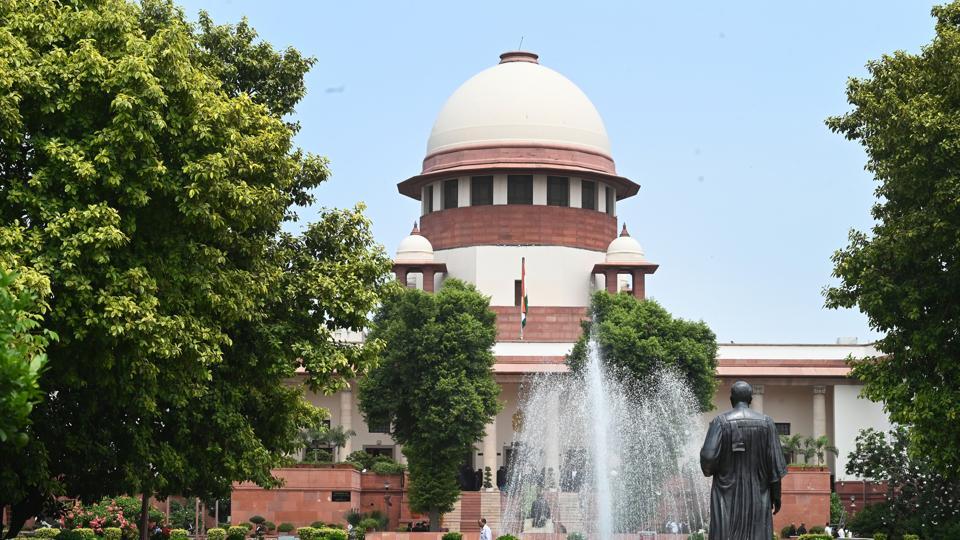
A bench of Justices Aravind Kumar and Vipul M Pancholi passed the order this month in petitions seeking preservation of wetlands.
In December 2024, the court directed states and union territories (UTs) to complete ground truthing and physical demarcation of all wetlands identified in the 2021 Space Applications Centre (SAC) Atlas within three months, as per their statutory obligation under the Wetlands (Conservation and Management) Rules, 2017.
The court, through subsequent orders over two years, sought responses from states on the extent of work carried out on ground truthing, or physical verification of the wetlands SAC identified under ISRO’s Wetlands Atlas, and physical demarcation of the actual boundaries of these water bodies.
The bench called preservation of water bodies, including wetlands, crucial for drinking water needs. “The water bodies being the source of drinking water is precious and would encompass within the four corners of right to live (Article 21), as guaranteed under the Constitution of India,” the bench said in the October 12 order.
The petitioners, including birder and environmentalist Anand Arya, informed the bench that the states and UTs have failed to demarcate the wetlands.
Several states said that the wetlands identified by the 2021 Wetlands Atlas cannot be traced. In some cases, they said that the wetlands do not need to be protected as they fall outside the definition of wetlands under the 2017 Rules.
The bench said the court cannot remain a mere spectator or be unmindful of the consequences flowing from water bodies remaining unprotected as it posted the matter on November 16. “We call upon all the states to file the affidavit indicated hereinabove within an outer limit of four weeks from today indicating the status of ground truthing being done (of wetlands) including other water bodies.”
The court described Tamil Nadu as a model state for undertaking the demarcation and ground-truthing exercise in four stages. Tamil Nadu has 28,898 wetlands. The state has so far demarcated 2,614 wetlands and sought six months to identify the remaining ones. As an exception, the court permitted Tamil Nadu to complete the demarcation of all identified wetlands within four months.
The court rued that even after nine years from the date of publication of the Rules, ground truthing and demarcation have not been completed or concluded. It directed states and wetland authorities to undertake the exercise as adopted by Tamil Nadu and file a compliance affidavit in four weeks indicating the mode and method of undertaking the exercise.
In August 2025, the court noted that the Atlas identified some 555,557 wetlands which are less than 2.25 hectares and asked states to spell out steps being undertaken to protect them.
The court, in its October 12 order, reiterated this direction, asking states to identify, specify and mark these wetlands as well.


