E-Paper



GTA VI developer's success 'a quiet sense of vindication' for a founder in Bengaluru
Dhruva Interactive's founder looks back on how Rockstar was brought to the table and explains why the sale to Rockstar was both a loss and a validation.

 Prefer HTon Google


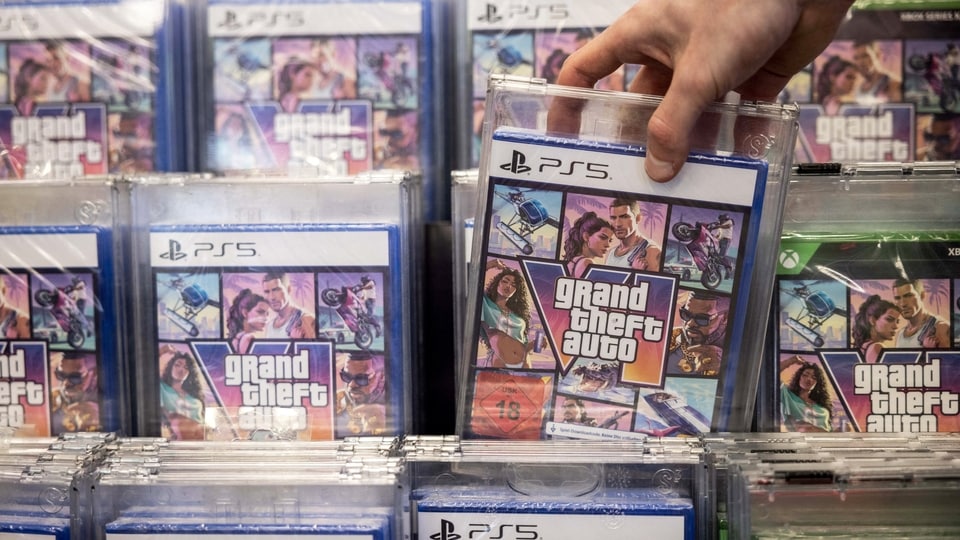
As Grand Theft Auto (GTA) VI reaches millions of players worldwide after its November 19 release, part of its developer Rockstar Games’s current story leads back to a small office on Indiranagar’s 12th Main in Bengaluru years back. Rockstar India, based in the Karnataka capital, grew out of Dhruva Interactive, India’s first game development studio. Rockstar bought the studio in 2019, along with roughly 300 of its people.
Its founder, Rajesh Rao, has kept a low profile since he stepped away after the deal. In a rare interview, he told Hindustan Times the launch of GTA VI gave him “a quiet sense of vindication” for an industry that barely existed when he started in 1997.
Rao looks back on the phone call that brought Rockstar to the table, explains why he turned down cheap, high-volume work and why the sale to Rockstar was both a loss and a validation. Most pointedly, he argues that “GTA-scale” is the wrong goal for India. The real test is whether Indian studios can own original IP. With more than 500 million players, he says, the home market is finally ready. Read the full interview:
Q1) In 1997, India had almost no gaming industry. What made you start Dhruva Interactive, and what did that first year look like? Who were the clients, and what was the work?
Deep Dive

Youth, irrational exuberance, and naivety. There is no other explanation for starting a games company in India in 1997 — there was no market, no ecosystem, and no consumer. I had started a multimedia company right out of engineering college in 1995, building touchscreen kiosks and training modules from a small Indiranagar 12th Main office where the team practically lived and worked. In February 1997, an Intel evangelist pitching the Pentium II showed us Shiny Entertainment’s MDK and signed us into their Early Access Technology Program to build a 3D rendering engine. We reinvented ourselves as Dhruva Interactive — named after the pole star, the star that shows the way — in March 1997.
What followed was 20 months of R&D funded by our multimedia cash flow. A trip to E3 in Atlanta in 1997 made it clear we had to show up with something genuinely impressive. We built a software 3D engine optimised for the Pentium that ran without hardware acceleration, making it viable for a wider mass market.
ALSO READ | The real cities and long waits that keep GTA fans coming back for more
On November 26, 1998 — Indian gamedev’s “Hello World” moment — we signed our first contract: the PC port of Mission: Impossible for French publisher Infogrames. The global press wondered who we were, since India didn’t exist on the gaming map. We grew from five to 15 people and delivered a solid beta before Infogrames shelved it. Still, it gave us a real game to show, a strong recommendation, and a hard lesson in full-game economics. With no local market to sustain original titles, survival pushed us toward global services.
Q2) No college taught game development then. Where did you find your first people, and how did you turn them into game developers?
India has never lacked raw engineering or fine arts talent — the gap was game sensibility. In 1997, most of our hires had never seen a game console. We put consoles in an office room and had new hires spend their first two weeks just playing games before talking about work. We were asking people to learn an entire medium on the job while building for global players.
What we lacked in institutional knowledge, we made up for in resourcefulness. In 2001, to get on the radar of US and European publishers, we built a Wild West demo called Saloon. None of us in Bengaluru had ever been inside a saloon, so we researched every detail on Google and built it from scratch—an anecdote Thomas Friedman later featured in The World Is Flat. The demo impressed publishers, and we landed work.
Still, you pay a heavy price for being a pioneer. For ten years, we learned the hard way—compounded by the fact that early Indian studios worked in self-imposed silos, each thinking we were smarter than the rest. Realizing in 2007 how much time we had wasted in isolation is why I started the NASSCOM Game Developer Conference (now IGDC): a platform built for developers, not suits, so the next generation wouldn’t repeat our mistakes.
Q3) GTA VI is out, and part of it was built in Bengaluru by Rockstar’s India studio, which grew out of Dhruva Interactive. As the person who built that team, what went through your mind when you saw the launch?
To be transparent, I’ve kept a low profile since stepping away after the 2019 acquisition and have no idea what my former team worked on at Rockstar — I’ve never asked. What I did feel was a quiet sense of vindication for the Indian ecosystem. Nearly 30 years ago, the idea that a team built in Bengaluru could operate at the pinnacle of global AAA production would have sounded absurd. Seeing India acknowledged in that conversation is a milestone for the thousands of Indian artists and engineers who spent decades proving their craft.
Q4) How many of the Dhruva team moved to Rockstar in 2019, and how many are still there today?
Roughly, 300 people transitioned into Rockstar India when Rockstar acquired Starbreeze’s stake in May 2019. As for how many are still there today, I don’t know — I stepped back after the transition and don’t track their internal numbers.
Q5) Had Dhruva worked with Rockstar before the acquisition? How did the deal come about, and who approached whom?
No, we had never worked with Rockstar before. By late 2018, Starbreeze — which had acquired Dhruva in 2017 — was undergoing a major financial restructuring and needed to divest assets. As Dhruva’s CEO, I was tasked with finding a buyer. I picked up the phone and called a few companies I knew would be interested, Rockstar among them, and the acquisition closed in May 2019.
Q6) Rockstar is famously secretive and rarely buys studios. Why do you think it chose to buy a team in India outright rather than simply outsource work to one?
I can’t speak for Rockstar’s strategy, only from an industry perspective. On massive, multi-year AAA titles where secrecy and an uncompromising quality bar are everything, you want dedicated talent inside your own firewall — deeply embedded in your pipelines, tools, and creative culture.
Building a 300-person AAA-ready studio from scratch in India takes a decade of trial and error. Acquiring a 22-year-old team with seasoned leadership and dozens of AAA game credits lets a publisher bypass years of team-building effort.
Q7) Many readers will ask this: on a game like GTA VI, are Indian teams doing core creative work, or production work on decisions made elsewhere? How has that changed since Dhruva’s early days?
In the late 1990s and early 2000s, global publishers barely trusted Indian studios with basic, repetitive assets. Over time, teams here earned the credibility to handle complex AAA production — full environments, hero vehicles, technical art, and co-development on franchises like Forza Motorsport, Halo, PayDay, and Quantum Break. That said, core creative direction on Western franchises naturally sits with the IP owners abroad. True creative leadership in India won’t come from services or captive studios — it comes when Indian studios own the IP.
Q8) With the sale, India lost one of its few independent studios of global standing. Looking back, do you see it as a gain for Indian game development, a loss, or both?
Both. We lost India’s oldest, most recognisable independent game studio brand — and personally, watching something you spent over two decades building fold into another entity is never simple.
At the same time, it was a massive validation for Indian game development. An acquisition by a studio of Rockstar’s stature sent an unmistakable global signal about the calibre of talent here and gave hundreds of Indian developers a seat at the highest table in AAA production. That alumni network is already lifting the ecosystem — many Dhruvaites now work at AAA studios worldwide, and several have started their own companies.
Q9) You chose to stay away from mass, commoditised work. What did that cost Dhruva, and what kind of work did you turn down? And what did it achieve?
We always viewed services as a pathway to building our own products someday, so taking on complex, challenging work mattered. We deliberately avoided high-volume, low-margin, commoditised work — besides, Chinese outsourcing vendors were already much larger and cheaper, so competing on price was a losing game.
The cost of this strategy was slower top-line growth; we walked away from easy revenue and never scaled headcount like traditional IT firms. What it bought us was trust. We built a roster of repeat AAA clients — Microsoft, Sony, Codemasters, EA, Starbreeze — who came to us for quality and reliability, not price. In later years we had a lot more business than we could take on. That reputation is why Starbreeze and later Rockstar saw strategic value in Dhruva.
Q10) Was there a particular project after which the big global studios began to take an Indian team seriously?
It was a chain of moments, driven by a handful of people willing to bet on an unknown Indian team.
First, in 1998, Eric Motte who was then CTO at French publisher Infogrames was instrumental in giving us a break and signing us up to work on the PC port of Mission: Impossible. That gave us a very credible demo, which I showed Ed Fries—then heading Microsoft Gaming Studios—I accosted him at the corner of 4th and Market during GDC, around 2001, showing him the game on my laptop, and that opened doors at Microsoft. Around the same time, Codemasters from UK kickstarted our art services by trusting us with cars for their racing games.
The real AAA turning point came in 2002, when we were chosen for Microsoft’s new racing franchise, Forza Motorsport. It became one of the most enduring partnerships in game outsourcing—we worked on every Forza title for over 15 years. Word of mouth from that work brought in more Microsoft studios, Sony, and EA, building a body of work across Forza, Forza Horizon, TOCA Race Driver, Formula 1, Halo, Quantum Break, and Spider-Man, to name a few.
Q11) Indian talent now works on games at GTA’s level, yet India has very few original hit games. Could India build its own GTA-scale game, and what’s missing: capital, owning the IP, ambition, or something else?
“GTA-scale” is the wrong benchmark — even most Western and Japanese studios can’t and shouldn’t chase a billion-dollar, decade-long title. The real question is whether India can build globally respected, commercially successful original IP.
The same global infrastructure — engines, tools, storefronts — that let Indian teams compete in AAA services now exists for original IP. And now there’s AI, that lets even small teams make great games. Geography, talent, and ambition are no longer excuses, and we’ve already seen breakout successes like PlaySimple and Moonfrog. Three gaps remain:
Patient risk capital: Indian investors are conditioned for SaaS and consumer-internet timelines, not 3-to-5-year, hit-driven creative cycles where games fail and burnt investors don’t return.
Creative leadership and game sensibility: We’ve trained world-class artists and engineers, but fewer experienced directors, designers, and producers who have shipped original IP. Players like Zynga setting up in Bengaluru helped seed that leadership, with alumni going on to found strong startups.
A paying domestic market: For decades, you couldn’t build a sustainable business for Indian players alone. That is finally changing.
The path forward isn’t jumping straight to a GTA — it’s building breakout indie and AA original games, owning the IP, and compounding that experience over the next decade. And of course, India is a mobile-first market.
Q12) If you were starting Dhruva today, what would you do differently?
I never started Dhruva to be a services company. In 1997, I wanted to be the Yash Chopra of games for India — building iconic entertainment for a mass-market Indian audience. Indians love Indian content — look at our film, TV, and music industries — and games are no different. We need games rooted in local social and cultural context, in our own languages.
In 1997, that dream was foolish. There was no domestic market, payment infrastructure, or purchasing power. We kept reinvesting services profits into original games across PC multiplayer, Java mobile, and smartphones—eventually spinning that out as GameTantra. Ironically, international releases like Maria Sharapova Tennis made money, while our India bets proved that being too early is the same as being wrong. Survival forced us to double down on services.
Nearly 30 years later, the domestic market is finally arriving. We have over 500 million players and growing purchasing power. If I were a young founder starting today, I would chase that original dream from day one. Personally, I’ve played my innings as a founder. Anyone at IGDC this year saw hundreds of studios and a young, capable generation of torchbearers. At this stage, I’d rather put my energy into mentoring them and strengthening the ecosystem through IGDC and GDAI than jump back into the ring myself.