
 E-Paper



Coronavirus: Delhi’s hotels check in to new normal
As city hotels reopen for business, with cautious optimism, after five months of lull owing to the Covid-19 pandemic, guests are being subjected to experiences that were previously unheard of in the hospitality industry.

 Prefer HTon Google


Handshakes these days at city hotels are a thing of the past, having been replaced with the traditional namaste offered by mask-wearing staff — their usual smile, ubiquitous in the hospitality sector, now hidden. Welcome drinks have made way for a quick pump or two of hand sanitising liquid into the hands of the guests.
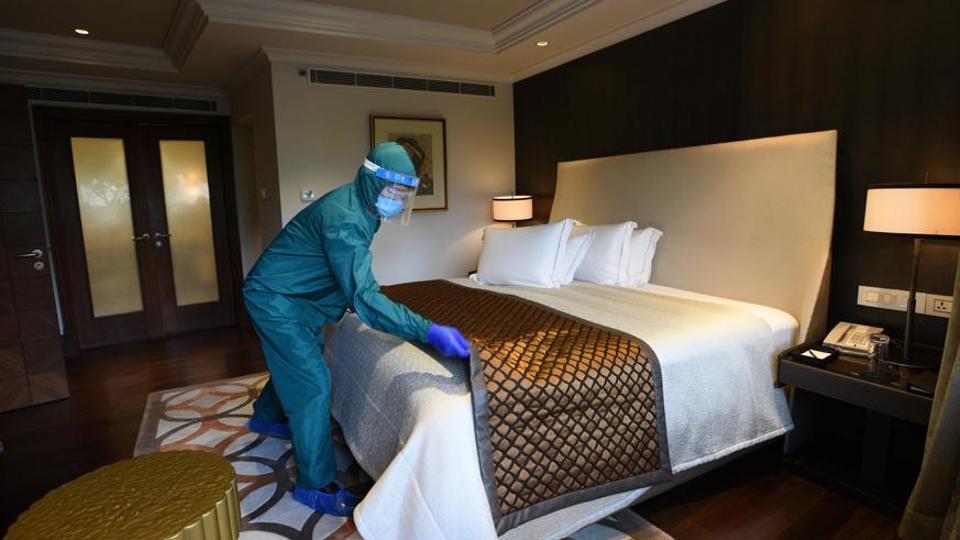
As city hotels reopen for business, with cautious optimism, after five months of lull owing to the Covid-19 pandemic, guests are being subjected to experiences that were previously unheard of in the hospitality industry.
Each guest is made to sign a form, declaring that they do not suffer from Covid-19 at the time of check-in. Any accessories/stationery being carried by them are also being collected and put inside UV sanitiser boxes. The UV sanitiser boxes have also made their way to the front desk of most hotels, besides being used for ensuring that kitchen knives and cutlery used are virus/bacteria-free.
The Centre’s rules mandate hotels follow standard operating procedures that demand regular sanitisation, disinfection and ensure minimum touch. Hotels have come up with other safety measures to beat the coronavirus — special floor mats that squeeze out fluids to disinfect footwear, disposable fruit forks to press elevator buttons, and security gates with ionisers on top to ensure that the hair of those entering the premises are disinfected.
Gaurav Pokhariyal, senior vice-president (operations) in the Indian Hotels Company Limited (IHCL), said: “Five of our hotels — Taj Palace, Ambassador; IHCL SeleQtions; Vivanta Dwarka; Ginger Delhi Rail Yatri Niwas; and Ginger East Delhi —have now opened. Taj Mahal, New Delhi, is expected to reopen in mid-September after ongoing refurbishments .”
HT visited several prominent hotels in the city on Thursday .
Thermal guns to check body temperatures and automated hand sanitisers seem to be the most common features in all hotel lobbies. Also, paper menus in restaurants have made way for QR codes accessible on phones . Portable fogging machines — for disinfecting all sorts of surfaces ranging from furniture to luggage — housekeeping staff dressed in protective gear were also some common sights at most hotels across the city.
Nakul Anand, executive director ITC limited – which owns the Maurya hotel — said they are working to address the important needs of well being and safety through responsible practices that are immensely relevant in the unprecedented circumstances that we face today.”
Rohit Arora, area general manager of The Park hotel in New Delhi, said: “People are not planning much in advance and currently there are no major corporate or leisure movements. Individual movements are rather planned on shorter notice. Hence, we need to keep a constant tap on booking trends. The current nature of bookings is largely corporate individual travellers, people seeking work vacations for a change and few social events with limited guest capacity.”


