
 E-Paper



What caused Wayanad landslide? Kerala minister calls incident ‘man-made’
Kerala's agriculture minister linked the Wayanad landslide to the ongoing tunnel project, citing unscientific dumping of excavated soil as a possible cause.

 Prefer HTon Google


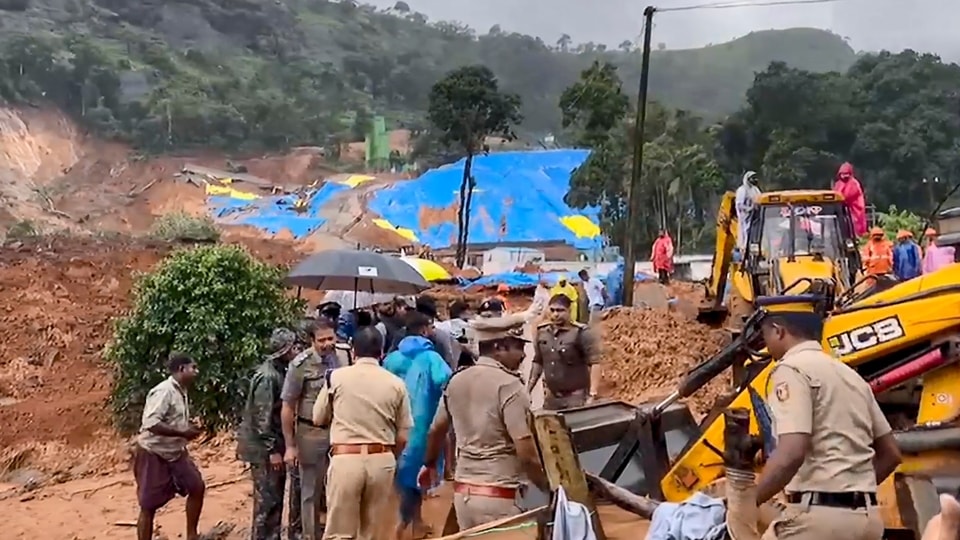
A major landslide hit Kerala's Wayanad district on Tuesday. As resue operations continue in the region to search for missing people, state agriculture minister T Siddique has stated that the incident could have been prevented, calling the landslide a “man-made” one.
The minister's statement has raised concerns about the ecological impact of large infrastructure projects in the Western Ghats.
While rescue operations are underway and authorities have yet to determine the exact cause of the landslide, Minister Siddique has alleged that "unscientific dumping" of excavated soil and mud from tunnel construction caused the disaster.
Why did the minister call it a 'man-made landslide'?
Speaking after the landslide, the minister blamed the handling of excavation waste at the tunnel project site and claimed that repeated warnings had gone ignored.
"It's a disaster perpetuated by unscientific dumping of soil and mud as part of the tunnel project. There were indications of such actions, and they were raised at meetings of the Konkan officials. But it seems no corrective steps were taken. Six people have been hospitalised so far. NDRF teams from Kozhikode and Wayanad are enroute. Efforts are on to search for trapped people and coordinate rescue operations," Siddique said.
The minister's remarks have renewed attention to the ongoing debate over the environmental risks associated with the Anakkampoyil-Kalladi-Meppadi tunnel project.
What happened in Wayanad?
The landslide struck Kalladi, where workers on the tunnel project were staying. One person was killed, and at least seven were injured in the incident.
According to officials, local residents rescued at least three people before emergency teams reached the site. Several vehicles used to transport tunnel workers were also damaged.
Police, Fire and Rescue Services personnel, and teams of the National Disaster Response Force (NDRF) were deployed for search-and-rescue operations.
Chief Minister VD Satheeshan held an emergency meeting following the incident and directed ministers to coordinate rescue efforts in Wayanad.
Also read: One dead, 7 missing after landslide hits Kerala's Wayanad tunnel project
Why is the tunnel project considered controversial?
The Anakkampoyil-Kalladi-Meppadi tunnel is a ₹2,134-crore project aimed at providing an alternative route between Kozhikode and Wayanad by bypassing the landslide-prone Thamarassery Ghat road. The two-lane tunnel is expected to improve connectivity and reduce travel time between the two districts.
However, the project has faced opposition from environmentalists and conservation groups, who argue that it passes through ecologically sensitive terrain in the Western Ghats, an area that has witnessed repeated floods and landslides in recent years.
The legal battle over the project also reached the courts. Earlier this year, the Supreme Court declined to halt construction after the Kerala High Court upheld the environmental clearance, observing that regulatory authorities had imposed safeguards and that concerns over compliance could be addressed before the National Green Tribunal if required.
Also read: Controversial tunnel road in Wayanad faces scrutiny after landslide tragedy
Investigation likely to determine the cause
The landslide has once again placed the tunnel project under scrutiny, particularly after the minister's allegation that poor disposal of excavated soil contributed to the disaster.
However, authorities have not officially established the cause of the landslide. Rescue operations remain the immediate priority, while any link between the ongoing construction work and the incident is expected to be examined as part of the investigation later.


