
 E-Paper



Low wages threaten the fate of world famous iconic Kani shawls

 Prefer HTon Google


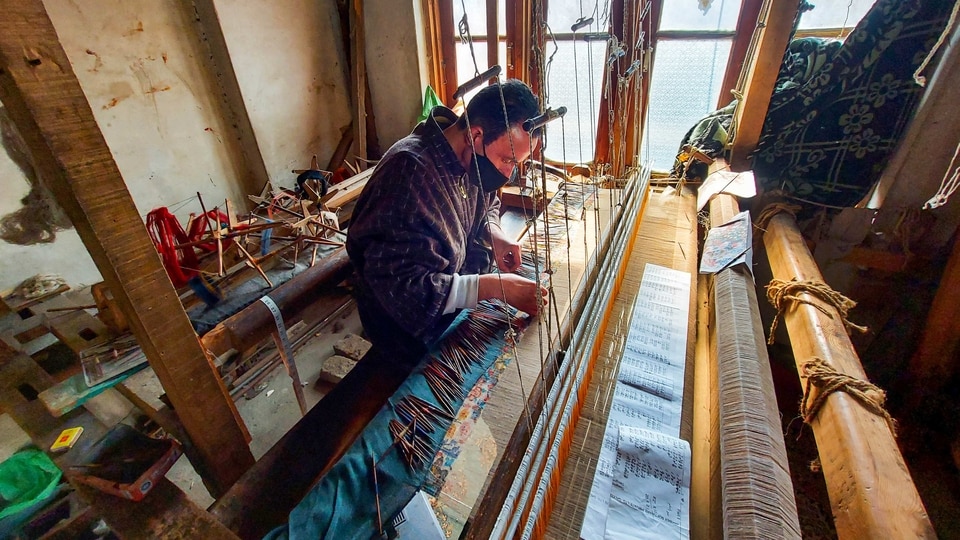
Artisans are considering giving up the production of the world-renowned Kani shawls due to receiving low wages.
A choice of drape for the well-off, including celebrities, the Kani Pashmina shawl may not find any hands to weave it in the near future as forced by dwindling wages many artisans are deciding to not let their children pick the craft. A Kani Shawl – made of Cashmere wool, locally known as Pashmina -- is spun on a handloom using wooden needles. Depending on the complexity and intricacy of the design, a Kani shawl can take anywhere between three months to three years to be completed.
"We are facing a lot of issues. Two decades ago, we used to get ₹60,000 for weaving one shawl but this has now come down to ₹25,000 a shawl. Artisans like me are getting peanuts … on an average, we earn ₹200 to ₹300 per day," Arshid Ahmad, an artisan, told PTI.
To put things in perspective, an unskilled labourer in Kashmir gets paid ₹650 per day. Resentment is not uncommon among artisans when they see celebrities flaunting their hard work before the cameras, while they are forced to make do with a pittance for wages.
"Famous personalities like (Prime Minister Narendra) Modiji, Amitabh Bachchan, and King (Shah Rukh) Khan use this shawl. Two artisans weave one shawl in the duration of three months if they work continuously and they get ₹40,000 for it," Zahoor Ahmad, another artisan, said.
Zahoor said he did not know exactly why the wages were falling but exporters have told them that there was not much demand for it. "In Kashmir, many people were involved in Kani weaving but now very few are left because of low wages," he added. Both Zahoor and Arshid do not want their children to take up weaving Kani shawls for a living.
"I will not allow my son to do this work because only I know what I am going through. We think we should modify designs so this art will survive but if wages are not increased then no one will come to take this art forward," said Zahoor.
"I have only one son but I will never allow him to do this work because of very low wages. This art will survive for three to four years maximum," Arshid said. Mushtaq Ahmad, a handloom owner, however, had a different take to offer on the falling demand for the Kani Shawls. "At present, there are 50,000 looms in Kashmir. Earlier there were only 5,000. So, you can assess the demand for Kani shawl," he said.
Ahmad said the design of the shawl dictates the price of the shawl and the wage for the artisan. "We pay artisans according to designs. If designs are good, we pay them handsomely." Mahmood Shah, the Director of the Department of handicrafts, said with the introduction of the Geographical Indication (GI) label, the economic conditions of the artisans will change for the good.
"Kani shawl stands at the top of textile evolution, there is nothing in the world beyond it. We have got GI for it and we have started labelling it for Kani," he said. Kani shawl weaving has an immense future and the marginalisation of artisans was primarily due to cheating by some dealers who sell machine-made shawls as Kani shawls, he said. "Lot of marginalisation of the artisans will end by virtue of the introduction of labelling GI that will draw a distinction between machine-made and hand-made shawls."
Shah said the transition from the unorganised sector to the organised sector will be a game-changer for the shawl weaving industry. "Unfortunately, for Kashmir arts, we have not been able to do this transition. We are trying to establish clusters where artisans will come in the morning and work fixed hours. We can ensure optimal wages and by virtue of that it can be very remunerative for the artisan," he added.


