
 E-Paper



Swapping gloves for guns in Kyiv: The Sporting Life by Rudraneil Sengupta

 Prefer HTon Google


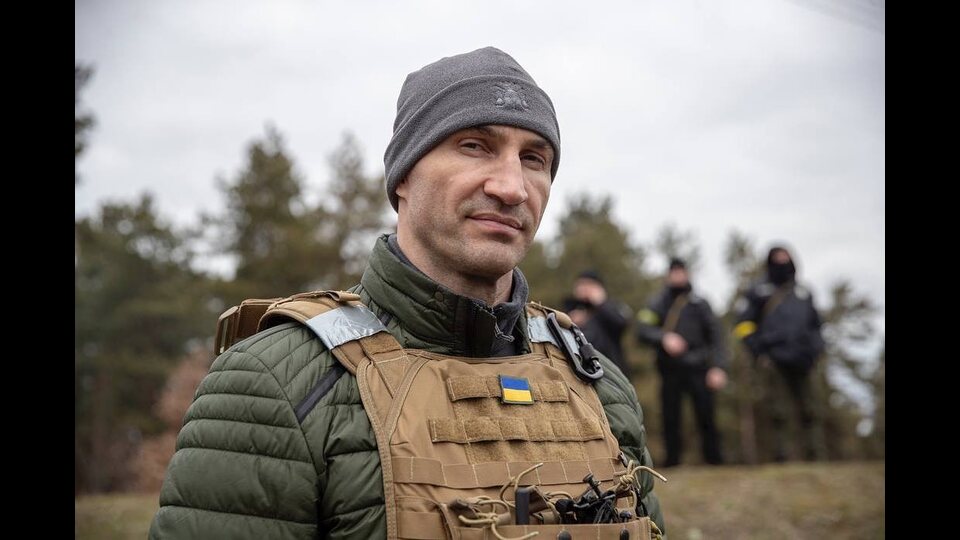
Ukraine’s boxers, some of the best in the world, are stepping out of the ring and into the battle against Russian invasion.
In September, Oleksandr Usyk was running rings around Anthony Joshua, hammering the champion over 12 fleet-footed rounds, in front of the latter’s home crowd in London. The bout was supposed to be a stepping stone for Joshua, before he challenged Tyson Fury in a bid to unify the world heavyweight titles. Instead, it turned out to be Usyk’s victory parade, an unlikely win for a boxer not even considered a proper heavyweight.
The heavyweight champion of the world has now swapped his boxing gloves for a Kalashnikov, one of many Ukrainian athletes to join the fight against the Russian invasion. This is not Usyk’s first brush with Russia. The boxer is from Crimea, the Ukrainian peninsula annexed by Russia in 2014, and wears his patriotism on his sleeve, celebrating wins in the ring with Ukrainian folk dance moves, and once publicly refusing an offer of Russian citizenship. His last few posts on social media are videos of him asking Russia to stop the war and leave his country.
Ukraine has a proud boxing tradition at both the amateur and pro levels. Wladimir Klitschko won the super heavyweight gold at the 1996 Olympics, the first Summer Games for Ukraine after it gained independence in 1991. Klitschko went on to become one of the greatest heavyweights ever. Between 2004 and 2015, he and his brother Vitali dominated the heavyweight division, in what came to be called the Klitschko Era. Both brothers, like Usyk, have enlisted in the army; Wladimir is posting videos from Kyiv, documenting the shelling and bombing of civilian structures. Vitali is also mayor of the besieged capital.
The most famous Ukrainian boxer currently active, the multi-division champion Vasiliy Lomachenko, has been photographed in Ukrainian army fatigues too, after reportedly joining a division in the port city of Odesa. Lomachenko was in a training camp in Greece when the Russian invasion began, and made a difficult overland journey back to join the fight.
The history of sport has numerous examples of decorated athletes taking up arms during a war. The two world wars, so all-consuming for Europe, saw hundreds of sportspeople die on the frontlines. Teofilo Yldefonso, the first Olympic medallist from the Philippines (he won a bronze in 1928; another in 1932; and reinvented the breaststroke — the way modern swimmers rise out of the water was something he did first), was captured by Japanese forces in 1942 and was in the infamous Bataan Death March, one of about 80,000 prisoners of war forced to march until many died from exhaustion or were shot where they stumbled. Yldefonso survived the march, but died soon after, in a concentration camp.
The only person to twice be awarded the Victoria Cross, Britain’s highest military honour, during World War 1 was Noel Godfrey Chavasse, a doctor-soldier who ran the 400m at the 1908 Olympics and was also a rugby player of repute. He got the first of the two war medals in 1916, after he spent a night rescuing soldiers from a no-man’s land under heavy fire. He got his second doing the same thing a year later. That one was posthumous; he had died a few days later, from bullet wounds.
It takes rare courage to turn a skill drawn from sports, many of which were born as battle training programmes, back into tactics for war. In a better world, this would not be necessary.


