
 E-Paper



Rude Travel by Vir Sanghvi: A new side of Sri Lanka

 Prefer HTon Google


Sri Lankans are still hoping for a better future. But in Colombo, its hotels are already prepped for success. And the cuisine is as delicious as ever
I was in Colombo when Dr Manmohan Singh tragically passed away. And in some strange way, there was a certain appropriateness about my choice of hotel. I was staying at the brand-new ITC Ratnadipa, already Colombo’s top hotel and a symbol of Indian hospitality around the globe. And the hotel has a strong Manmohan connection.
Nobody at ITC will now confirm this, but the story goes that Manmohan Singh was deeply concerned about the millions of dollars that China was pouring into Sri Lanka in an effort to reduce Indian influence. He phoned Yogi Deveshwar, who was then the chairman of ITC, and asked if the hotels-to-cigarettes-to consumer-products conglomerate would make a significant investment in Sri Lanka to demonstrate Indian goodwill.
Deveshwar agreed at once. It wasn’t just that the request had come from the Prime Minister of India; he also saw the wisdom of investing in Sri Lanka. But what kind of investment could ITC make? Deveshwar told me he thought long and hard about it before asking the hotels division (it was not yet the separate company that it now is) to consider building a grand hotel in Colombo.
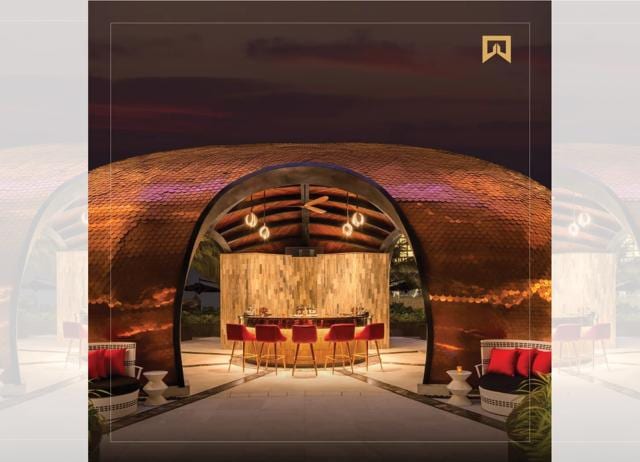
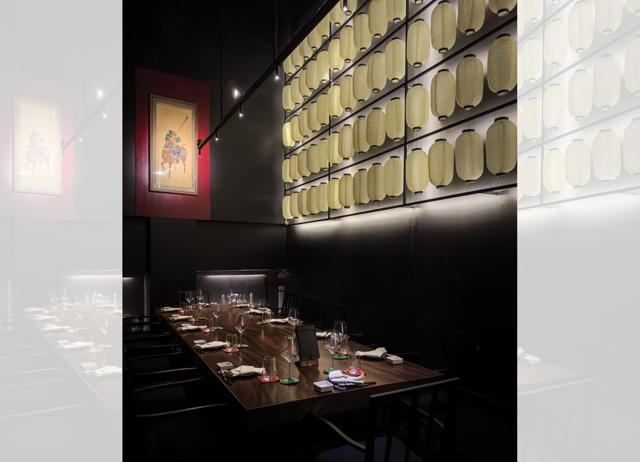
That is how the majestic ITC Ratnadipa, in the best location in Colombo, overlooking the sea, came to be built. Because it was meant to be a showpiece for India, everything was planned on a grand scale: The largest guest rooms in Sri Lanka, an impressive lobby, an apartment wing connected by a sky bridge to the main hotel building, and several restaurants that brought the best of ITC to Colombo: Peshawari, Yi Jing, Avartana and the Indian Ocean Pavilion, patterned on Calcutta’s massively successful Grand Market Pavilion with over a dozen live cooking counters.
All of the hotel’s 352 rooms are still not open, but the 260 or so that are available were packed out over the new year at the highest rates in Colombo. Locals have taken the hotel to their hearts: On New Year’s Eve, 1,200 guests filled the hotel’s restaurants, most of them Colombo residents. And each day you would see well-heeled Sri Lankans who had dropped in just to check out the hotel.
Neither Manmohan Singh nor Yogi Deveshwar will be around to watch the Ratnadipa go from triumph to triumph, a glittering advertisement for India. But wherever they are, they probably have a sense of “mission accomplished”.
As good as it is to see India shining bright in Colombo, it is also good to see Sri Lanka flourishing and thriving. I first came here as a schoolboy and thought that Colombo was a charming but sleepy town distinguished by the warm and fun-loving nature of its people.
I have been back several times and things have not always been wonderful for Sri Lanka. There was a terrible civil war, accompanied by the terrorism perpetrated by the Tamil Tigers. More recently, there has been an economic crisis, accompanied by street demonstrations.
But Sri Lanka always bounces back. There was no sign at all, this time, that anything had ever been wrong. A contentious election, which led to a whole generation of politicians (including many who had ruled Sri Lanka for decades, being booted out), seemed to have left everyone I met more cheerful and optimistic about the future.
Colombo is no longer the sleepy town I first knew, but it is nearly just as charming. The last time I came, I used it as a stopping off point for trips to the wonderful Ceylon Tea Trails hotel run by Malik Fernando of Dilmah Tea, and an excursion to the seaside resort of Weligama.
This time I was determined to stay in Colombo and enjoy the capital itself.
My wife and I spent a week in Lanka and we decided to be as spontaneous as possible. Each morning we would wake up and decide what we would do that day. We had made no plans, no restaurant reservations and did not even get in touch with any of the people we know in Colombo.
It worked out beautifully. Most days we would go out for lunch or drive to a nearby beach or town (two hours was the cut-off point for driving distances) and enjoy the change of scene. We spent nearly all of our evenings in our hotel, eating either the local food made by the Ratnadipa’s Sri Lankan master chefs or letting the hotel’s executive chef Anurudh Khanna organise meals at the hotel’s many restaurants. We tried the Dal Bukhara at Peshawari, the hand pulled noodles at Yi Jing and the steak with pomme purée at the Indian Ocean Pavilion.
Each morning, I ordered the same breakfast (some variation on egg hoppers, including upmarket versions with black truffle, Oscietra etc) before we went out in search of lunch. We went out for dinner only once and that was for an invitation that nobody could turn down.
Dharshan Munidasa, Sri Lanka‘s greatest chef, had dinner with us at his new Nihonbashi , walking distance from our hotel, where he served amazing Japanese food (he is half Japanese) including sashimi of local tuna, lamb grilled Japanese style, ramen with prawns, and a remarkable dish of snapper fish on rice topped with a fried egg and finished at the table with hot olive oil.
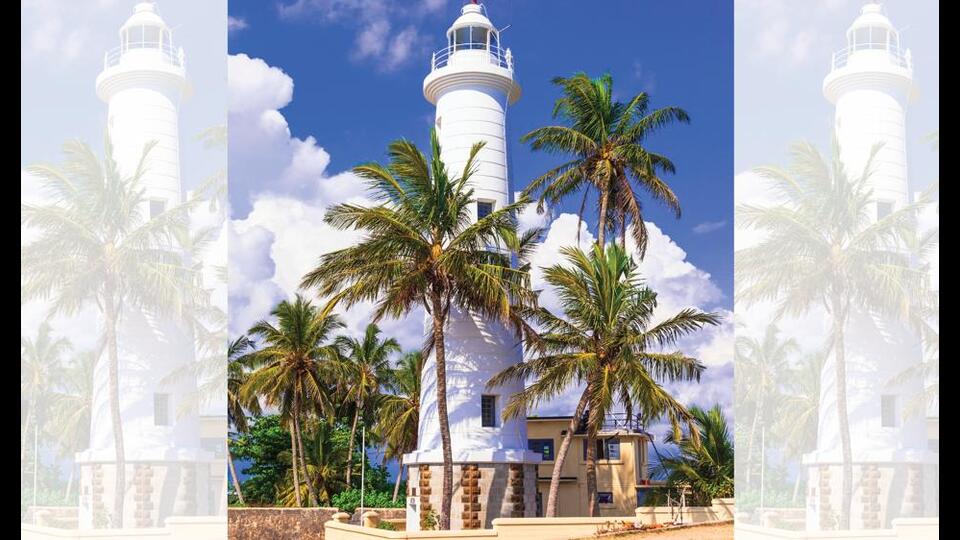
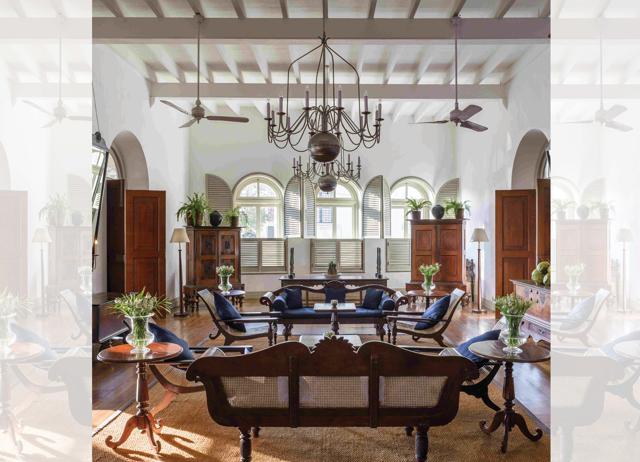
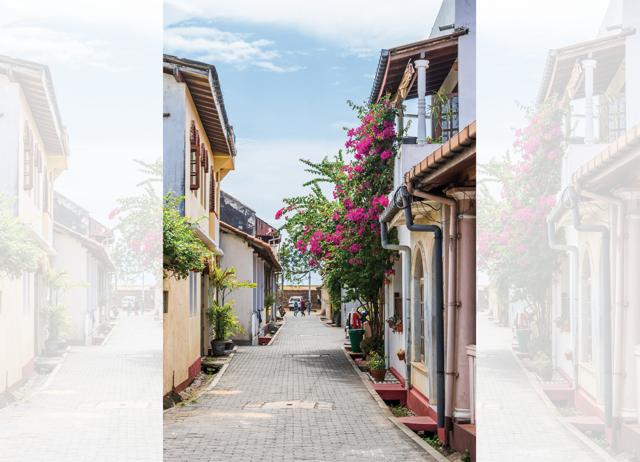
Our lunches were simpler but delicious. We drove to Galle (pronounced Gaul like in the Asterix comics) and spent an afternoon at Amangalla, one of two Aman hotels in Sri Lanka. This is not an Aman hotel of popular imagination. It opens onto the main road and dates back to 1715. For 140 years, from 1865 onwards, it was the New Oriental hotel, popular with sailors from all over the world who came to Galle. Aman took it over in 2005 and restored it to luxury standards while preserving its original character.
On another day, we went on impulse to the beach at Negombo and ate hamburgers, mesmerised by the sand and the sea. We sat through a storm, the following day, looking out at Bolgoda Lake, the largest natural lake in Sri Lanka.
And one day we spent an afternoon at the Galle Face Hotel (Confusingly, it is in Colombo not Galle.) This was Sri Lanka’s greatest hotel once upon a time and could still be to Colombo what the Taj Mahal hotel is to Mumbai, if only they spent some money on restoring it. According to legend, every large international group has tried to get the owners to sell, or at least, to enter into collaboration so that the 160-year-old hotel recovers its former glory. But the owners have always refused.
Though we were staying next door at Colombo‘s smartest, gleaming, most modern hotel, I must confess to a weakness for old historical hotels, no matter how rundown they may be. I wouldn’t necessarily stay in them but I love wandering through the public areas. So we sat at the bar, ate Lankan curry and rice, drank the local Lion beer and thought back to how things must’ve been in its days of glory.
That’s one of the many things I like about Colombo. History and modernity exist cheek by jowl. On the night of the 31st we did what we always do, stayed in and brought in the New Year on our own. But even as we ate our room service meal, we couldn’t help looking out of the window to the seaside causeway below where at least 80,000 people had gathered to celebrate the end of 2024 and the arrival of 2025. There was a free concert. Fireworks lit up the night at four different locations. And a spectacular drone show took over the sky.
It wasn’t necessarily glamorous or sophisticated, but it was full of joy, packed with life and completely real.
Like Colombo itself.
From HT Brunch, January 11, 2025
Follow us on www.instagram.com/htbrunch


