
 E-Paper



Living with 'dancing eyes': Bengaluru ophthalmologist explains misunderstood eye condition affecting millions of Indians

 Prefer HTon Google


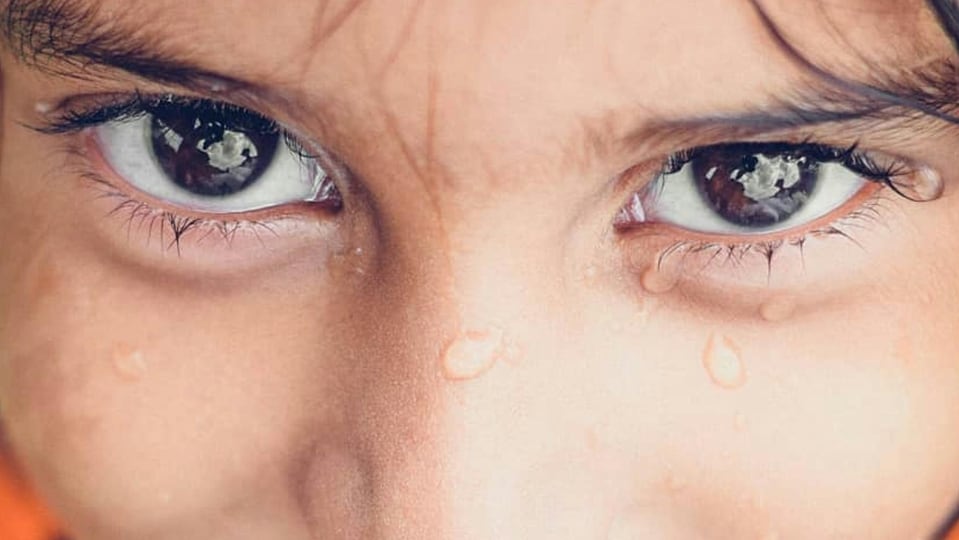
Dr Thanemozhi Srinivasan of Dr Agarwals Eye Hospital explains nystagmus — a silent vision condition often misread in Indian schools and workplaces.
Did you know that millions of people in India live with a vision condition where their eyes are constantly in motion, yet most families have never even heard its name until a diagnosis? Also read | Are women more vulnerable to dry eye disease? Sankara Eye Hospital's Dr Prabhakar GV explains causes and prevention tips
In an interview with HT Lifestyle, Dr Thanemozhi Srinivasan, consultant ophthalmologist at Dr Agarwals Eye Hospital in RR Nagar, Bengaluru, shed light on the mechanics, everyday challenges, and evolving medical approaches to this widely misunderstood condition called nystagmus.
What is nystagmus?
Often nicknamed 'dancing eyes', Dr Srinivasan shared that nystagmus is a condition that quietly reshapes how people experience the world around them. Despite its prevalence and significant impact on daily life, it remains largely absent from mainstream health conversations in India, she said.
"Picture trying to watch a film while someone keeps jostling the camera, over and over, without stopping. That’s roughly what daily life looks like for the millions of Indians living with nystagmus. It’s a condition that quietly reshapes how people see the world, yet it barely gets talked about. Doctors miss it, schools misread it, and most families have never even heard the word before their child is diagnosed," Dr Srinivasan explained.
At its core, nystagmus is a neurological issue that causes involuntary, rhythmic eye movements. Depending on the individual, the motion can swing side to side, bob vertically, or rotate, Dr Srinivasan said, and added that medical professionals broadly classify the condition into two categories:
⦿ Infantile nystagmus: Appears within the first few months of life. It is often linked to genetic factors or disruptions in early visual development, such as congenital cataracts, albinism, or an underdeveloped optic nerve.
⦿ Acquired nystagmus: Develops later in life, usually as a secondary effect of an underlying nervous system issue. Triggers include head injuries, strokes, multiple sclerosis, brain tumours, inner ear balance disorders, or severe Vitamin B12 deficiencies. Also read | Magnesium deficiency: 5 silent signs like eye-twitching that you should never ignore
The diagnostic challenge in India
Diagnosing nystagmus early remains a hurdle across the country, primarily due to a lack of broad awareness. "Getting an accurate diagnosis in India is often a slow, frustrating process, mostly because awareness is so thin on the ground," Dr Srinivasan said. She added, "Parents will notice their infant's eyes seem to 'wobble,' but it's easy to mistake that for a passing phase, or to lump it in with an ordinary squint."
Pinning down a precise diagnosis typically requires a collaborative approach between ophthalmologists and neurologists. According to Dr Srinivasan, comprehensive evaluations often involve:
⦿ MRI scans to rule out structural abnormalities or lesions in the brain.
⦿ Electrodiagnostic testing to evaluate eye and nerve responses.
⦿ Eye-tracking software to map out the specific speed, distance, and direction of eye movements.
Beyond 'shaky vision': daily realities
According to Dr Srinivasan, for adults living with acquired nystagmus, one of the most disorienting symptoms is oscillopsia — the persistent illusion that the surrounding environment is constantly moving, even when standing completely still. She added that simple daily tasks, such as reading fine text, recognising faces in a crowd, navigating stairs, or focusing on close objects, demand immense physical and mental exertion. This sustained effort frequently leads to chronic eye strain, fatigue, and severe headaches.
To adapt, many individuals adopt a physical habit known as chasing a 'null point'. Dr Srinivasan pointed out: "Many people unconsciously tilt or turn their head to cope. They're chasing what's called a 'null point,' a particular angle where the eye movements calm down just enough to give them a clearer, steadier picture." Also read | Neurologist reveals what vertigo feels like; shares types, symptoms and how to manage
She added that the psychosocial impact is equally significant:
⦿ In schools, children with nystagmus are frequently mislabeled as clumsy or distracted due to their eye movements and head
⦿ In Workplaces, adults face systemic accessibility barriers and professional limitations.
⦿ In daily independence, standard milestones, such as passing a driver's license exam, often present major structural obstacles.
Modern interventions
While there is currently no absolute cure for nystagmus, Dr Srinivasan said that care in India has progressed significantly beyond passive observation. Modern clinical management, she shared, employs a mix of optical, surgical, and therapeutic advancements:
⦿ Advanced optics: specialised prism lenses and contact lenses. Contact lenses are particularly effective as they move with the eye, maintaining a steadier visual field.
⦿ Surgical procedures: surgeries such as tenotomy alter eye muscle tension to reduce oscillation intensity and align the "null point" toward a straight-ahead gaze, thereby reducing awkward head postures.
⦿ Therapies and tech: emerging options include digital vision therapy, medications (such as gabapentin or memantine) to dampen movement, and AI-driven tracking tools to monitor progression.
As specialised neuro-ophthalmology continues to grow across India, the focus is shifting toward systemic support alongside clinical care. "The bigger opportunity now lies in catching nystagmus early and building real support around it, in schools, workplaces, and healthcare systems alike," noted Dr Srinivasan.
"Get that right, and India has a real shot at turning what's often an isolating, misunderstood condition into something people can manage with clarity and confidence," she concluded.
Note to readers: This article is for informational purposes only and not a substitute for professional medical advice. Always seek the advice of your doctor with any questions about a medical condition.


Catch your daily dose of Fashion, Taylor Swift, Health, Festivals, Travel, Relationship, Recipe and all the other Latest Lifestyle News on Hindustan Times Website and APPs.


