
 E-Paper



Unakoti, the ‘Angkor Wat of the North-East', is vying for world heritage tag

 Prefer HTon Google


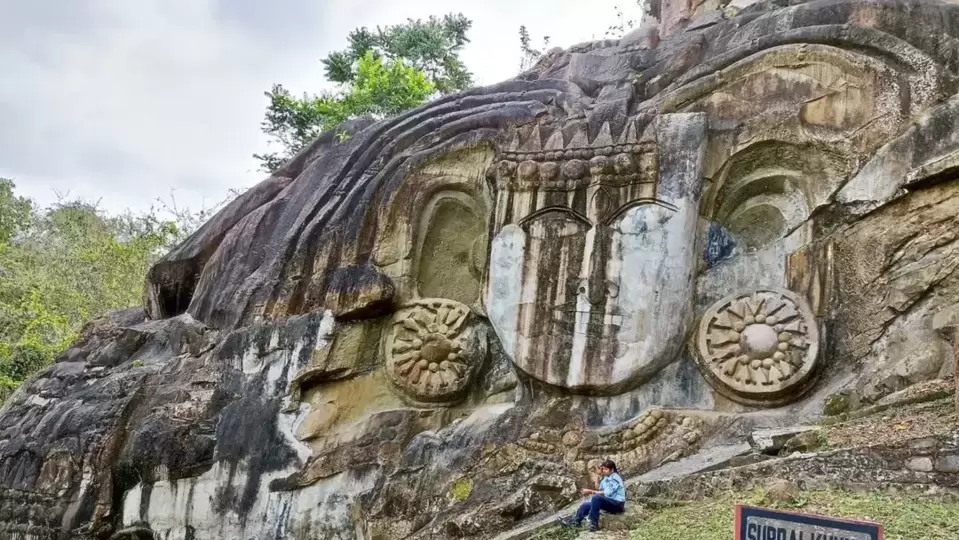
With the government and ASI striving to preserve the collection of Shaivite rock sculptures in the northern section of the state, Unakoti, the chiselled "Angkor Wat of the North-East," is competing for a UNESCO world heritage classification.
Unakoti, the chiselled ‘Angkor Wat of the North-East’ region, is vying for a UNESCO world heritage tag with both the government and ASI, working to preserve the series of Shaivite rock sculptures in the northern part of the state. Nestled in the Raghunandan hills, about 180 km from here, Unakoti is home to giant bas-relief sculptures of the 8-9th century carved out of a huge hill.
“The structures of the rock-cut sculptures are gigantic and have distinct mongoloid features and display almost the same mystical charm as the spellbinding figures in the Angkor Wat temple of Cambodia. So call it the Angkor Wat of North-East,” said Panna Lal Roy, a well-known historical writer of the state, who has been studying the sculptures for many years. (Also read: Unesco World Heritage tag: Here's list of all 40 Indian sites after Dholavira addition )
Unakoti means one less than a crore (koti in Bengali) and is a rock-cut art that has suffered centuries of neglect and due to vagaries of weather, many of the art facets now stand degraded, he said.
After the Archaeological Survey of India (ASI) adopted it as a heritage site, the situation has “slightly improved, though a lot of work, including substantial excavation remains to be undertaken”, a government official said, adding that the Centre has approached UNESCO to declare it as a World Heritage Site.
The Centre has recently granted ₹12 crore to the state for developing the place as a major tourist destination, but as the ASI does not allow any activity in the core area of the archaeological site, the official claimed.
The Tripura government is developing areas near the site to encourage tourists to visit this treasure of the North East, he said. There are two types of images found at Unakoti - rock-carved figures and stone images. Among the rock-cut carvings, the central Shiva head and gigantic Ganesha figures are prominent.
The central Shiva head, known as Unakotiswara Kal Bhairava, is about 30 feet high, including an embroidered head-dress which itself is 10 feet high. On each side of the head-dress of the central Shiva, there are two full-size female figures - one of Durga standing on a lion and another female figure on the other side.
In addition, three enormous images of Nandi Bull are found half-buried in the ground. There are various other stone and rock-cut images at Unakoti. Hindu mythology has it that Lord Shiva once spent a night here on way to Kashi. Unakoti or one less than a crore gods and goddesses followed him.
Legend has it that Lord Shiva had asked his followers to wake up before sunrise and make their way towards Kashi. Unfortunately, none woke up in the morning, except Lord Shiva himself. "Before he set out for Kashi alone, he cursed the sleeping gods and goddesses to turn into stone and that is how the site got its name," Roy said.
Thousands of people and tourists throng the site during Ashokastami Mela, held in the month of April. Roy said Unakoti became a major Hindu Shaivite pilgrimage site during the reign of the Pala empire in Bengal, some archaeologists suggest that it might also have had Buddhist influence.
“There is one Shaivite pilgrimage at Bhuban Pahar in Cachar district of Assam, which is not very far from Unakoti. Chandranath hills of Chittagong also have Shaivite pilgrimage”, Roy added.


