
 E-Paper



Better air in Mumbai? Let us improve the plan first
Mumbai was one of the 18 cities in the state that were asked to submit air pollution mitigation plans under Union environment ministry’s National Clean Air Action Plan (NACP), aimed at reducing emission sources by 30% by 2024.


The Central Pollution Control Board (CPCB) recently rejected the city’s action plan to tackle air pollution for the second time, citing shortcomings. V Shukla, in-charge of air quality management, CPCB, said Mumbai is the only megacity in India which has been asked to revise its plan, submitted by the Maharashtra Pollution Control Board (MPCB), a second time.
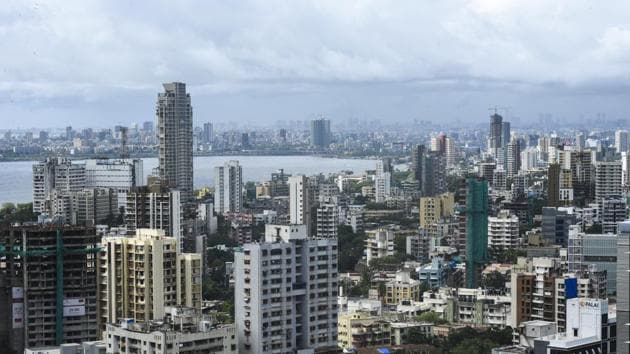
Mumbai was one of the 18 cities in the state that were asked to submit air pollution mitigation plans under Union environment ministry’s National Clean Air Action Plan (NACP), aimed at reducing emission sources by 30% by 2024. The MPCB, however, said their plan for Mumbai has been “approved in-principle” and they will submit the revised plan to the CPCB within seven days of getting their recommendations.
The MPCB had submitted the action plan for Mumbai once in February and then in April. “We found shortcomings in Mumbai’s action plan for most of the CPCB recommendations. The plan needs to be revised. Mumbai is the only megacity to revise their plan a second time,” said Shukla. He said the CPCB was in the process of sending their recommendations regarding the changes.
During a seminar in Mumbai on Thursday, VM Motghare, joint director (air pollution), MPCB, said, “CPCB has asked for some clarifications, and we are working on it. Once we receive the recommendations, I’ll sit with the Mumbai civic chief and incorporate the changes. The plan will be submitted before a state committee for final deliberations, and resubmitted to the CPCB.”
Motghare said that under the action plan, industries in Mahul-Chembur area have been asked to carry out continuous air monitoring. “Some plants installed monitoring systems while others were fined. Overall, industries are complying with CPCB norms,” said Motghare. “For Mumbai’s action plan, re-suspension of dust, vehicular emission reduction, addressing dust from construction, biomass burning are the focus points.”
During the seminar, organised by Delhi-based Climate Trends, experts presented conflicting views over changes in Mumbai’s air quality.Rakesh Kumar, director, National Environmental Engineering Research Institute (NEERI), said MPCB does better monitoring than any other state, which is why 18 cities were identified from Maharashtra under NCAP. “There has been a one-tenth reduction in air pollution in Chembur-Mahul zone since the 80s, while there’s been a sea-change since the early 90s in terms of fuel standardisation,” said Kumar. “We need to enhance pedestrian movement, traffic management and parking infrastructure.” However, Dr Sundeep Salvi, director, Chest Research Foundation, said air pollution is a major concern for Mumbai today, more than ever before, with studies establishing adverse impacts on every organ.
A report released at the event highlighted the total monetary burden of air pollution estimated (based on a NEERI study) for Mumbai was ₹452.3 crore for a 50 micrograms per cubic metre increase in particulate matter (PM) 10 levels. The monetary burden is ₹872.6 crore for a similar increase in nitrogen dioxide levels. “Industry, transport and biomass burning in slums, combined with meteorological factors has made air pollution a severe public health burden,” said SN Tripathi, IIT-Kanpur, NACP core committee member. “Source-specific mitigation and inter-departmental coordination will be crucial in achieving NCAP goals.”

Stay updated with all the Breaking News and Latest News from Mumbai. Click here for comprehensive coverage of top Cities including Bengaluru, Delhi, Hyderabad, and more across India along with Stay informed on the latest happenings in World News.


