
 E-Paper



Listen to people’s power, in the voices of the young
Conversations in public transport, educational institutions, workplaces, drawing rooms in homes — just about everywhere — have revolved around the Citizenship (Amendment) Act-National Register of Citizens (NRC).


An air of protest has hung heavy over Mumbai in the past week or so. Not since the Emergency (1975-77) can I remember such mass interest in a political issue in the city.
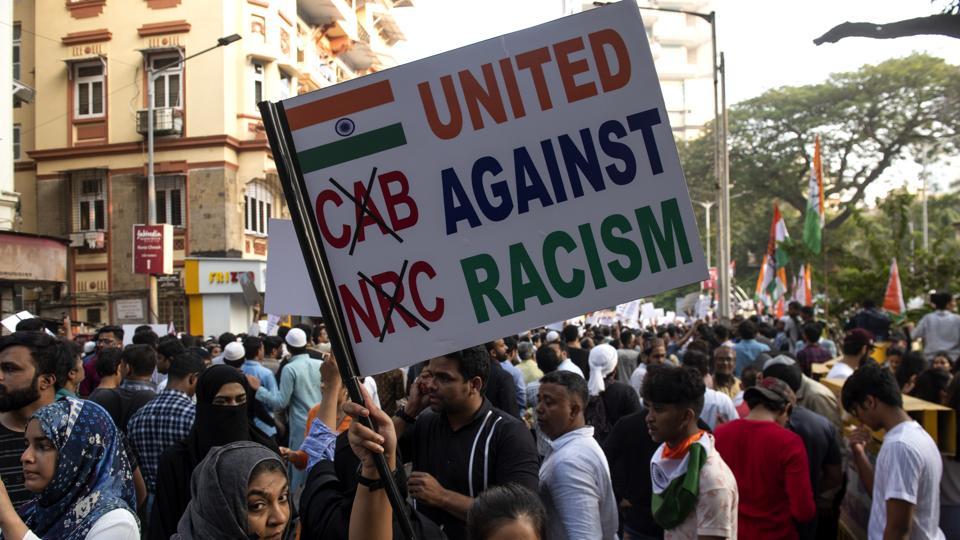
Conversations in public transport, educational institutions, workplaces, drawing rooms in homes — just about everywhere — have revolved around the Citizenship (Amendment) Act-National Register of Citizens (NRC) that has triggered off morchas and dharnas countrywide, starting from campuses in different cities and spreading rapidly beyond.
A lot has changed between 1975 and now. Forty-five years back, when the Emergency was promulgated, it took a while for the impact to be felt beyond the capital and northern parts of India.
There were no cell phones then (why, even landlines were difficult to get!), no Internet, TV was the prerogative of the well-heeled, but which actually wasn’t such a big handicap since it was a mouthpiece of the state. Dissemination of information was primarily through radio (again, largely state-controlled) and newspapers, several of which had capitulated to Prime Minister Indira Gandhi’s then authoritarian regime. This meant one was oblivious of developments for long periods of time, unlike now when communication is instantaneous and the responses to situations swift. Consider how rapidly the CAA-NRC controversy has snowballed all over the country, within a couple of weeks!
What hasn’t changed in all these years is the fervour, especially among the youth, to rise in protest when confronted with circumstances that challenge their idea of rightfulness and reasonableness of decisions taken by parties/leaders/authority/government. As a student during the Emergency, I remember the environment was charged up for a fight. How and what could be done against this atrocity would be the buzz in college, and huge crowds — predominantly young — would be at meetings addressed by A B Vajpayee, Morarji Desai, Jagjivan Ram and others at Crawford Market, Colaba, Shivaji Park, etc.
Bombay’s stature as a politically vibrant city eroded after the Emergency which is intriguing because this is where some momentous protests and movements in the country’s history had taken place.
Azad Maidan had been the venue for all kinds of protests from the start of the 20th century, especially for Independence, that gathered steam in the 1930s. And August Kranti Maidan is where the clarion call for the British to ‘Quit India’ was given in August 1942. Yesterday’s protest took place at the same August Kranti Maidan. I am writing this article before the event took place so don’t know the response. Sensing the pervading mood in the city, I reckon it would have been sizeable.
Mumbai, of course, was one among several cities where protests flared up countrywide on Thursday. The trigger was the questionable constitutionality of CAA-NRC and the intent of the government, though I think other issues, simmering below the surface, also got plugged in. What’s astonishing, however, is how ill-thought the government’s response has been in this volatile scenario. Students and the young, particularly, will not be straitjacketed into a line of thought they find disagreeable. They have the passion, energy, desire and ideas about what they want their future to be, and will use protest to be heard if this does not come readily.
Here’s the crux. If even an 18-year-old can be trusted to have enough intelligence to discern between candidates and ideologies, why can’t he/she -- and certainly those older -- be trusted when raising objections on socio-political issues? How hypocritical, how supercilious!
Democracy at the best of times is chaotic. Dissent and disobedience are two of the wheels that make it work and take it forward. Sometimes these are also at the core of massive transformation. Who should know this better than Indians, of any vintage and every political dispensation, considering the voluminous body of work about the struggle for Independence that abounds? And also the battles against the Emergency, which several in power today had fought as students? Why not pay heed to what the dissent is about now? There are many ways in which such situations can be handled: through attrition, apathy, cussed indifference (or all three rolled into one which seems to be the overriding strategy currently), brutal repression (which has sadly found expression in some places) or discussions to understand the concerns of protesting people and work out reasonable solutions. History suggests that for the long run, the last option works best.

Stay updated with all the Breaking News and Latest News from Mumbai. Click here for comprehensive coverage of top Cities including Bengaluru, Delhi, Hyderabad, and more across India along with Stay informed on the latest happenings in World News.


