
 E-Paper



Ram Mandir theft: A test of our dharma, not of God’s power
If theft can occur in the house of Lord Ram himself, is God then helpless? The scriptures answered this question long before any temple of stone was raised

 Prefer HTon Google


Reports about the pilferage of donations to Ram Mandir in Ayodhya, about money being stashed away by the very people who were appointed for counting the contributions of devotees, have made the faithful wonder: If this could happen in Lord Ram’s own house, is God powerless? Why did He not prevent it?
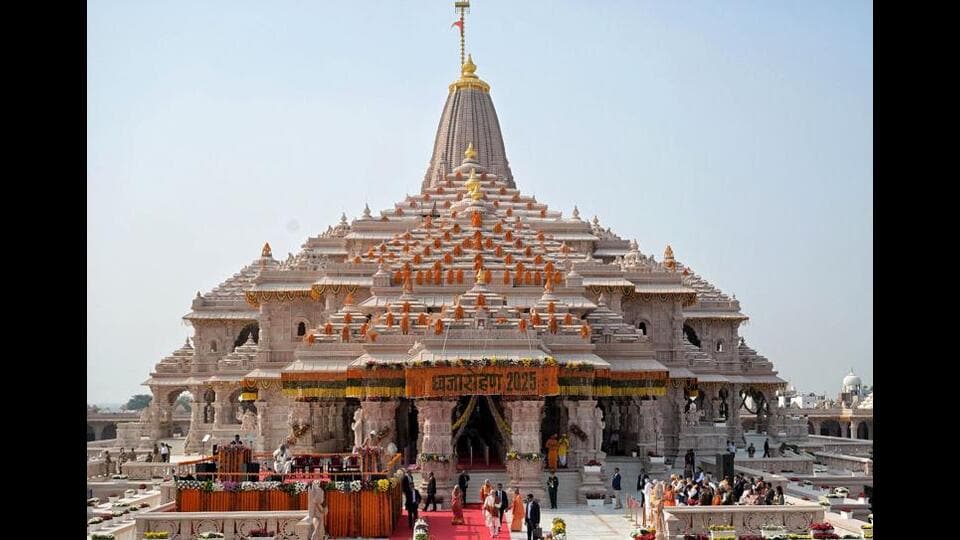
This question needs a thoughtful answer, not slogans from either side of the belief-unbelief divide. The answer that we get in our scriptures is much older than any temple ever constructed.
Lord Krishna in Bhagavad Gita (13.23) says about the Supreme:
upadrashtanumanta cha bharta bhokta maheshvarah,
paramatmeti chapyukto dehe’smin purushah parah.
The Supreme Lord who resides in this body is the observer and the permitter, the sustainer, the experiencer, the Great Lord and He is also known as the Supreme Self. He is aware of each thought and each action. He does not stop the hand of the person from doing any wrongful act. Had it been the case then the concepts of karma and dharma would have lost their meanings altogether. There could have been no virtue in honesty, if there were no possibility of dishonesty.
God who stops every sin is one who rules over a world of puppets. The God who sees everything and allows the act to ripen in its time is the God who rules over a world of men endowed with morality. The choice was made by our tradition many years ago and we have never shied away from the consequences thereof.
The Vedas and Puranas never regard a tirtha as a citadel for accumulation of wealth. They regard it as a place where the human heart lies bare. In the temple, it is not God who is tested, but we are tested. In the case of the thief who steals from the deity, it is money that is stolen, and nothing has been stolen from God who has nothing of His own. In fact, what the thief loses is his own viveka, the discriminating faculty within him. The Manusmriti puts it in words every schoolchild once knew: dharmo rakshati rakshitah. Dharma protects those who protect it. Abandon it and you walk out from under its shelter by your own choice.
Is God going to turn a deaf ear to injustice? God hears it with patience and that is something different. Sanatan dharma believes that there is no act without retribution, and that may come quickly or in many years or even after death. Duryodhana enjoyed wealth and power and his prosperity taught him nothing but arrogance. Ravana ruled a golden city and commanded powers no mortal king possessed. Both ended as warnings. There may be delay in God’s court, our elders said, but there is no darkness in it.
This is the very answer which can be found in the life of Rama. If it were His wish, Sita would never have been abducted at all. The exile could have been avoided; Ravana could have been turned to ashes in an instant. But Rama chose to walk the forests for 14 years, to suffer as a man suffers when he loses his wife, to laboriously build a bridge of stones across the sea and to earn his reward through labour. This was done to show us how dharma can be fulfilled through truth, perseverance, and sacrifice, and not through divine intervention. When one asks “Why didn’t Ram stop a thief in his own temple?” one tends to overlook the fact that Ram did not even stop a thief who stole away his wife. He answered adharma the harder way, and that is why we worship him.
The Bhagavata Purana calls the Kali Yuga an era where greed becomes thick and wealth is the yardstick by which a person is measured. It is not a prediction about the defeat of God at all. It is simply describing our working environment. The darker it gets outside, the more important the lamp becomes inside. If there is temptation, then there has to be honesty too, and awareness and the willingness to speak out when things are not right. Whoever blew the whistle in Ayodhya, performed an act of dharma. As do those rightly demanding an audit and tightening of systems and punishment of the guilty regardless of who they might be. Faith and responsibility need not come into conflict. A devotee who demands transparency in the management of offerings shows greater respect to God than one who does not.
Let the investigation take its full course. Let the truth come out in its completeness and let justice take its place, without favour or fear. That’s what Ram would want from us, the king who sent away even his beloved queen rather than let a single subject doubt the purity of his house. But the mistakes of some men must not make us question God, or dharma, or the faith of all those millions who prayed in Ayodhya with nothing in their hands but faith. Their offering was never counted in any room. It cannot be stolen.
The purity of a temple was never kept in its vaults. Wherever there is dharma, there is Ram as well. Greed is an age-old weakness of mankind, and Ram has always met it with grace. He accepted Shabari’s half-eaten berries because love had touched them. He gave refuge to Vibhishana, who came to him from the enemy’s own family. His door has never closed on the fallen who are willing to turn. Let the person at fault find the courage to make amends, and let the rest of us look after the temple inside our hearts, for a pure heart is all He has ever asked of us. While the Ram temple might require some new locks for now, the temple of our heart requires just His name.
Rahul Verma is founder of Uday Foundation and NKB Divine Meditation Foundation. The views expressed are personal
(This is a Hindustan Times Digital exclusive)


