
 E-Paper



Remembering even what’s difficult, painful is necessary
What a Yeats poem and a recent movie tell us about age and the burden of remembering.

 Prefer HTon Google


When You Are Old is not among WB Yeats’s most admired poems. The Second Coming is. No surprises there, because miseries — war, pestilence, natural disasters — have been visiting the world relentlessly in the recent past.
The Irishman’s vision of a “rough beast slouching towards Bethlehem to be born” is unmistakably borne out by these visitations. I turn to that bewitching poem repeatedly, in awe of the poet’s sense of doom which one part of me shares.
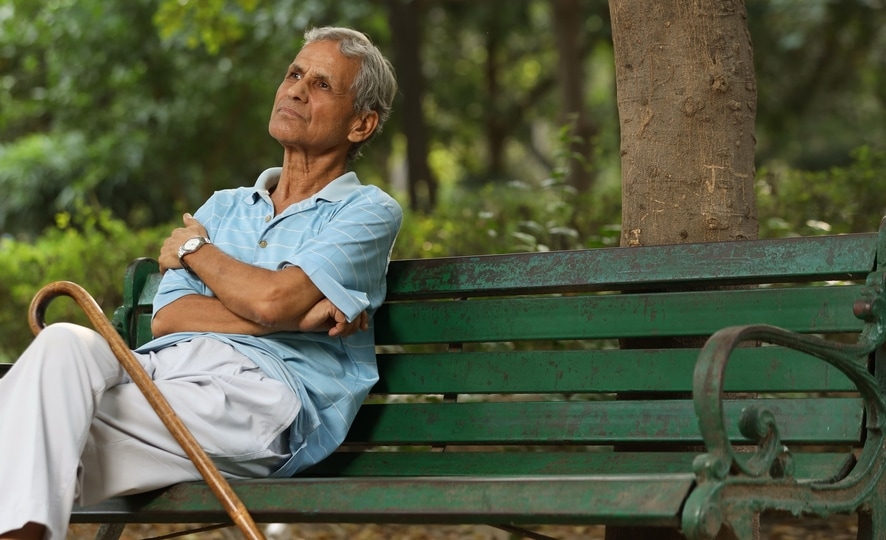
My favourite Yeats poem today is When You Are Old. The most obvious reason for this, of course, is that I am old. At 81, or 82, or thereabouts, very old.
I warm to the poem just as I do to a hand extended for me to hold and trust it, when I am climbing down steps or getting out of a car. Bless that hand, bless it more when it is strong and stays unbent when I put all my weight on it.
But co-extensiveness with the poem’s theme is only part of the reason for it being my Yeats favourite. The “real” reason is that it resonates with something in me that was old and entrenched even when I was young.
In my late teens, I had a teacher in school — the unforgettable Awadh Kishoreji — who read poems aloud to our class. He was not old. But he was not young either. Eyes closed, he would go into the inner worlds of the poems and modulating his voice to suit the spirit of each line and half-line, would carry us into that world. Did he read out When You Are Old to us? I am not sure. I cannot say with certainty that he did. Perhaps he did, for I can see him enact, gently, “…full of sleep and nodding by the fire...”
Also Read | Irish poet WB Yeats’ family treasures to go on display for first time
When, in my early 20s, I was in college and joined the English literature honours course, my teacher MM Bhalla — or Bhallasaheb as we knew him — did something similar. His eyes would not close, though, as he read or recited poetry. They would, in fact, widen, moisten, and transfer to us his sense of wonder over what he was reading out.
One has to be totally true to one’s teachers — so one has been taught — and, therefore, I will not say with my hand over my heart that he read When You Are Old to us. But I hear his voice in each word of this poem whenever I read it.
In each word and in each syllable of each word, his voice intones Yeats, with a little tremor to it, the expired whiff of a cigarette he stubbed out under his shoes just before he entered class adding an ember of immediacy.
When You Are Old, Bhallasaheb tells me (or I imagine him telling me) today, some 60 years after he vanished from our midst like a leaf carried off by a gust of a summer wind, is not when you get to understand the poem.
You understand it whenever you read it, regardless of your age. For, it is not about chronology (it is that, of course, but only like dawn is about a particular hour in the day); it is about remembering when remembering is both necessary and difficult. Remembering is necessary because forgetting is dangerous. And difficult because remembering is about feeling guilty, feeling like wanting to atone. And then he says — perhaps he did, perhaps did not — that to atone is to be one with oneself.
He says… Who says? Yeats or Bhallasaheb? I am getting a bit mixed up here for I am now old, very old. Which reminds me, before I forget, I must say that that When You Are Old came back to my mind when, the other day, I watched Mein Wapas Aunga, with Naseeruddin Shah acting in it the part of a very old man who remembers or, rather, does not forget what happened to him when he was young in a town in West Punjab, Sargodha. He remembers, but not sequentially, for he is now old. But what he does remember is mighty important — not just for him, as remembering was important for Yeats in the poem, but important for just about all of us in this part of our unhappy world.
Also Read | The solace of poetry on Easter during the pandemic
Yeats’ poem is addressed to a woman. Is she Maud Gonne? Someone did say that to me. But it does not matter whether it is her or isn’t. It is Yeats speaking urgently, in delirious panic, about what he owes to a woman. Here, I am so taken by the poem’s similarity to the film that I am mixing up Yeats and Naseeruddin Shah. But that does not matter. What matters is that “he” is telling “her” that she matters to him because he recognises something precious in her: the pilgrim soul.
Pilgrim soul? What in high heaven is that? I cannot be sure but something tells me, as I descend stairs down my memory path, holding your hand, dear reader, that India had a pilgrim soul in her. India? “Her”? Yes, India is a she for sure. Ageless, and old. Unageing, and yet with eyes that have “shadows deep” and “sorrows on her changing face”. Are we forgetting that with which India made a covenant? This year, 2026, is the 80th year of when a hideous thing happened in Bengal. Men slaughtered, raped, looted. They called the pogrom the Great Calcutta Killing. Next year, 2027, will be the 80th year — I think my math is right — of when our country broke free of the British Raj. But it also broke — broke in two — as all communities (Hindu, Muslim, Sikh), for shame, repeated 1946 with greater ferocity.
We who are old must remember that today in a spirit of atonement. We who are young and have nothing to “remember” of then but can listen to those who do, must also do so in the spirit of being at one with them.
Yeats’s The Second Coming is about a beast. When You Are Old is not. But, like Mein Wapas Aunga, it is about something which must be remembered to record. Love, to use Yeats’s words, “hid its face among the stars” in shame at what hate had done to it. The old in us and the old in the young must draw that love out from where it is still in hiding, and send hate to that cave of shame.
Gopalkrishna Gandhi is a student of modern Indian history and the author of The Undying Light: A Personal History of Independent India. The views expressed are personal


