
 E-Paper



Wait out Trump’s term without rocking the boat
India may have decided that it has waited long enough to speak about its concerns with Washington, but strategic autonomy is expensive

 Prefer HTon Google


Lately, India has been to speak more openly about tits relationship with the US and how it views the changes underway in Washington. Does this signal a change in New Delhi’s approach to Washington? What should it do next? The answer is not retaliation but patience paired with diversification. The earlier stand was probably calculated: India had spent over two decades building its relationship with the US. Trump would eventually leave office, but the relationship would remain. There was little reason to allow one president to damage something that had become strategically important to India.
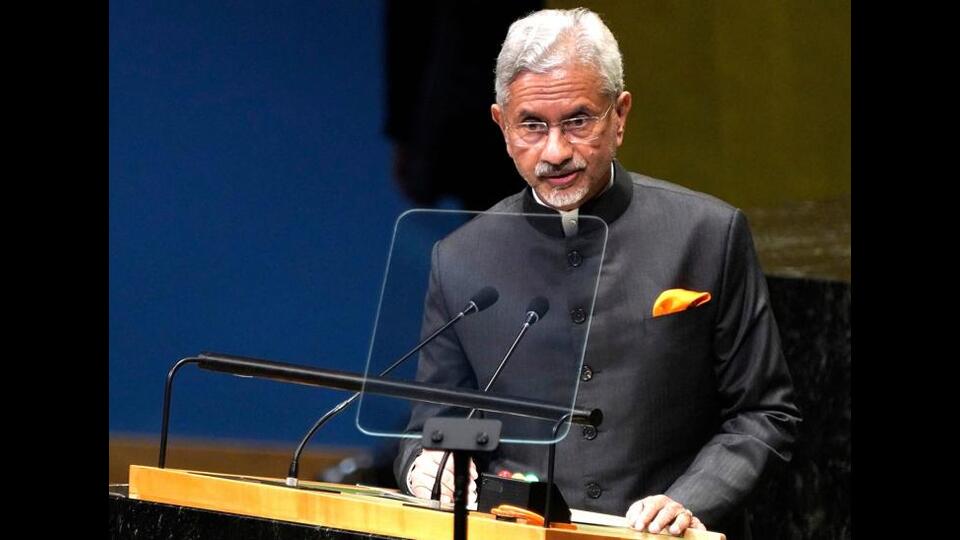
So, what changed? External affairs minister S Jaishankar recently mentioned one particular drag on India-US ties: terrorism, with an obvious context. Trump’s unusually warm relationship with Pakistan’s army chief Asim Munir has not gone down well in New Delhi. However, there are no signs that New Delhi wants to break with Washington. Instead, it has signalled greater willingness to state its concerns and its limits. Jaishankar went further at the Munich Leaders Meeting. He described the US as having undergone a “radical repositioning” and said that it had “deliberately become a lonelier power”. He drew an important distinction between US policy and what was happening under Trump (limited to the current administration). However, he also pointed out continuity between the Biden and Trump administrations when it comes to industrial policy. India therefore cannot assume that simply a change of president will restore the relationship to its state before Trump. That said, the relationship hasn’t become irreparable either.
The US midterm elections are approaching. India is beginning to speak openly about the problems in the relationship just as Trump’s political room for manoeuvre could begin to narrow — a change in control of either chamber of Congress would constrain Trump. India only needs to recognise that Trump’s presidency will eventually end, and that whoever follows him will inherit the consequences of his policies. Washington may eventually discover that being a “lonelier power” comes with a cost. Meanwhile, New Delhi should continue to engage Washington while preparing for a relationship in which US policy remains more transactional than it would like.
A future US administration may have to spend considerable political capital rebuilding trust with allies and partners subjected to tariffs, sanctions and pressure. India should not assume that this will necessarily happen, or that it can afford to wait for a more accommodating administration. It needs to build relationships that serve its interests regardless of who occupies the White House. This is where Europe becomes important.
The India-EU free trade agreement is concluded. There is a security and defence partnership and a mobility understanding. Anyone who deals with Indian manufacturing knows how deeply European companies are already embedded in the country. The opportunity is enormous: engineering, electronics, defence, space, components, machinery and advanced manufacturing. Europe itself is rebuilding its defence capacity. India has capabilities in ammunition, artillery and some military vehicles, and could become a supplier. However, caution is necessary. Diversification does not mean replacing the US with Europe. Nor does it mean that India and Europe will always see eye to eye: Russia remains the most important example of this divergence. India has been speaking to both Moscow and Kyiv, trying to identify waypoints that could eventually make an end to the war possible.
Iran is another, narrower example. Europe has spent decades trying to prevent Iran from becoming a military nuclear power. Jaishankar was recently asked if India was comfortable with another nuclear power. He replied cryptically that while India had never signed the NPT, Iran had. Europe’s concern is nuclear proliferation and regional security. India’s is whether energy continues to flow, and at what price. The interests overlap even if they are not identical.
This is why India needs the freedom to work with partners where interests converge, while accepting that there will be differences. India now has to consider what happens after Trump. Stronger relationships with Europe, Russia, Japan, the Gulf and others give India choices. Diversification alone, though, may not be enough. India doesn’t have the ability to shape the emerging world just yet. Multipolarity gives India more room to manoeuvre, but it also demands more from India: economic weight, manufacturing capacity, technology and military power. It cannot expect other countries to accommodate its interests simply because it has maintained relationships with several of them.
India may have decided that it has waited long enough to speak about its concerns with Washington, but strategic autonomy is expensive. So, it must turn plain-speaking into a broader strategy: Maintain the relationship with the US, build stronger alternatives, retain the freedom to differ with partners, and invest in the capabilities that give India leverage.
Yusuf Unjhawala is a research fellow at Takshashila Institution, Bangalore. The views expressed are personal
(This piece is part of the HT debate series. The title of this debate is “What should India do about a difficult U.S.?” The opposing side of the debate can be accessed here)


