
 E-Paper



Photos: Ayodhya land dispute finds a resolution – a timeline
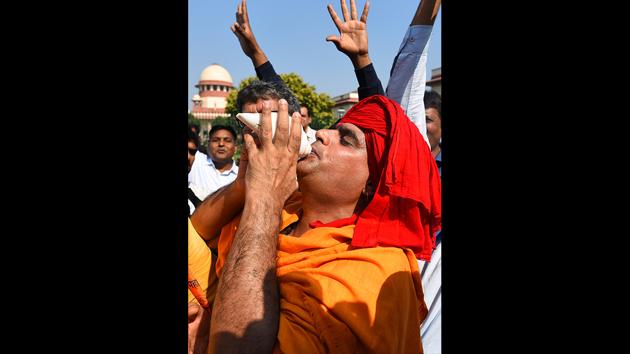
In a landmark ruling, a five-judge Constitution Bench of the Supreme Court on Saturday unanimously ruled that the disputed site at Ayodhya will go to Hindus and Muslims will get alternative land. In one of the most awaited orders, the bench -- comprising Chief Justice Ranjan Gogoi, Justices SA Bobde, DY Chandrachud, Ashok Bhushan and SA Nazeer -- said five acres of land will be given to Muslims. The judges wrapped up the case on October 16 in marathon 40-day daily hearing after the top court’s bid for mediation between the two parties failed to bear fruit. A look at the dispute timeline in pictures.
Updated on: Nov 9, 2019 7:23 PM IST


Share via


Copy link

1/14
 View Photos in a new improved layout
Updated on Nov 9, 2019 7:23 PM
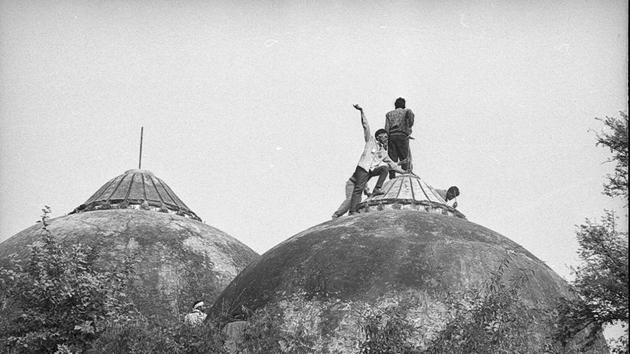
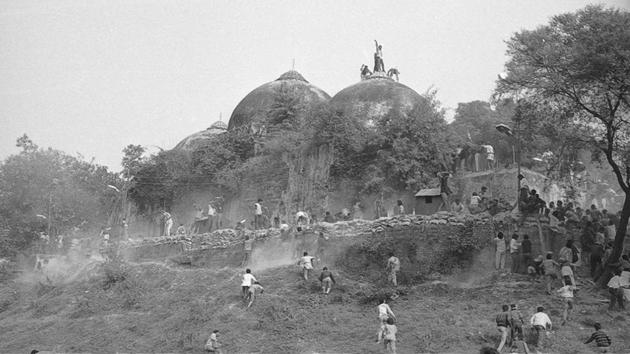
People climb atop Babri Masjid the day it was demolished in Ayodhya, Uttar Pradesh, on December 06, 1992. The Babri Masjid-Ram Janmabhoomi case has dragged on for over 25 years but the dispute is over a century old. Five judges of the Supreme Court on Saturday ruled the case in favour of Ram Lalla, that represents the child deity and held that a temple should be built at the Ayodhya site by a government-run trust. (Sanjay Sharma / HT Archive)
2/14
 View Photos in a new improved layout
Updated on Nov 9, 2019 7:23 PM
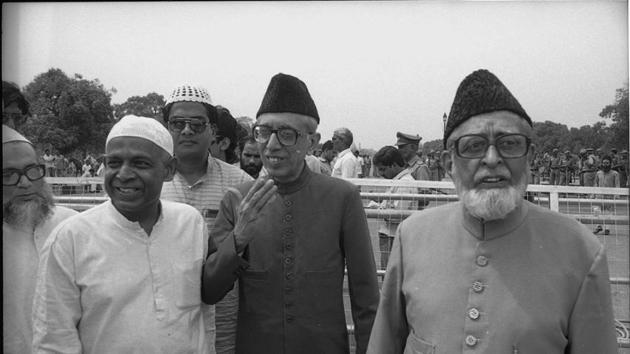
Muslims demonstrators at India Gate rallying for Babri Masjid on March 30, 1987. While the case took centre stage after the demolition in 1992, disputes over the ownership of the land date back to 18th century with the first incident of violence over the site recorded in 1853. The epic court dispute began when Mahant Raghubir Das, a Hindu priest, filed the first court case and sought permission to build a canopy on the Ramchabutra. (Virendra Prabhakar / HT Archive)
3/14
 View Photos in a new improved layout
Updated on Nov 9, 2019 7:23 PM
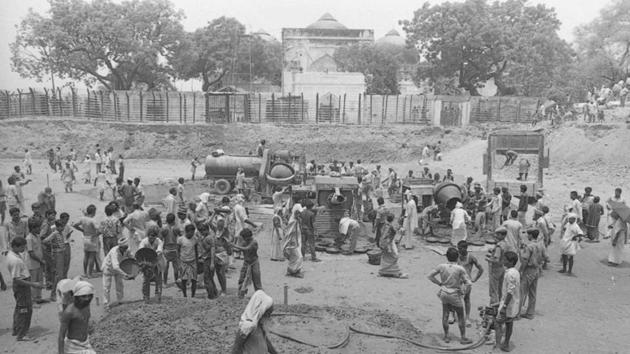
Workers begin the construction work for the Ram temple on July 09, 1992. Hindu groups formed a committee in 1984 to lead the construction of a Ram temple at the Janmabhoomi site and the movement gathered momentum under BJP leader Lal Krishna Advani. In 1989, the Vishwa Hindu Parishad (VHP) laid the foundation of a Ram temple on the land next to the Babri Masjid. (Rajiv Gupta / HT Archive)
4/14
 View Photos in a new improved layout
Updated on Nov 9, 2019 7:23 PM
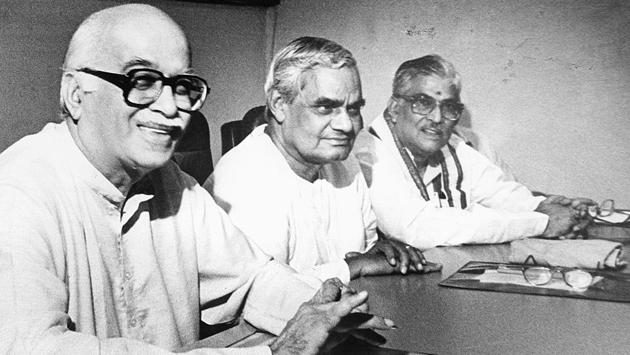
AB Vajpayee (C), Murli Manohar Joshi (R) and LK Advani at a party National Executive Committee meeting. BJP president Advani in 1990 went on a Somnath-to-Ayodhya Rath Yatra to ‘educate people’ about the movement to build a temple at the site. In 1991, BJP became the primary opposition party and came to power in Uttar Pradesh. The momentum for the temple movement increased as kar sevaks (volunteers) poured into Ayodhya. (HT Archive)
5/14
 View Photos in a new improved layout
Updated on Nov 9, 2019 7:23 PM
As BJP gained momentum with its Rath Yatra, thousands of kar sevaks gathered in Ayodhya. The mosque was partially damaged in 1990 and at least 30 were killed in police firing. The state government, under Mulayam Singh Yadav, swore protection and promised a complete lockdown of the site and city. (HT Archive)
6/14
 View Photos in a new improved layout
Updated on Nov 9, 2019 7:23 PM
A politically charged crowd after speeches by LK Advani, Murli Manohor Joshi and Uma Bharti stormed the Babri Masjid and razed it to the ground, sparking anti-communal riots across India in which an estimated 2,000 people were killed. (Sanjay Sharma / HT Archive)
7/14
 View Photos in a new improved layout
Updated on Nov 9, 2019 7:23 PM
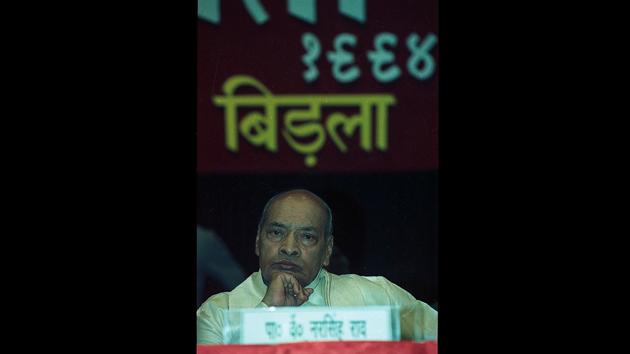
Then Prime Minister PV Narasimha Rao, at Saraswati Samman KK Birla Foundation Award, in 1994. In the immediate fallout, Rao’s government dismissed BJP governments in UP, MP, Rajasthan and Himachal Pradesh. Ten days after the mosque was demolished, Prime Minister Rao set up a commission of inquiry under retired judge Justice MS Liberhan. (HT Archive)
8/14
 View Photos in a new improved layout
Updated on Nov 9, 2019 7:23 PM
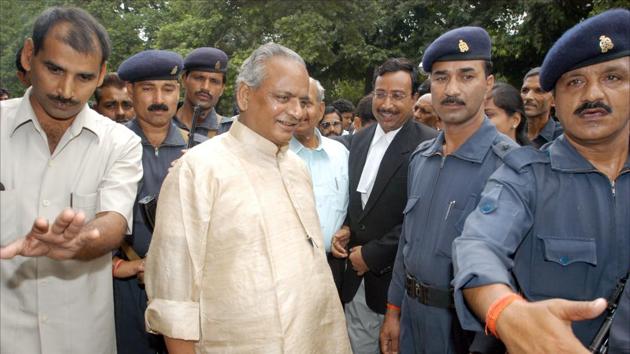
A special court hearing the Babri Masjid demolition case ordered framing of charges against 49 accused, including senior BJP leaders Lal Krishna Advani, Murli Manohar Joshi and Kalyan Singh (pictured) in September 1997. (Ajay Aggarwal / HT Archive)
9/14
 View Photos in a new improved layout
Updated on Nov 9, 2019 7:23 PM
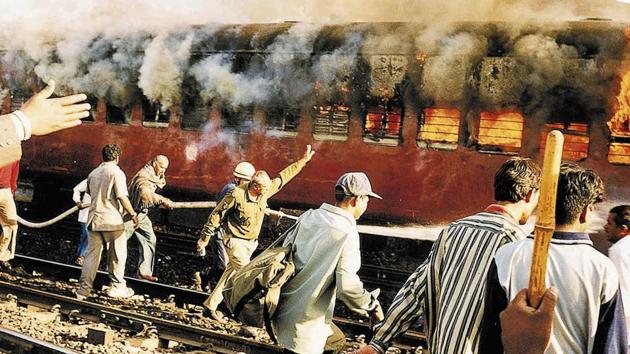
In 2002, under pressure from VHP, the Centre filed an application in the Supreme Court for vacating the ‘interim order’ banning any religious activity in Ayodhya. On February 6, 2002 at least 59 people were killed when a train in Godhra, Gujarat carrying kar sevaks from Ayodhya was attacked. As a result, riots erupted across Gujarat in which over 1,000 people were killed. (AP File)
10/14
 View Photos in a new improved layout
Updated on Nov 9, 2019 7:23 PM
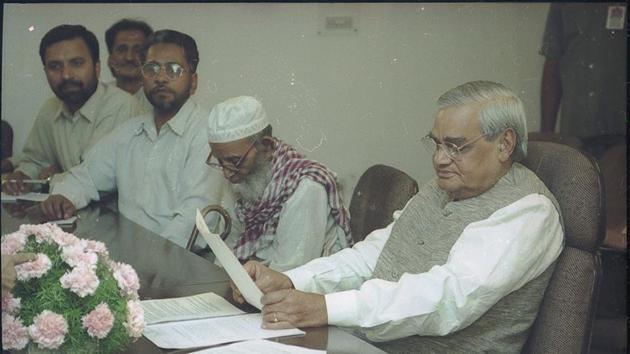
Then Prime minister AB Vajpayee meets with Babri Masjid Action Committee, on 15 May, 2000. After the Lucknow bench of the Allahabad High Court began hearings to determine who owns the Ayodhya site, Prime Minister AB Vajpayee set up an Ayodhya cell to hold talks with Hindu and Muslim leaders. After a series of events following the Allahabad High Court verdict of a three-way division of the disputed land and its subsequent failure, the top court called for an amicable settlement. (Pradeep Bhatia / HT Archive)
11/14
 View Photos in a new improved layout
Updated on Nov 9, 2019 7:23 PM
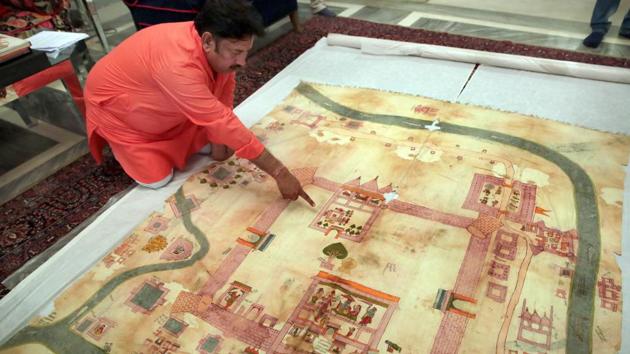
Ramu Ramdev, OSD at the City Palace, points out at Lord Rama’s birthplace in an old dilapidated map of Ayodhya being taken out from archives of erstwhile royal family of Jaipur, at City Palace, in Jaipur. On September 30, 2010, Allahabad High Court led by a three-judge bench partitioned the 2.77 acres of land in three equal parts between the the Sunni Waqf Board, the Nirmohi Akhara and Ram Lalla. (Himanshu Vyas / HT File)
12/14
 View Photos in a new improved layout
Updated on Nov 9, 2019 7:23 PM
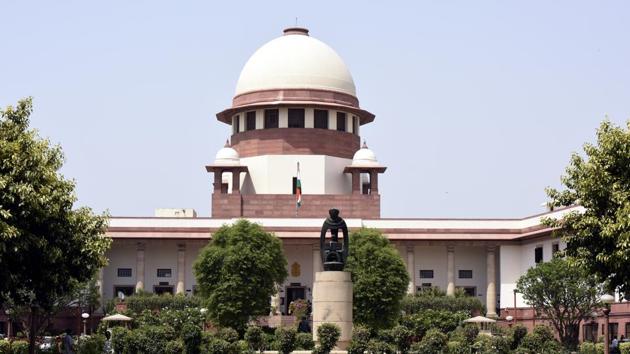
After a series of events following the Allahabad High Court verdict of a three-way division of the disputed land and its subsequent failure, the top court called for an amicable settlement over who owns the site. On the eve of 25th anniversary of the demolition the SC decided to hear civil appeals filed by various parties challenging the 2010 Allahabad High Court verdict on the Ram Janmabhoomi-Babri Masjid title dispute on February 8 next year. (Sonu Mehta / HT Archive)
13/14
 View Photos in a new improved layout
Updated on Nov 9, 2019 7:23 PM
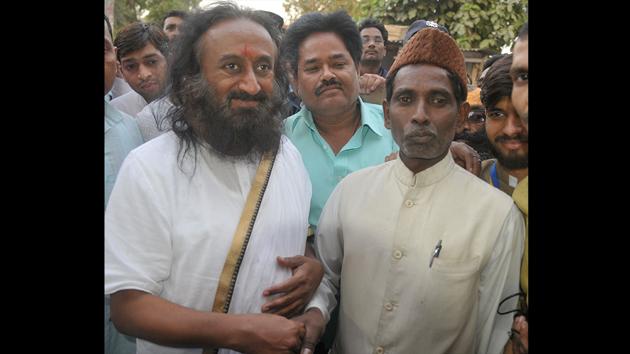
On March 08, 2019, SC constituted a mediation panel with FM Kalifulla as the chairman and comprising spiritual leader Sri Sri Ravi Shankar and senior advocate Sriram Panchu, to mediate in the land title dispute. Though the mediation failed and the court ordered day-to-day hearing of the case from August 06. (Deepak Gupta / HT Archive)
14/14
 View Photos in a new improved layout
Updated on Nov 9, 2019 7:23 PM


