

 E-Paper


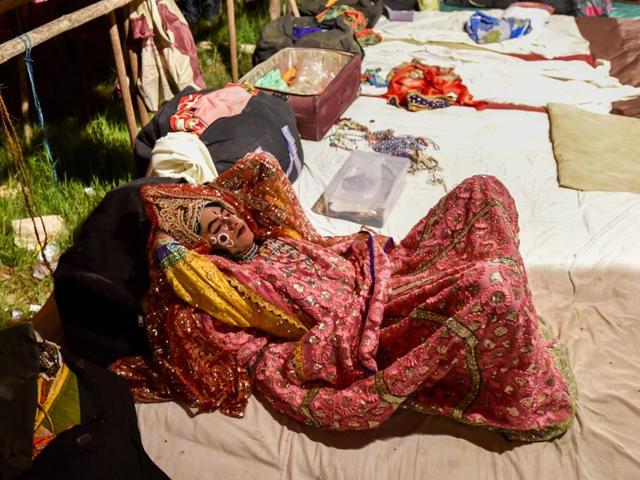
Ramleela: Watching the backstage drama
1 / 13
 View Photos in a new improved layout
Published on Oct 12, 2016 09:05 am IST
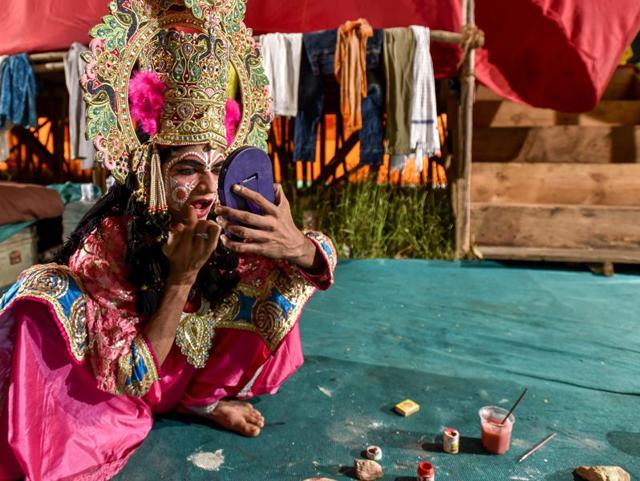
An artiste from Mathura in Uttar Pradesh gets ready before his performance at the Shri Ramleela Utsav Play Festival at Azad Maidan in Mumbai. Ramleela is a dramatic folk re-enactment of the life of Rama, ending up in ten-day battle between Rama and Ravana, as described in the Hindu religious epic, the Ramayana. (Kunal Patil/HT photo)
2 / 13
 View Photos in a new improved layout
Published on Oct 12, 2016 09:05 am IST
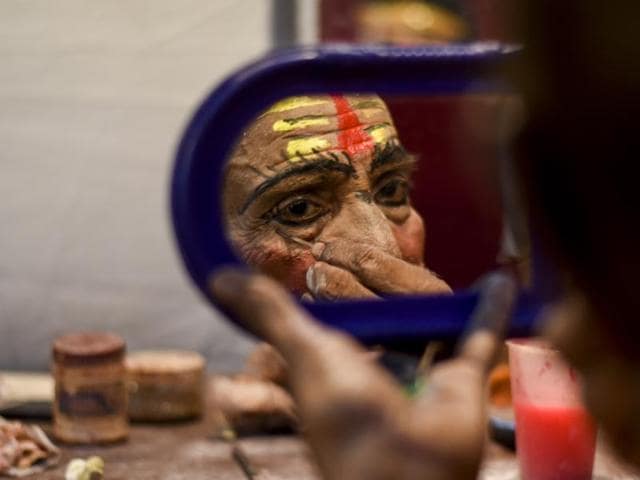
Traditionally organised in a makeshift open-air theatre at night, it is usually staged by amateur actors. There is often a singer in the sidelines who recites relevant verses from the Ramayana during moments of dramatic tension. These recitations and the narrative of the play are usually based on Ramacharitamanas, Gosvami Tulsidas’ version of the Ramayana, in the Awadhi language, written in the 16th century. (Kunal Patil/HT photo)
3 / 13
 View Photos in a new improved layout
Published on Oct 12, 2016 09:05 am IST
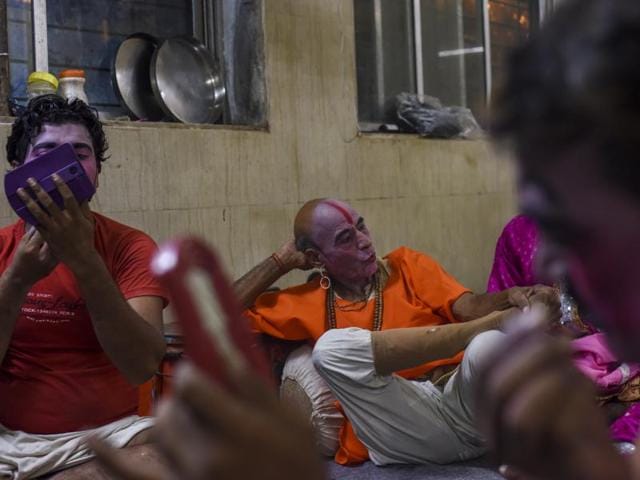
Historically it is believed that the first Ramlila shows were staged by Megha Bhagat, one of the disciples of Tulsidas, the author of Ramacharitamanas in about 1625 AD. (Kunal Patil/HT photo)
4 / 13
 View Photos in a new improved layout
Published on Oct 12, 2016 09:05 am IST
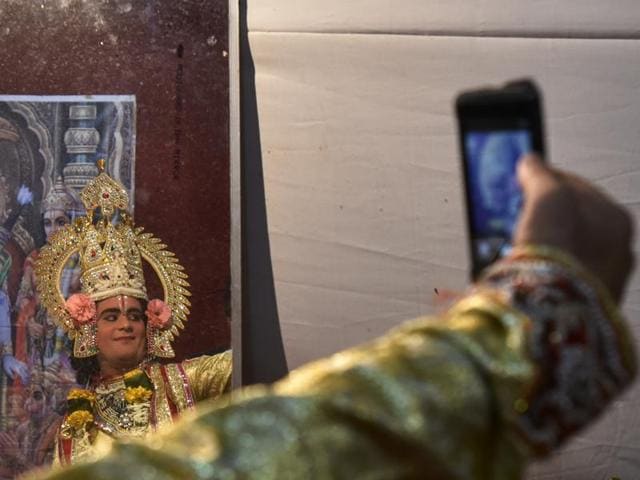
Keeping in touch with tradition does not mean an artiste cannot take a selfie after getting dressed up for his performance at the Shri Ramleela Utsav. (Kunal Patil/HT photo)
5 / 13
 View Photos in a new improved layout
Published on Oct 12, 2016 09:05 am IST
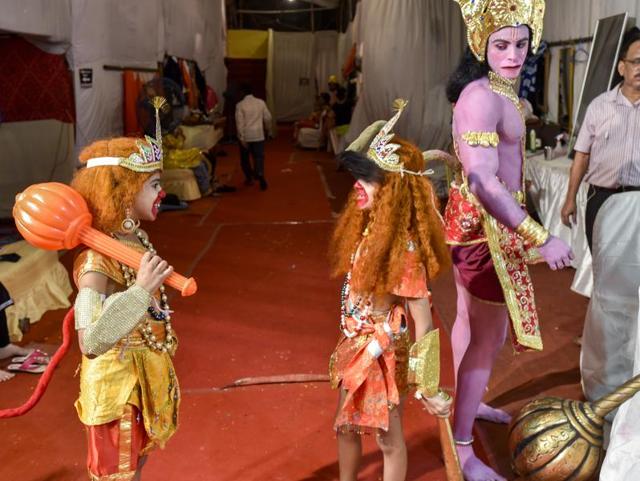
A tiny Hanuman seems all set to take over anyone who comes in his way. (Kunal Patil/HT photo)
6 / 13
 View Photos in a new improved layout
Published on Oct 12, 2016 09:05 am IST
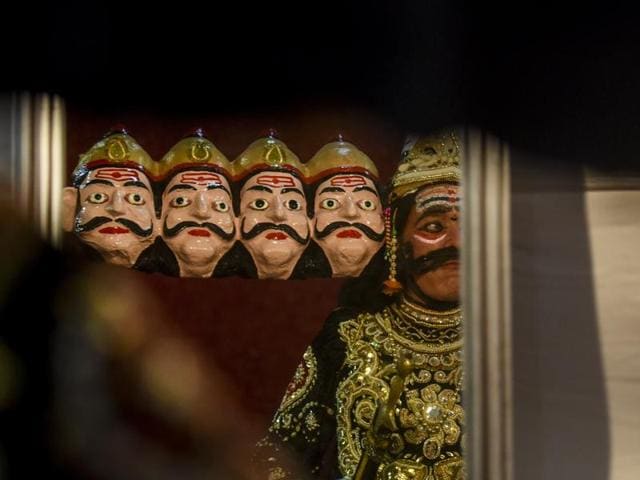
Who says Ravan can’t be nervous? An artiste has a quiet moment before his grand entry. (Kunal Patil/HT photo)
7 / 13
 View Photos in a new improved layout
Published on Oct 12, 2016 09:05 am IST
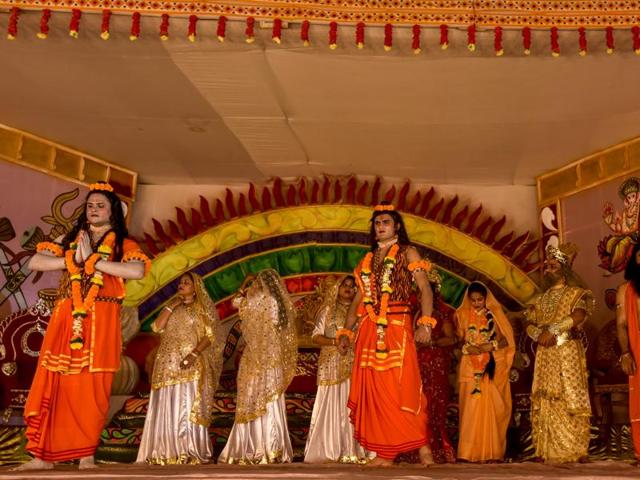
Ramleela has received considerable global attention, especially due to its diverse representation throughout the globe. UNESCO proclaimed the tradition a Masterpiece of the Oral and Intangible Heritage of Humanity in 2005. (Kunal Patil/HT photo)
8 / 13
 View Photos in a new improved layout
Published on Oct 12, 2016 09:05 am IST
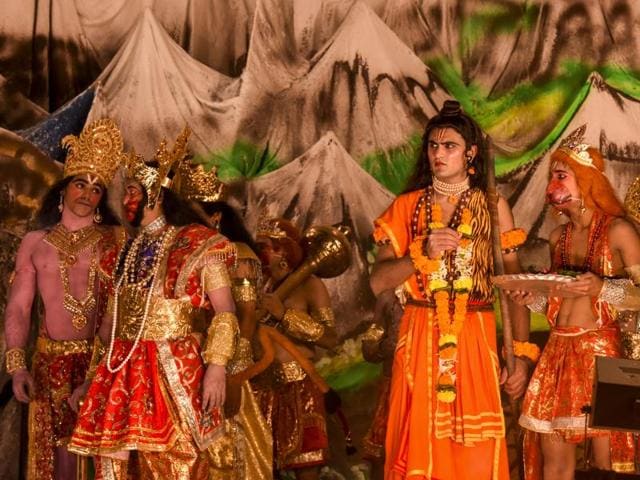
Lord Rama is called the Maryada Purushottam or ‘The best among the dignified’. (Kunal Patil/HT photo)
9 / 13
 View Photos in a new improved layout
Published on Oct 12, 2016 09:05 am IST
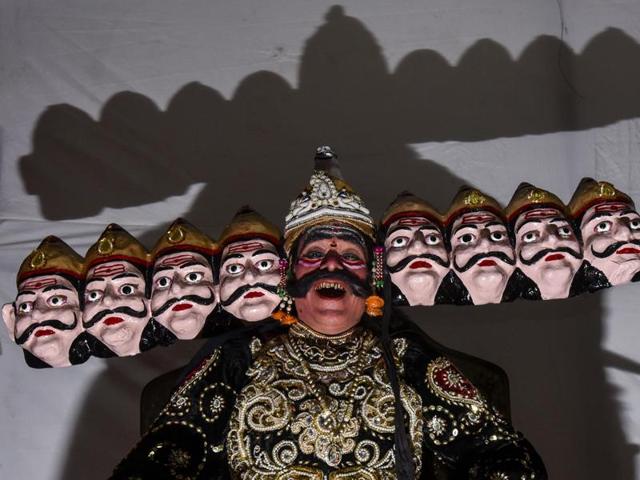
Ravana is depicted and described as having ten heads and as a follower of Shiva, a great scholar, a capable ruler, who wished to overpower the devas. His ten heads represent his knowledge of the six shastras and the four Vedas. In the Ramayana, Ravana kidnaps Rama’s wife Sita to exact revenge on Rama and his brother Lakshmana for having cut off the nose of his sister Shurpanakha. (Kunal Patil/HT photo)
10 / 13
 View Photos in a new improved layout
Published on Oct 12, 2016 09:05 am IST
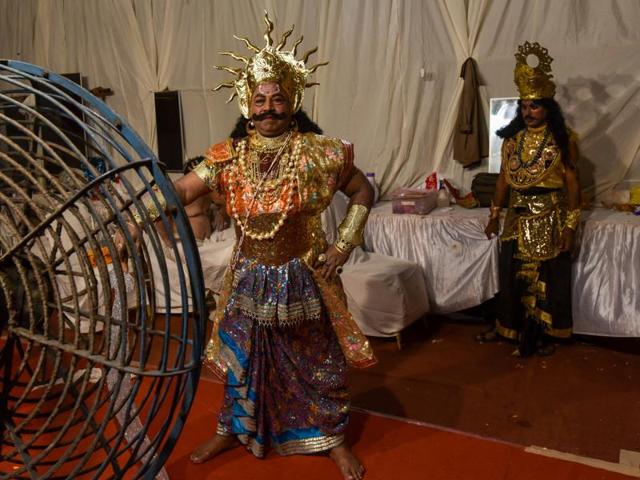
Time to cool down before turning on the heat on the stage. (Kunal Patil/HT photo)
11 / 13
 View Photos in a new improved layout
Published on Oct 12, 2016 09:05 am IST
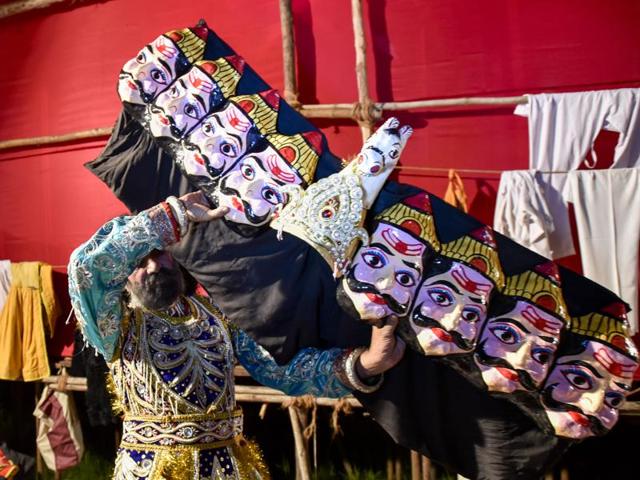
From the demon, back to being human. (Kunal Patil/HT photo)
12 / 13
 View Photos in a new improved layout
Published on Oct 12, 2016 09:05 am IST
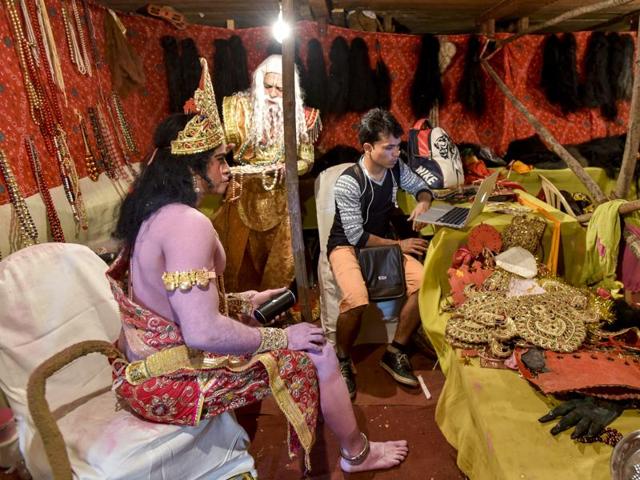
After the high-pitched drama, time for some high-decibel music. (Kunal Patil/HT photo)
13 / 13
 View Photos in a new improved layout
Published on Oct 12, 2016 09:05 am IST