

 E-Paper


Snacking on bugs: Students at Yokohama, Japan, show how
1 / 8
 View Photos in a new improved layout
Updated on Feb 25, 2016 07:03 pm IST
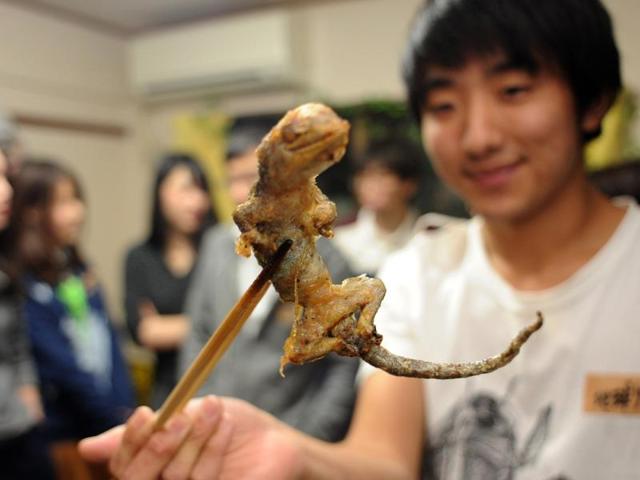
Yuta Shinohara (R) from Keio University cooks a lizard at a get-together in Tokyo on December 21, 2015. People gather a few times each month through word of mouth and social media sites to sample various insects and other creatures. Bugs are a staple in Japanese cuisine given their abundance in the region. (AFP)
2 / 8
 View Photos in a new improved layout
Updated on Feb 25, 2016 07:03 pm IST
The range of insects consumed in Japan is vast -- from boiled wasp larvae, silk moth pupae, aquatic insect larvae to grasshopper. (AFP)
3 / 8
 View Photos in a new improved layout
Updated on Feb 25, 2016 07:03 pm IST
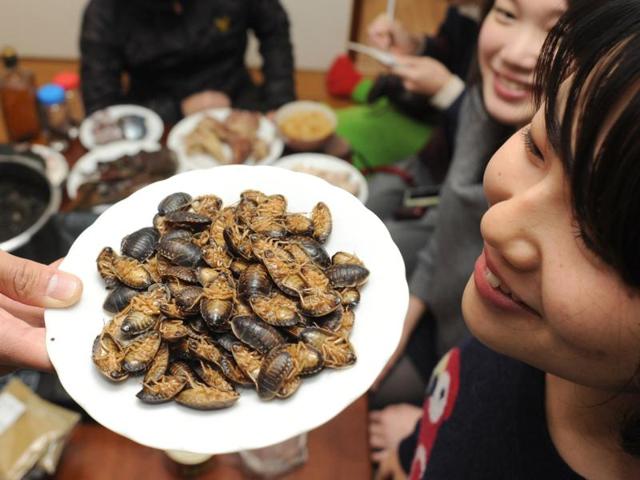
Not just Japan, many countries across the world have insects as one of the specialities in their cuisine. These include countries such as China, Ghana, Mexico and Brazil. A young woman admires a plate of insects at a get-together in Tokyo. (AFP)
4 / 8
 View Photos in a new improved layout
Updated on Feb 25, 2016 07:03 pm IST
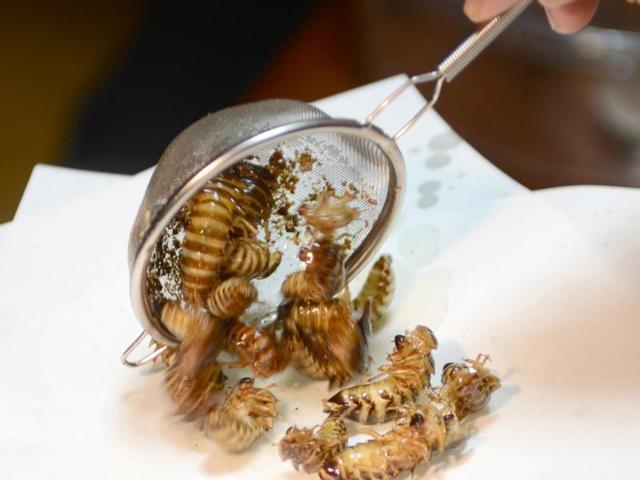
Here are few other insects you wouldn’t believe are edible --Stinkbug (Mexico, Southern Africa), Tarantula (Cambodia and Venezuela) and Dragonfly (Indonesia) to name a few. (AFP)
5 / 8
 View Photos in a new improved layout
Updated on Feb 25, 2016 07:03 pm IST
The health benefits of having bugs are immense, say experts. While the protein content is as high as any non vegetarian diet, fat content is dramatically less. (AFP)
6 / 8
 View Photos in a new improved layout
Updated on Feb 25, 2016 07:03 pm IST
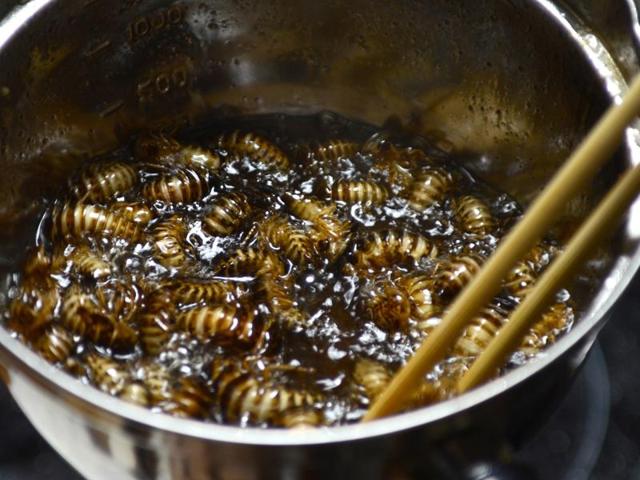
As per USNews web site, 100 grams of top sirloin beef (meat cut from the rear back portion of the animal) contains about 29 grams of protein in addition to a whopping 21 grams of fat, while 100 grams of grasshopper contains 20 grams of protein and a measly six grams of fat. (AFP)
7 / 8
 View Photos in a new improved layout
Updated on Feb 25, 2016 07:03 pm IST
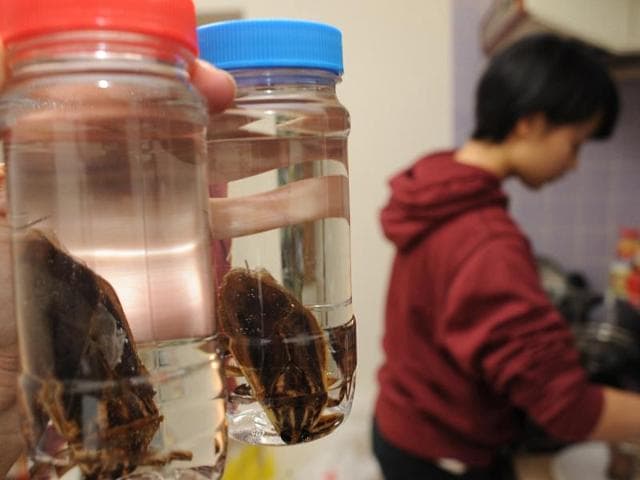
Additionally, farming insects emits 10 times less greenhouse gases as compared to livestock, says Dr Belgian entomologist Arnold van Huis in The Guardian. (AFP)
8 / 8
 View Photos in a new improved layout
Updated on Feb 25, 2016 07:03 pm IST