
 E-Paper



Photos: Iran marks the 40th anniversary of the 1979 Islamic Revolution
Forty years ago, Iran's ruling shah left his nation for the last time and an Islamic Revolution overthrew the vestiges of his caretaker government. February 11, marks the 40th anniversary of Iran’s exiled Ayatollah Ruhollah Khomeini cementing the revolution upon his return from exile to Tehran, a moment that changed the country’s history for decades to come. That revolution would spark the US Embassy takeover and hostage crisis, stoking the animosity that exists between Tehran and Washington to this day.
Updated on: Feb 11, 2019 3:22 PM IST


Share via


Copy link

1/17
 View Photos in a new improved layout
Updated on Feb 11, 2019 3:22 PM
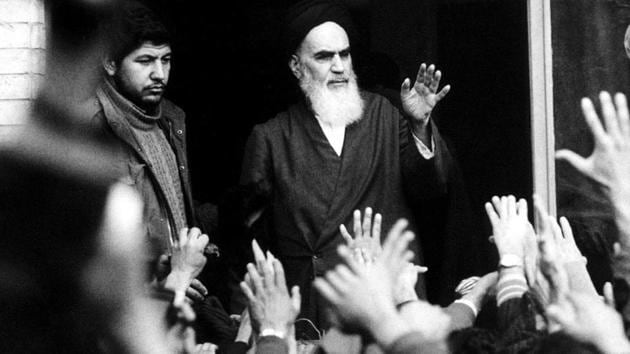
Ayatollah Ruhollah Khomeini (C), is greeted by supporters at the Alavi School upon his return in Tehran, Iran on February 1, 1979. Unrest sprouted with religious riots in the holy city of Qom a year ago on January 7 in 1978. The death of seven demonstrators set off a cycle of anti-Shah violence on each successive 40th day of mourning. (REUTERS File)
2/17
 View Photos in a new improved layout
Updated on Feb 11, 2019 3:22 PM
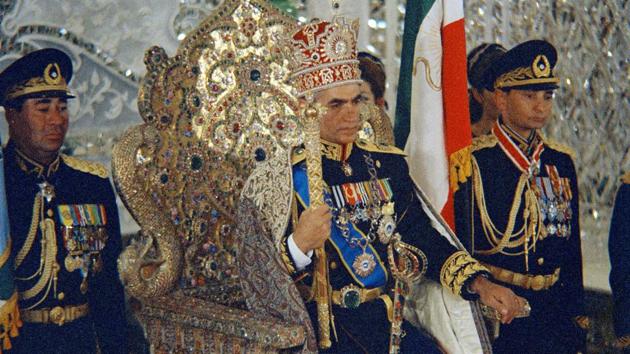
Shah Mohammad Reza Pahlavi sits on the Peacock Throne in Tehran, Iran in this October 1967 photo. The Shah blamed Soviet-backed Communists for the mounting violence on August 18, 1979. A day later a fire at a cinema hall in Abadan claimed hundreds of lives. Authorities and opposition blamed each other, triggering unrest across Iran’s oil-rich regions. (AP File)
3/17
 View Photos in a new improved layout
Updated on Feb 11, 2019 3:22 PM
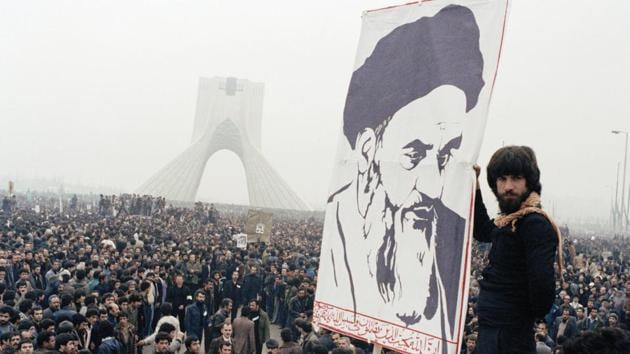
Protesters demonstrate against the Shah in Tehran a month after martial law was imposed on September 08, 1978 in Tehran and 11 cities after 100,00 anti-shah demonstrators marched in the capital and were shot at by troops in the Jaleh Square. 121 were killed and 200 wounded. (AP File)
4/17
 View Photos in a new improved layout
Updated on Feb 11, 2019 3:22 PM
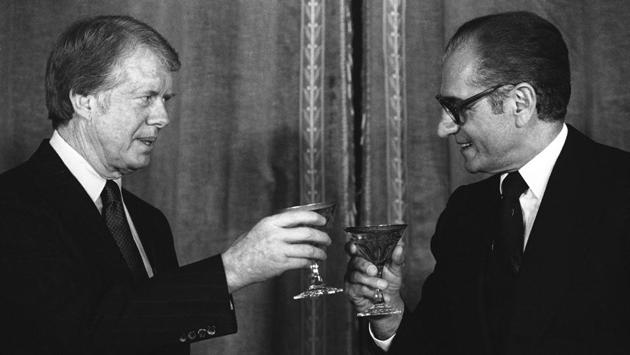
Then US President Jimmy Carter toasts Shah Mohammad Reza Pahlavi during a New Year’s Eve dinner at Niavaran Palace in Tehran on December 31, 1977. On September 11, 1978 Carter called on the shah to reaffirm the “close, friendly relationship” between the United States and Iran. Iran’s Islamic Revolution to follow, changed a stalwart ally into a regional adversary. (AP File)
5/17
 View Photos in a new improved layout
Updated on Feb 11, 2019 3:22 PM
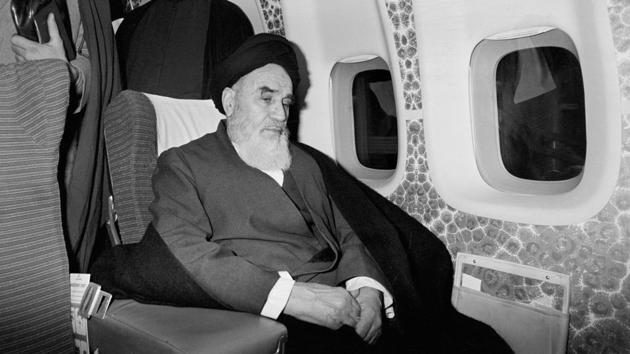
Ayatollah Ruhollah Khomeini inside an airplane in Paris before flying back to Iran after 14 years of exile. Iran entered October 1978 with strikes by civil servants nationwide. Khomeini was forced to leave Iraq for France where he had lived in exile since a failed revolt against the 1963 land reform that deprived the clergy of land holdings. (Thierry Campion / AP File)
6/17
 View Photos in a new improved layout
Updated on Feb 11, 2019 3:22 PM
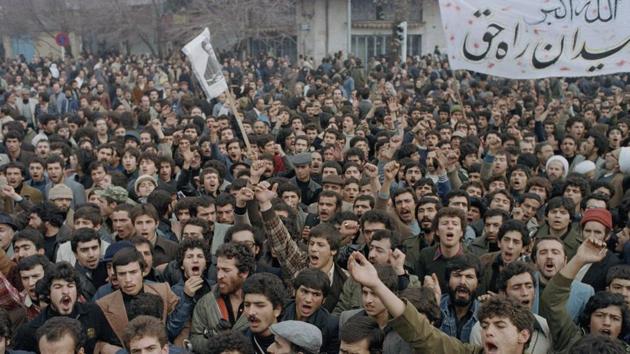
Protests in Tehran escalated towards November and Iran’s petroleum exports took a hit after workers began strikes that ultimately brought exports down from 5 million barrels a day to a trickle. (Michel Lipchitz / AP File)
7/17
 View Photos in a new improved layout
Updated on Feb 11, 2019 3:22 PM
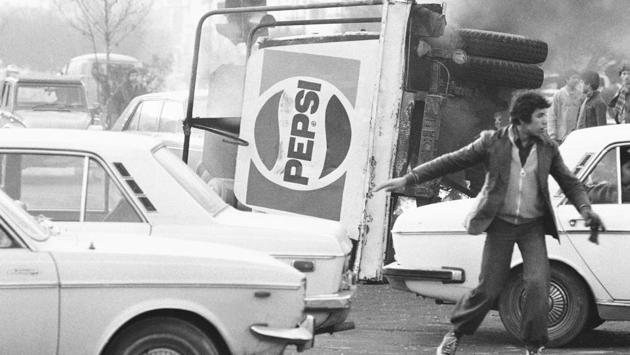
An overturned truck with a Pepsi logo burns during riots in Tehran. In early November, the cabinet resigned and was replaced by a military government headed by Gen. Gholam-Reza Azhari. Newspaper editors were arrested and censorship prompted a two-month newspaper strike. The shah pledged that “past mistakes of unlawfulness, cruelty and corruption will not be repeated.” (AP File)
8/17
 View Photos in a new improved layout
Updated on Feb 11, 2019 3:22 PM
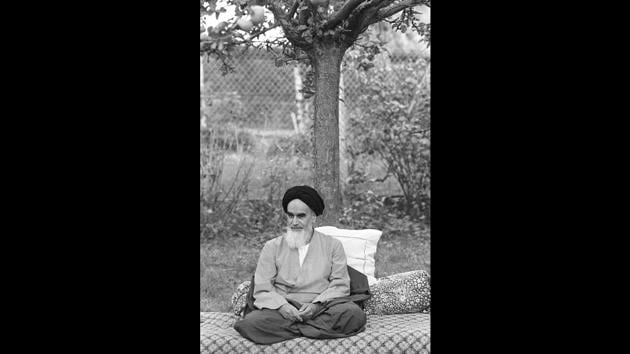
Ayatollah Khomeini in his garden in Neauphle-Le-Château, near Paris, a few months before his triumphal return to Iran. From Paris, The Ayatollah called for resistance against the “illegal” military government. With the government in turmoil, anti-Americanism intensified sparking an exodus that reduced the number of Americans from 45,000 to 12,000 by January. (Joel Robine / AFP File)
9/17
 View Photos in a new improved layout
Updated on Feb 11, 2019 3:22 PM
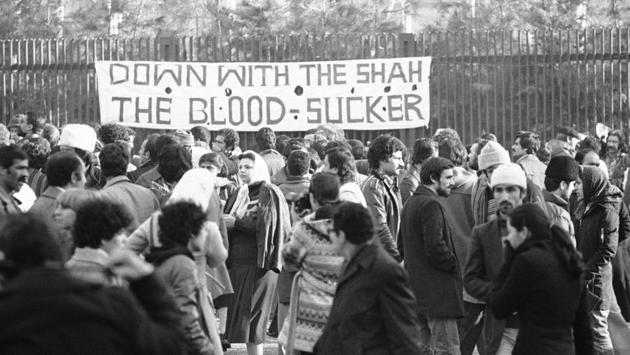
A banner denouncing the shah at the entrance of Tehran University in January 1979. In December, rioters burned down the headquarters of the US Grumman Aircraft Corp in Isfahan. An attempt to storm the US Embassy in Tehran resulted in US Marines firing tear gas. On December 29, the shah asked Shapour Bakhtiar of the opposition National Front to form a civilian government. (Bernhard Frye / AP File)
10/17
 View Photos in a new improved layout
Updated on Feb 11, 2019 3:22 PM
Demonstrators hold a poster of Ayatollah Ruhollah Khomeini on January 01, 1979, during a demonstration in Tehran. The same day Shah Mohammad Reza Pahlavi appeared before reporters for the first time in two months and conceded that he “would love” to go on a vacation “in the situation permits.” (AFP File)
11/17
 View Photos in a new improved layout
Updated on Feb 11, 2019 3:22 PM
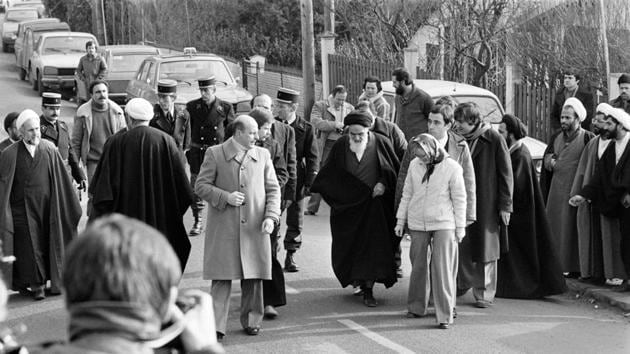
Future Iranian President Hassan Rohani (background 2nd-R, with turban and glasses) among companions of Ayatollah Ruhollah Khomeini walking out of his villa in France. On January 13, the shah appointed a regency council to represent the crown during his absence, while the Ayatollah announced the formation of a revolutionary council to prepare for an “Islamic republic” from Paris. (Marcel Binh / AFP File)
12/17
 View Photos in a new improved layout
Updated on Feb 11, 2019 3:22 PM
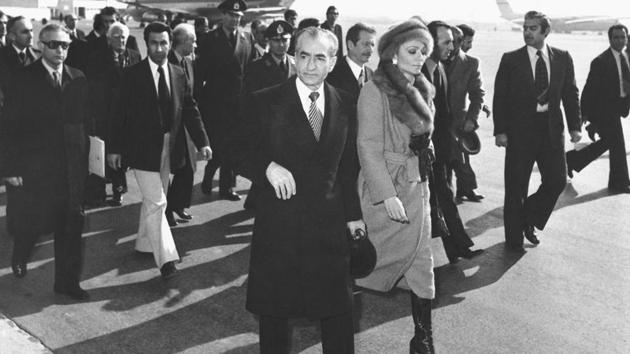
Shah Mohammad Reza Pahlavi and Empress Farah Diba walk on the tarmac at Mehrabad Airport in Tehran. The shah abandoned the Peacock Throne on January 16, departing Iran at the controls of a jetliner, never to return. (AP File)
13/17
 View Photos in a new improved layout
Updated on Feb 11, 2019 3:22 PM
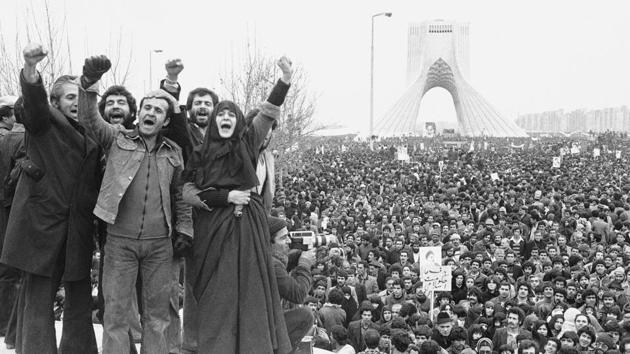
More than a million supporters of an Islamic Republic assembled around the Shayad monument, in Tehran on January 16. The shah’s departure left the country euphoric with leftist and secular groups jumping to back the Ayatollah as a figurehead despite ideological differences in the expectations of political gains once the dust settled. (Aristotle Saris / AP)
14/17
 View Photos in a new improved layout
Updated on Feb 11, 2019 3:22 PM
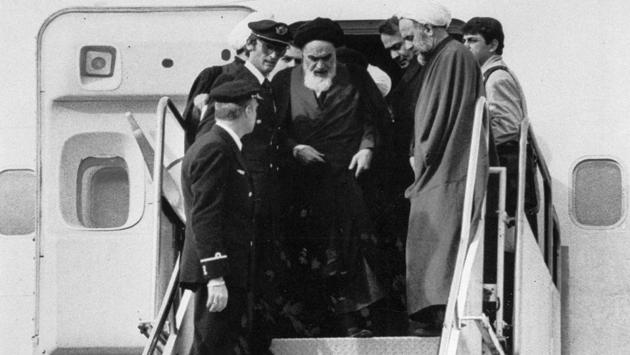
Ayatollah Ruhollah Khomeini emerges from a chartered Air France, accompanied by supporters and 120 international journalists as a measure against threats, upon his arrival at Mehrabad airport in Tehran, Iran on February 01, 1979. (FY / AP File)
15/17
 View Photos in a new improved layout
Updated on Feb 11, 2019 3:22 PM
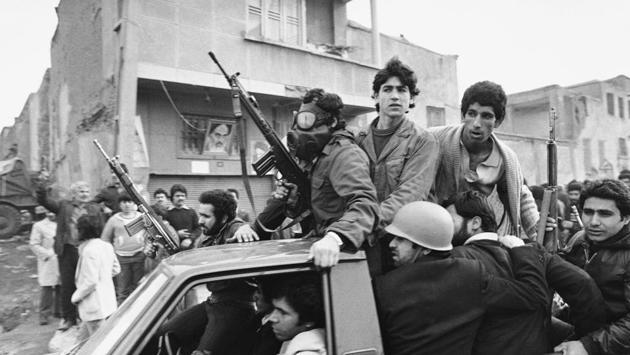
Armed rebels, one wearing a gas mask, ride in a truck near the headquarters of Ayatollah Khomeini in Tehran. Imperial guards were sent in to quell a pro-Khomeini demonstration by air force cadets in Farahabad on February 09. Islamists and leftist guerrillas fought imperial troops around the base the next day resulting in the troops’ retreat with heavy losses. (Campion / AP File)
16/17
 View Photos in a new improved layout
Updated on Feb 11, 2019 3:22 PM
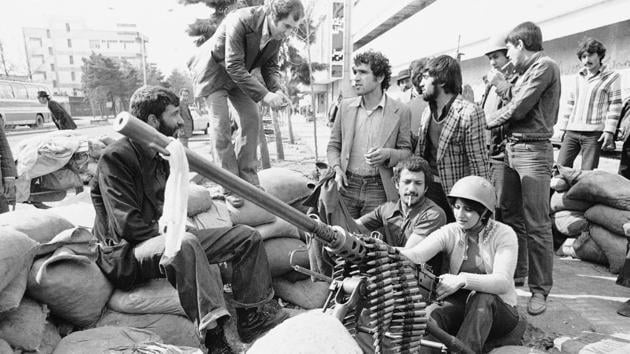
An Iranian woman sits at a heavy weapon in Tehran Street, on February 13, 1979. On February 11, Iran’s general staff declared the neutrality of the armed forces and troops were ordered back to their barracks, guaranteeing the Islamic Revolution’s success. The loss of the military doomed the Shapour Bakhtiar government, forcing the prime minister to eventually take exile in France. (Michel Lipchitz / AP File)
17/17
 View Photos in a new improved layout
Updated on Feb 11, 2019 3:22 PM


