
 E-Paper



Photos: Muslim family holds ancient key to Jesus tomb site in Jerusalem
For centuries, the imposing iron key to the Church of the Holy Sepulchre, built where many Christians believe Jesus was crucified and buried, has been passed down from father to son in a Muslim family in Jerusalem's Old City which houses sites that are sacred to all three major Abrahamic monotheisms.
Updated on: Dec 5, 2017 10:39 AM IST


Share via


Copy link

1/10

 View Photos in a new improved layout
Updated on Dec 5, 2017 10:39 AM
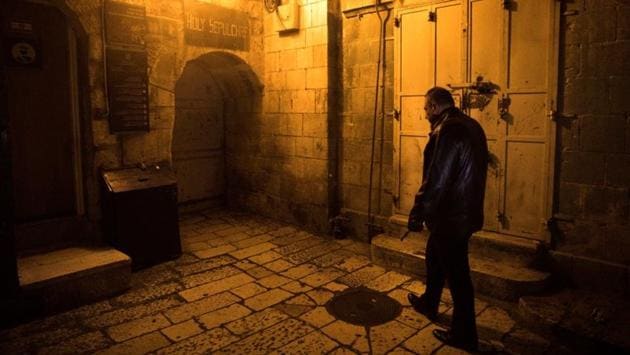
An Orthodox Christian priest walks inside the Church of the Holy Sepulchre in Jerusalem's Old City. As night falls, Adeeb Joudeh, a Muslim, makes his way through the stone alleyways of Jerusalem’s walled Old City cradling the ancient key to one of Christianity’s holiest sites. (Ronen Zvulun / REUTERS)
2/10
 View Photos in a new improved layout
Updated on Dec 5, 2017 10:39 AM
Worshippers touch the purported tomb of Jesus in the burial place, known as the Edicule, at the Church of the Holy Sepulchre. Jerusalem’s Old City today houses sites that are sacred to all three major monotheisms. It and other east Jerusalem areas were captured by Israel from Jordan in the 1967 Middle East war. (Ronen Zvulun / REUTERS)
3/10
 View Photos in a new improved layout
Updated on Dec 5, 2017 10:39 AM
Adeeb Joudeh, the custodian of the ancient key to the Church of the Holy Sepulchre, walks as he holds the church key in Jerusalem's Old City. Centuries ago, the imposing iron key was entrusted to his family, one of Jerusalem’s most prominent clans, says Joudeh. (Ronen Zvulun / REUTERS)
4/10
 View Photos in a new improved layout
Updated on Dec 5, 2017 10:39 AM
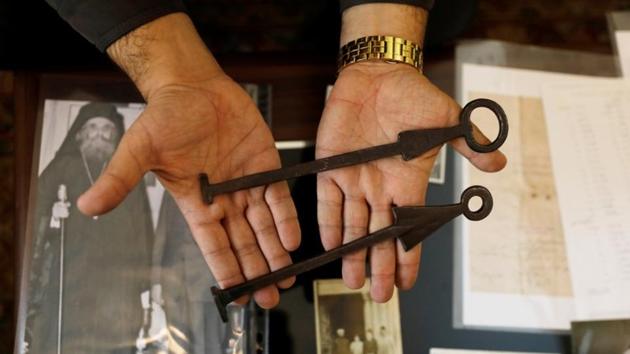
Adeeb Joudeh, displays the ancient keys to the Church of the Holy Sepulchre, at his home near Jerusalem's Old City. He dates the arrangement back to the time of Saladin, the Muslim conqueror who seized the holy city from the Crusaders in 1187. (Ronen Zvulun / REUTERS)
5/10
 View Photos in a new improved layout
Updated on Dec 5, 2017 10:39 AM
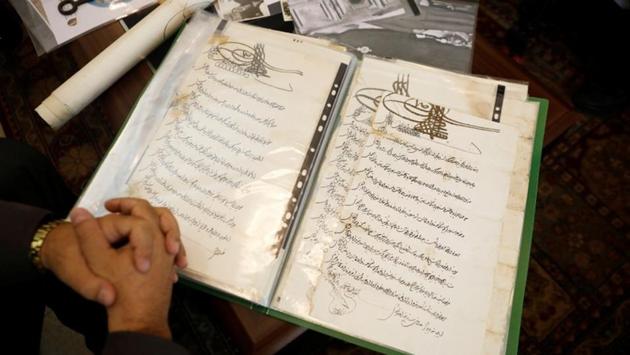
Adeeb Joudeh, shows royal decrees called "Fermans", by rulers of the Ottoman empire, bestowing the key custodianship of the Church upon his family. Historians differ on the roots of the arrangement. Some researchers say Saladin most likely bestowed the guardianship upon two families in order to assert Muslim dominance over Christianity. Documentation, however, only goes back to the 16th century, Joudeh said. (Ronen Zvulun / REUTERS)
6/10
 View Photos in a new improved layout
Updated on Dec 5, 2017 10:39 AM
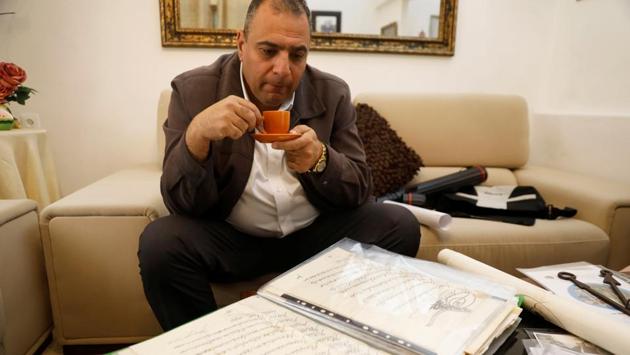
Another of the city’s oldest Muslim families, the Nusseibehs, were entrusted with the duty of opening and closing the church doors, a task they perform to this day. It requires firm fingers: The key is 30 cm (12 inches) long and weighs 250 grams (0.5 pounds). Joudeh says his key is about 800 years old. Another copy he holds broke after centuries of use. (Ronen Zvulun / REUTERS)
7/10
 View Photos in a new improved layout
Updated on Dec 5, 2017 10:39 AM
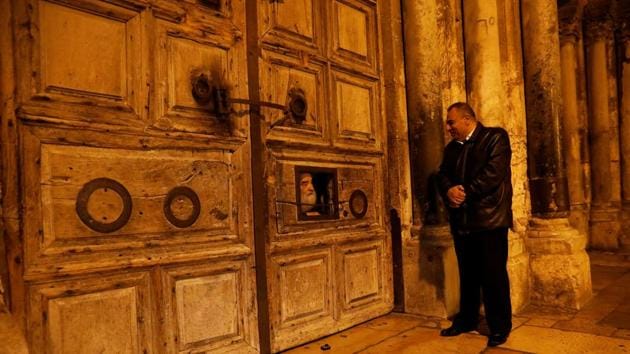
Adeeb Joudeh (R), looks at a priest as he peers through an opening in the church doors as they prepare to open it, in Jerusalem's Old City. “I started learning this when I was eight years old. It’s handed down from father to son,” said Joudeh. “I have been doing this for 30 years and I feel that the Church of the Holy Sepulchre is my second home.” (Ronen Zvulun / REUTERS)
8/10
 View Photos in a new improved layout
Updated on Dec 5, 2017 10:39 AM
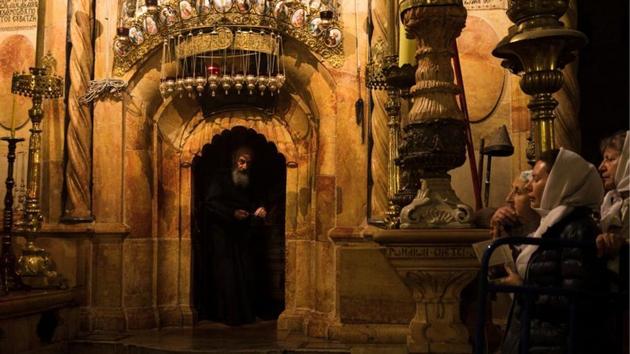
Worshippers stand nearby as a priest peers out from the Edicule, the burial place housing the purported tomb of Jesus, at the Church of the Holy Sepulchre. The Greek Orthodox, Armenian and Roman Catholic denominations share custody of the church, where tensions often run high over control of its various sectors. (Ronen Zvulun / REUTERS)
9/10
 View Photos in a new improved layout
Updated on Dec 5, 2017 10:39 AM
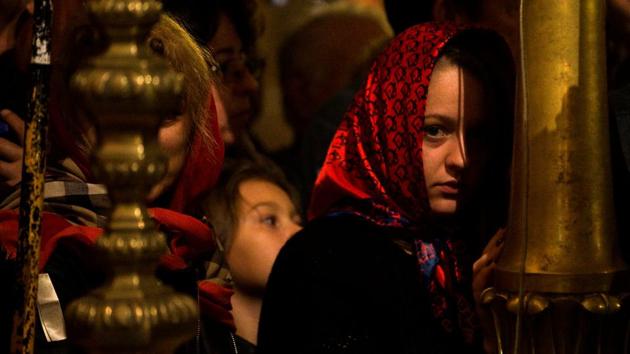
A worshipper visits the Church of the Holy Sepulchre in Jerusalem's Old City. Christianity scholar Yisca Harani said having Muslim families in charge of the key and the doors helps somewhat in keeping the peace between the denominations. (Ronen Zvulun / REUTERS)
10/10
 View Photos in a new improved layout
Updated on Dec 5, 2017 10:39 AM


