
 E-Paper



Photos: Soviet bombs continue to claim lives in Afghanistan decades on
Forty years after the Soviet Union invaded Afghanistan -- and three decades since the conflict ended -- the war's legacy continues to claim lives across the country. Cluster bombs were used extensively by Soviet forces, who dropped them like deadly rain across Afghanistan in the years following their December 1979 invasion. Bamiyan, famous as the home of two giant 6th-century Buddha carvings that the Taliban blew up, has been extensively scoured for mines and other explosives. The region, dominated by Shiite Hazaras and relatively unaffected by today's violence ravaging the rest of Afghanistan, will soon be the first of the 34 provinces in Afghanistan where all known contaminated areas have been cleared of mines.
Updated on: Dec 16, 2019 5:34 PM IST


Share via


Copy link

1/11
 View Photos in a new improved layout
Updated on Dec 16, 2019 5:34 PM
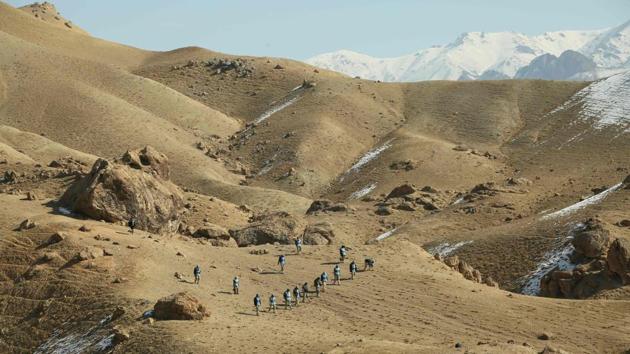
Deminers scan a Soviet-era combat zone at Ahangaran in Bamiyan, Afghanistan. Gholam Mahaiuddin sighs softly as he thinks of his 14-year-old son, killed by a bomb dropped last century in the hills of Bamiyan. “We knew the mountain was dangerous,” said Mahaiuddin, who found his son’s remains after he didn’t come home one day. “We were aware of mines but we could not find them. They were buried in the soft sand after the rain.” (Mohammad Ali Shaida / AFP)
2/11
 View Photos in a new improved layout
Updated on Dec 16, 2019 5:34 PM
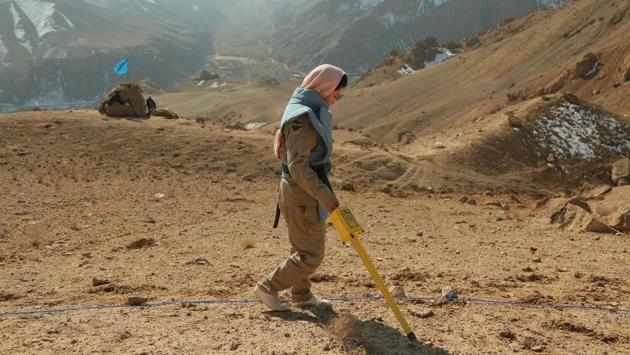
An Afghan deminer at work. Mahaiuddin’s son, Moujtaba, was killed along with two friends, aged 12 and 14, on May 17 when they went looking for berries. When none of them had returned the next day, Mahaiuddin and other residents from his tiny village, called Ahangaran, started searching. “I found my son with just his chest and head left,” Mahaiuddin recalled. (AFP)
3/11
 View Photos in a new improved layout
Updated on Dec 16, 2019 5:34 PM
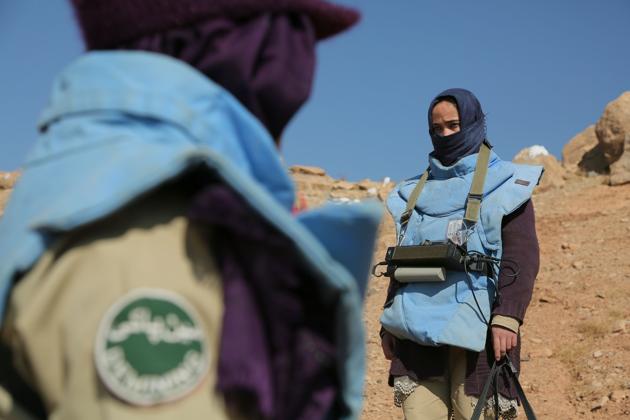
Moujtaba and his friends had been killed by what is known as an AO-2.5 RTM submunition. The cluster bombs were used extensively by Soviet forces, who dropped them like deadly rain across Afghanistan in the years following their December 1979 invasion. Mahaiuddin, 44, remembers the war well. He said he used to bring tea to mujahideen fighters who would hide in the mountains and launch ambushes against Soviet patrols. (AFP)
4/11
 View Photos in a new improved layout
Updated on Dec 16, 2019 5:34 PM
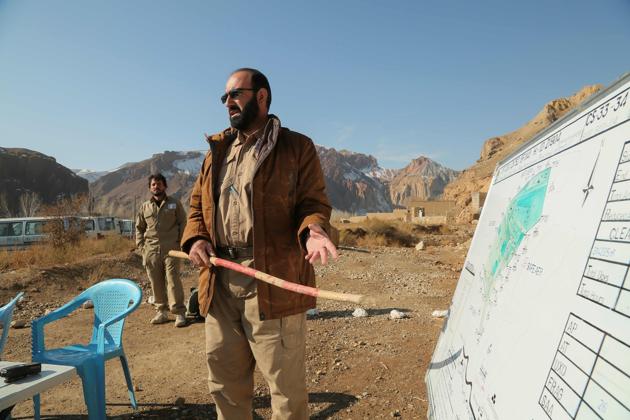
A team is briefed as they scan a combat zone dating back to the Soviet invasion. “It is the most dangerous, it is very sensitive to vibrations,” said Bachir Ahmad, who heads a team of deminers from the Danish Demining Group (DDG). The humanitarian organisation has been working in several Afghan provinces since 1999 to clear explosives left from a war most of the country’s current, young population never lived through. (AFP)
5/11
 View Photos in a new improved layout
Updated on Dec 16, 2019 5:34 PM
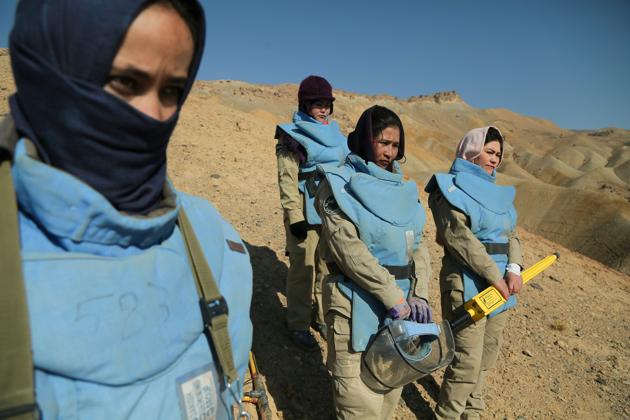
In this photograph taken on November 14, 2019, Afghan deminers working for the Danish Demining Group (DDG) look on during the scanning of a combat zone dating back to the Soviet invasion at Ahangaran in the central afghan province of Bamiyan. - Forty years after the Soviet Union invaded Afghanistan -- and three decades since the conflict ended -- the war's legacy continues to claim lives across the country. (Photo by MOHAMMAD ALI SHAIDA / AFP) / TO GO WITH: Afghanistan-conflict-SovietUnion-explosives, FEATURE by Pierre Celerier (AFP)
6/11
 View Photos in a new improved layout
Updated on Dec 16, 2019 5:34 PM
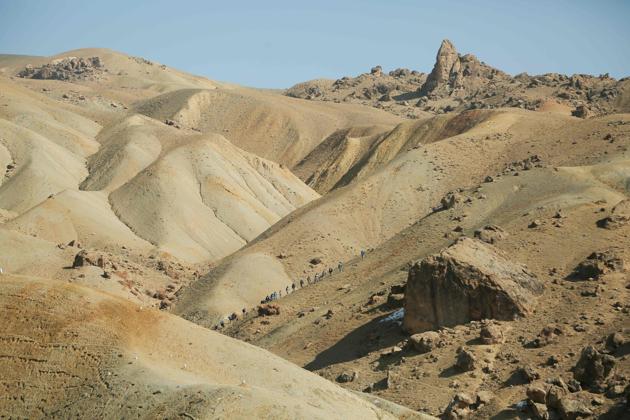
Bamiyan, famous as the home of two giant 6th-century Buddha carvings that the Taliban blew up, have been extensively scoured for mines and other explosives. Near the site of the blast that killed Moujtaba and his friends, DDG workers have painted white pathways showing which areas are clear of danger. “This is the last battlefield we are cleaning in Bamiyan, it dates back to 1986,” said Habib Noor, the DDG’s head for the province. (AFP)
7/11
 View Photos in a new improved layout
Updated on Dec 16, 2019 5:34 PM
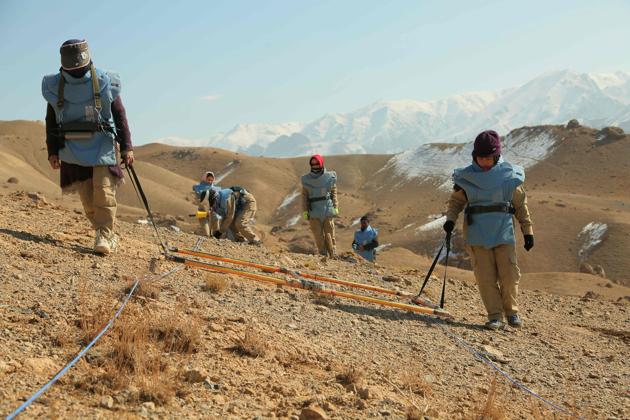
Bamiyan will soon be the first of the 34 provinces in Afghanistan where all known contaminated areas have been cleared. The DDG found 26 explosive devices just in the area around Ahangaran. “We explored the area with information from the people, finding locals who had fought up there,” Noor said. (AFP)
8/11
 View Photos in a new improved layout
Updated on Dec 16, 2019 5:34 PM
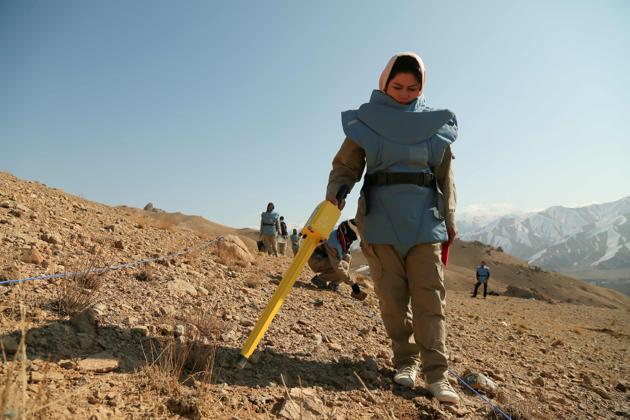
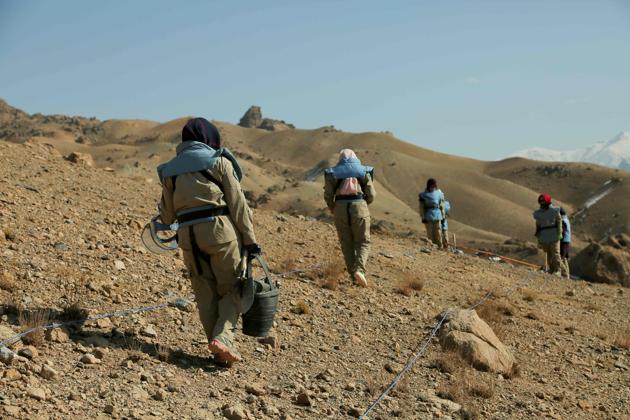
At the site near Ahangaran, deminers worked under a bright blue sky, with a doctor and team leader always on hand. The team of eight, wearing bright blue body armour, picked quietly at the ground, their silence broken only by the sound of crows crying and metal detectors buzzing. Zarkha, 26, said she had found her first cluster bomb a few days earlier. “I was very scared,” she said. (AFP)
9/11
 View Photos in a new improved layout
Updated on Dec 16, 2019 5:34 PM
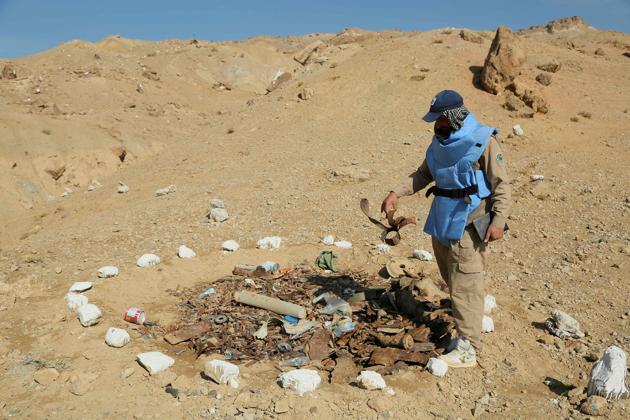
Last year, mines and other “explosive remnants of war” (ERW) killed or wounded 1,391 Afghans, according to government statistics. More than half of the victims were children. “The explosive is still operable after one hundred years. The metal and plastic will degrade but not the explosives,” said Abdul Hakim Noorzai, DDG’s chief of demining operations based in Kabul. (AFP)
10/11
 View Photos in a new improved layout
Updated on Dec 16, 2019 5:34 PM
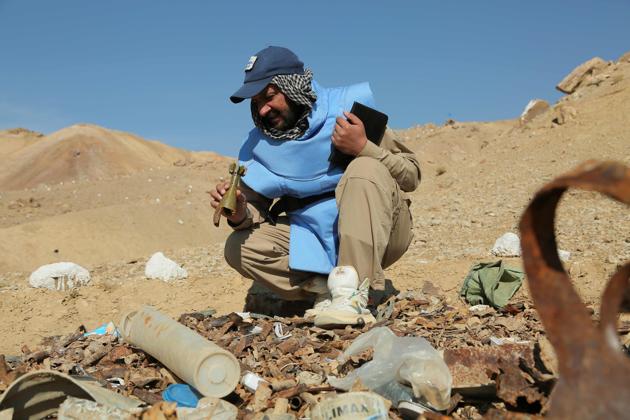
An Afghan deminer holds a mortar bomb during the scanning of a combat zone. Ahmad, the demining team leader, said he was angry his country remained devastated by the Soviet war. “They destroyed our lives. Because of them we have to do demining instead of being a doctor or engineer or teacher,” he said, adding that he had been demining since 2003 and was bored with the tedious work. (AFP)
11/11
 View Photos in a new improved layout
Updated on Dec 16, 2019 5:34 PM


