E-Paper



When shared buggies turn ‘personal cab services’: Misuse of common area amenities raises concerns in housing societies
Redditors have flagged misuse of shared buggies, meant for tower-to-gate travel, now increasingly used like ‘personal cab services’

 Prefer HTon Google


Homebuyers in gated communities have raised concerns about the misuse of shared amenities, including golf carts and club facilities. What are intended as inclusive services, especially for the elderly and those with mobility challenges, are increasingly being used as personal conveniences by some residents, sparking debates around fairness and accountability.
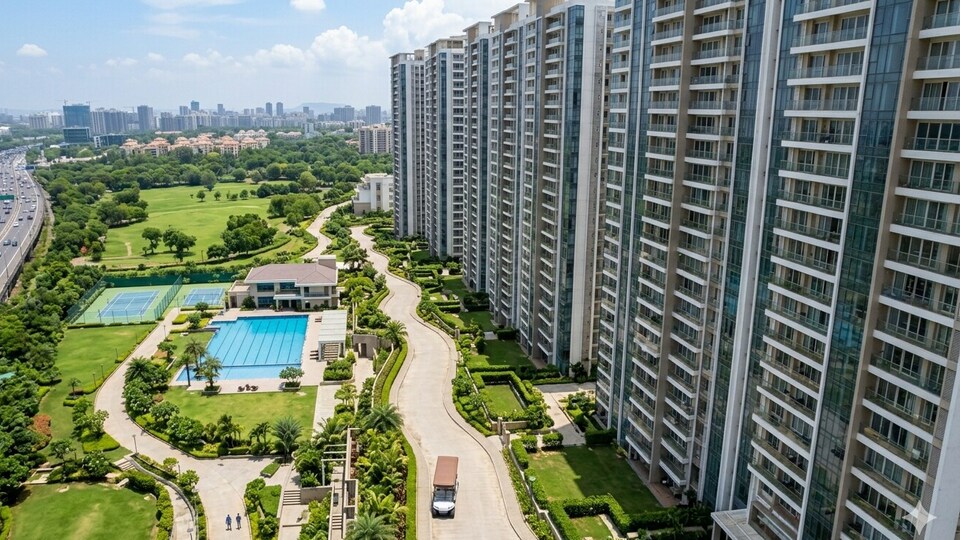
Across large residential complexes in cities such as Bengaluru and Mumbai, internal transport systems like buggies, introduced to ease movement between towers and entry gates, have become a flashpoint for resident disputes. Redditors say that although these services are funded by maintenance charges paid by all homeowners, their use is often inequitable.
“In my society, there’s a buggy meant for going between towers and the main gate. But honestly, it’s one of the most misused amenities here. Some people treat it like their private vehicle. Now they’re even planning to upgrade it, and all that cost is coming from our maintenance money. Does this happen in other societies, too, with common amenities? How do you deal with it? At this point, I feel better to just remove this facility altogether,” one of the Reddit users wrote.
Also Read: Bengaluru rental row raises key question: Can landlords deduct repair costs from security deposits?
From shared utility to ‘private convenience’?
Several Redditors pointed out that the problem lies not in the existence of such amenities, but in how they are used. In one case, a resident noted that the buggy “feels like a private vehicle for some,” with frequent instances of it being occupied for short, non-essential trips.
Others pointed to preferential access. “There are cases where certain residents effectively schedule pickups, almost like a personal cab service,” another Redditor wrote, pointing out that this often leaves elderly residents or those carrying luggage waiting or walking instead.
Also Read: Are Bengaluru’s first-time tech buyers pausing real estate purchases amid AI layoff fears?“The buggy was meant for older residents and such people who needed assistance. But those rules are not followed, thanks to society members and families influencing the staff/security. Who uses the buggy every single time they go out... Meanwhile, older residents and people with luggage sometimes have to walk instead. There's even some people who makes the driver picks them up at a scheduled time each day as if it's their Uber,” the Redditor wrote.
Debate over cost, fairness and access
The issue has also reignited a familiar debate within gated communities about whether residents should pay for amenities they do not personally use. While some question why maintenance funds should be spent on upgrading facilities they rarely use, others strongly push back against this view.
“One thing I don’t like is people saying ‘I don’t use this, so why should I pay,’” a resident said, pointing out that amenities such as elevators, swimming pools and sports courts are part of the shared infrastructure that defines modern community living.
“One thing I don’t like about many gated residents. They say I don’t use these facilities, so why pay for them? Like a tennis court, elevators, swimming pool. Extra amenities to make life easy for a section of society post construction,” one of the Redditors said.
“Gated societies nowadays are very different from the older days society where every paisa was counted. As long as there is no corruption, having all this makes life a little livable compared to what our government fails to provide outside. That is reality. All of a sudden, we have people saying let’s not do anything and keep the bare minimum going on. Those people should get into buildings where there are no amenities, like a standalone plot with 8 or 10 equally sized apartments with space for a parking lot at the max. So, when booking a flat in a gated society, share these values; otherwise, don’t book and make life miserable for other people,” he said.
'Approach the resident welfare association'
Many residents attribute the problem to the weak enforcement of rules by managing committees. In some cases, guidelines restricting buggy use to elderly residents or those with genuine need exist on paper but are not implemented effectively, they said.
Some of the Redditors have proposed dedicating separate transport for staff, such as housekeeping and gardening workers, while others recommend stricter usage norms and monitoring.
A more structured approach involves taking the matter to the Resident Welfare Association (RWA) or general body meetings. “Bring a resolution and present options; it’s one of the easiest issues to fix,” a resident suggested, highlighting that collective decision-making remains the most effective mechanism in such communities.
(Disclaimer: This report is based on user-generated content from social media. HT.com has not independently verified the claims and does not endorse them.)