
 E-Paper



Big tech wants everyone to use an AI agent. But who shoulders the cost?
These online helpers have such pricey computing needs, companies are only offering them to premium customers, or limiting who can access them.


 Prefer HTon Google


Tech companies have touted always-on AI agents as the next big thing. To make them worthwhile businesses, the firms will need to figure out how to operate them for a fraction of the cost.
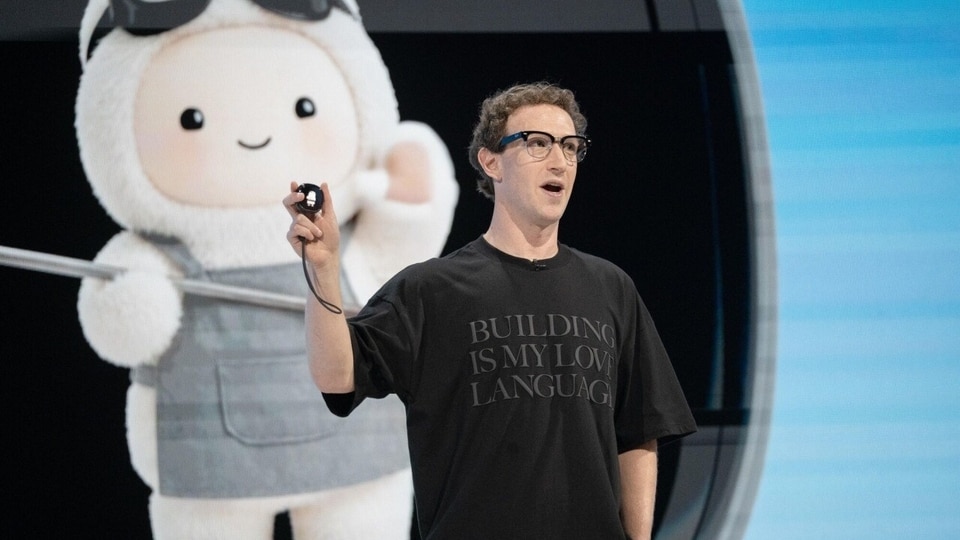
Meta Platforms, OpenAI, SpaceX and startup Instinct have all released buzzy AI agents in recent months, describing them as technology that can take actions and complete tasks for their users in the background.
Several of the companies are also now talking about how much costly computing power the online helpers use. To deal with the high costs, some companies are only offering agents to paying customers. Meta limited the initial launch of its free-to-use Muse agent to just the United States.
Google had to build an entirely new platform to run its agents. “Scaling the Gemini agent to planet scale requires compute that spins up rapidly and operates with extreme efficiency,” Google vice president Gautham Thambidorai wrote in an October blog post.
Developing the technology proved difficult, and Google had to pivot at least once, according to people familiar with the situation. This spring, engineering issues contributed to Google delaying a broader rollout of its agent, Gemini Spark, which launched initially only to trusted testers. The company subsequently offered it to subscribers of its pricier AI plans.
News Corp, owner of The Wall Street Journal, has a commercial agreement to supply content on Google platforms and a content-licensing partnership with OpenAI.
OpenAI similarly restricted access to its Dots AI agent to the $100-a-month subscription tier and up. SpaceX’s Grok Bot is only available via its $30-a-month subscription and up, and access to Anthropic’s Claude Duet starts with a $20-a-month Claude Pro subscription.
Meta, which has had the splashiest launch so far, offers Muse free, with subscription options for higher usage. Meta Chief Executive Mark Zuckerberg said on the company’s earnings call last month that Meta hadn’t launched its AI agent Muse globally yet because it is “very compute-intensive to run.”
The AI agent offered by the startup Instinct is also free to use but only accessible by invitation.
If AI agents become more compute-efficient, companies could offer them more widely, and potentially start to profit from the costly products.
“The field has grown so quickly and so fast that there hasn’t been time to do all these optimizations and now it’s becoming clear that it’s economically needed,” said Asher Spector, co-founder of Flapping Airplanes, an AI startup aiming to make AI more efficient. “If you have 100 times more demand for agents, it’s not possible to have 100 times more compute built out.”
Efforts to use computing power more efficiently took on a new level of importance last week after Americans voted for data center moratoriums and several of the gubernatorial candidates that campaigned against them won in key states.
Following the election results, both Meta and OpenAI executives said that they believe it will be more difficult to build data centers in the future, according to public comments and remarks OpenAI CEO Sam Altman made at a company Q&A that were viewed by The Wall Street Journal.
Companies want to “squeeze as much as you can out of the existing chips,” Spector said. “Efficiency is gonna be the thing that defines who actually gets to create and capture a lot of value over the next couple of years.”
Zuckerberg said on the earnings call that Meta expects to improve Muse’s cost efficiency by more than 10 times in the next year, which he said could enable it to become profitable. He didn’t say how much money each Muse agent costs Meta to run.
A Deutsche Bank analyst note estimates the capital costs of each user’s agent at $25 to $50 since each Muse agent runs on its own virtual machine. Analysis from Vals AI, an independent benchmarking startup, estimates the free version of Muse could cost more than $50 a month for a user with heavy, regular activity.
Meta is currently using its core advertising business to pay for Muse and hopes to eventually take a small cut of the money made on user transactions, Zuckerberg said on the earnings call. In the meantime, the company is also working to improve cost efficiency.
“We obviously have a lot of work to do there,” he said. “Increasing the compute efficiency is going to be important for getting this to work from a business perspective.”
Thibault Sottiaux, OpenAI’s head of core products, said on X that the company is working to run the agents on Terra, a smaller model, to help bring Dots to more people.
Elon Musk also recently weighed in. After someone publicly asked him to reset the usage limits on SpaceX’s agent, he said on X that the “cost of serving Grok Bot was unsustainably high relative to revenue.”
Write to Meghan Bobrowsky at meghan.bobrowsky@wsj.com and Erin Woo at erin.woo@wsj.com


