
 E-Paper



Bengaluru Amazon executive uses Claude AI to trace ancestral land in UP: 'Genuinely impressive'
After hearing recommendations about Claude Cowork, Khan said that he decided to use the AI assistant’s “computer use” feature to help locate the plots.

 Prefer HTon Google


A Bengaluru-based Amazon executive has shared how he used Anthropic’s Claude AI assistant to trace and map his ancestral family land in Mohammadpur, Uttar Pradesh.
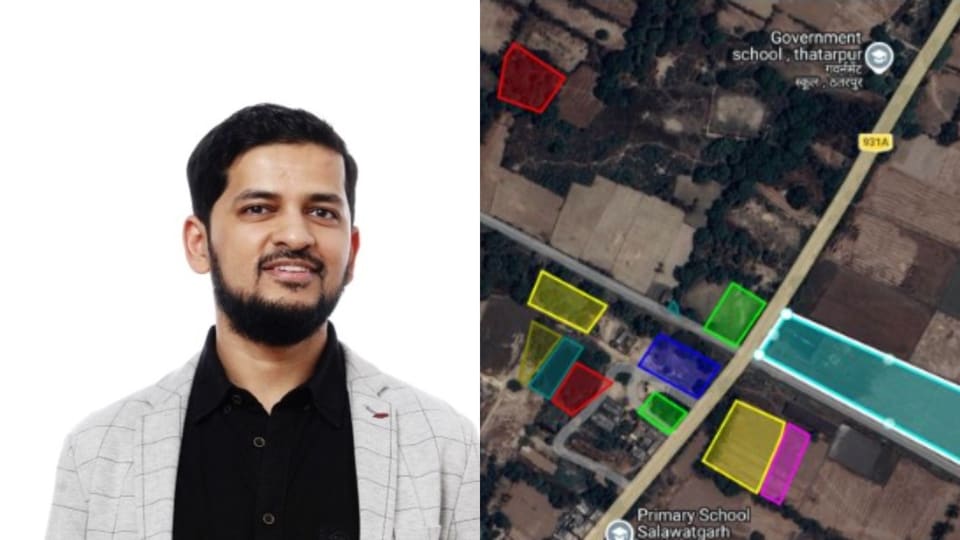
In a detailed post on LinkedIn, Zahid Khan, Director and GM (New Shopping Experiences) at Amazon Bengaluru, explained how AI helped him navigate complicated government land records written in dense official Hindi and identify 25 plots of inherited land in Mohammadpur village in Uttar Pradesh.
“I used Claude Cowork to find my ancestral land in rural India!” Khan wrote. He shared that the land originally belonged to his great-grandfather and was passed down through generations to his late father and eventually to him. However, he said he had visited the village only a few times in his life and had little idea where the plots were located.
“My late father inherited land in a small village called Mohammadpur in Uttar Pradesh — passed down from his grandfather, to his father, to him, and now to me. I've only visited that village a handful of times in my life so I wouldn't know where to look even if I tried,” he wrote.
Khan said that the records were digitised but scattered across multiple government portals and written in complex legal Hindi that was difficult to understand. “The kind of Hindi that makes legal documents feel like ancient scripture,” he remarked.
But after hearing recommendations about Claude Cowork, Khan said that he decided to use the AI assistant’s “computer use” feature to help locate the plots and map them accurately. He said that the AI system largely handled the process independently.
Khan explained that Claude searched land records using his father’s name typed in Hindi, identified plots where his father was listed as an owner or co-owner, and extracted plot numbers from government mapping websites.
The AI assistant then recognised that the maps were using Universal Transverse Mercator (UTM) coordinates instead of standard latitude and longitude formats. It subsequently converted the coordinates, generated a KML file and uploaded it to Google My Maps. The result was a clear, GPS-routable map showing the exact boundaries of the ancestral land.
Concluding the post, Khan jokingly said that the project pushed him from Claude’s free plan to its paid Pro and Maz subscriptions.
See the post below:
(Also Read: Claude AI wipes German founder’s production database, Indian-origin peer slams ‘childish’ prompt)
How did social media react?
The post quickly caught social media’s attention, with many users calling it one of the most practical and meaningful uses of AI they had seen.
One user wrote, “This is among the few real use cases I've come across for AI use which is super encouraging. This should be augmented as an agent into Govt. Registrar of Property website.”
“Fascinating use case, AI bridging language and bureaucracy to reconnect families with their roots. Shows how tooling can turn archival data into personal stories,” commented another.
“This is genuinely impressive,” remarked a third user. “This is so cool! India definitely has massive amounts of digitised yet still unusable data. AI agents navigating these kinds of government workflows may unlock enormous value over the next few years,” commented another.


