E-Paper


Know Your Neighbourhood: The story of how Kolkata’s Tollygunge got its name
Once known as Russapugla, the South Kolkata neighbourhood of Tollygunge took its present name from British officer William Tolly.

 Prefer HTon Google


Tollygunge is one of South Kolkata’s most prominent neighbourhoods, known for its Bengali film studios, residential areas and green spaces. Home to the iconic Tollygunge Club and its golf course, the locality was once a densely forested stretch, far removed from the bustling urban landscape it is today.
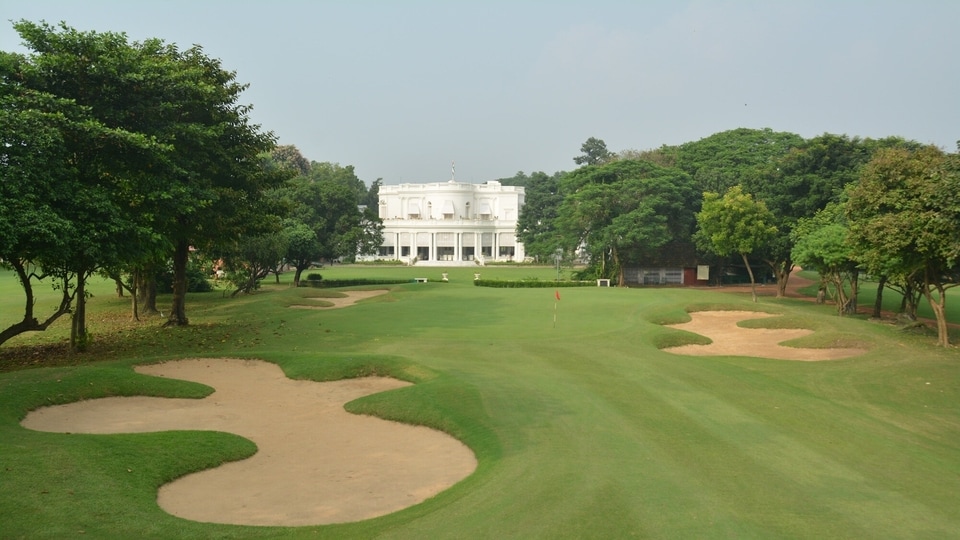
According to a report on the website Live History India, the area’s history goes back to the 18th century, when the area was known as Russapugla. The region was covered in thick vegetation, including mangrove trees such as Sundari, Byne and Garjan.
According to the Tollygunge Club's historical account, the name Russapugla is believed to have originated from a tree under which a Sufi saint, known as Pugla Pir, meditated and eventually died.
How Tollygunge got its name
The neighbourhood owes its present name to Colonel William Tolly, a British Army officer who undertook the task of restoring and extending an important waterway in the region during the 18th century.
At the time, Calcutta had an extensive network of creeks and waterways. One of these was the Govindpur Creek, also known in Bengali as Adi Ganga, as the original course of the Ganga once flowed through it.
As per the website Get Bengal, in 1775, Tolly approached Warren Hastings, then Governor-General of India, with a proposal to make the waterway navigable by connecting Beliaghata with the southern parts of Calcutta.
According to letters published in Fort William-India House Correspondence, Volume 7 (1773–1776), Tolly offered to undertake the work either under a contract with the East India Company or in return for ₹80,000, along with the right to collect tolls from boats using the waterway for 12 years.
The proposal was accepted, and Tolly was asked to survey the area. The 27-km-long canal was subsequently developed and opened for navigation in 1777. It came to be known as Tolly's Nullah, after the colonel. The surrounding locality gradually acquired the name Tollygunge, linking its identity to both the canal and the officer who helped make it navigable.
After Tolly's death, his widow could not continue managing the waterway and collecting tolls. The East India Company subsequently took over its management and auctioned the leasehold rights in 1794. By 1804, the Bengal government had assumed responsibility for the canal's upkeep.
Tipu Sultan’s Tollygunge connection
Tollygunge also has a connection to the family of Tipu Sultan, the ruler of Mysore. Following the Vellore Mutiny of 1806, members of Tipu Sultan's family were brought to Calcutta by the British and provided financial allowances. Several of them eventually settled in the Tollygunge area.
One of Tipu Sultan's sons, Ghulam Mohammed Shah, acquired the grounds of a plantation in the neighbourhood and used the property as a residence. The estate had earlier belonged to Richard Johnson, an employee of the East India Company. According to the Tollygunge Club's archives, the property was originally an indigo plantation established in 1781.
The family later sold portions of the estate and leased out other sections. Among those who acquired an interest in the property was Scottish banker William Dixon Cruickshank, who wanted to establish a club where British residents could participate in sports and other recreational activities. This led to the establishment of the now-famous Tollygunge club in the year 1895.