
 E-Paper



Myanmar committed genocide during 2017 Rohingya crackdown, UN court rules
This is the fourth time since the Holocaust that an international court has found that the legal threshold to establish the commission of genocide has been met.

 Prefer HTon Google


The International Court of Justice on Thursday ruled that that Myanmar had committed genocide against the Rohingya population during its August 2017 clearance operations in northern Rakhine, in a landmark case which has implications for the interpretation of the Genocide Convention and, therefore, other cases before the United Nations top court.
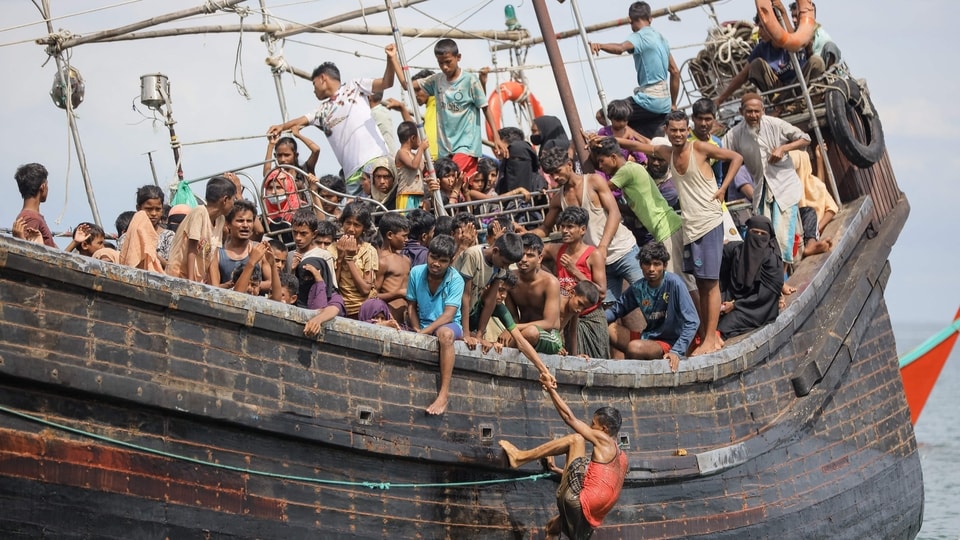
This is only the fourth time since the Holocaust under Nazi Germany that an international court has found that the legal threshold to establish the commission of genocide has been met and the first time a state has been held responsible.
"The Republic of the Union of Myanmar has committed genocide against the Rohingya group in northern Rakhine State, in violation of its obligations under the Convention on the Prevention and Punishment of the Crime of Genocide," said the court.
Also Read | Four sentenced to 7 years for role in Rohingya trafficking network
The intent to destroy a group “in whole or in part” by analysing the broader pattern of conduct is key to establishing whether the crimes amount to genocide under international law.
"On the basis of all the evidence taken together, the Court is of the view that the only reasonable inference that can explain Myanmar's actions is an intention to destroy a substantial part of... the Rohingya population in northern Rakhine State," the court said.
The top United Nations court found that evidence shows that the security forces killed some 10,000 Rohingya civilians — 1.2% of the targeted population, 815,000 — in the “clearance operation”, said President Yuji Iwasawa as he read out the judgment.
The court also found that the forces committed widespread acts of rape and sexual violence against the minority Muslim population. “The magnitude and character of sexual violence during the clearance operations support the conclusion that the acts were intended to physically and mentally impair the population’s ability to procreate,” said the judgment.
The court observed that the military forces perpetrated widespread “acts of extreme violence against children and attacked fleeing Rohingya as they sought to flee in large numbers to Bangladesh”.
The case was brought by The Gambia, backed by the Organisation of Islamic Cooperation, in November 2019. It alleged that Myanmar violated the 1948 Genocide Convention during a military campaign in Rakhine state in August 2017.
Also Read | Rohingya refugees from Myanmar are living in fear in Malaysia
The crackdown forced more than 730,000 Rohingya to flee to neighbouring Bangladesh, amid reports of mass killings, rape, torture and the burning of villages. Myanmar has rejected the allegations, maintaining that its military operations were a legitimate response to attacks by the insurgent group, Arakan Rohingya Salvation Army (ARSA).
The case directly impacted more than 1.2 million Rohingya refugees who currently reside in crowded camps in Bangladesh’s Cox’s Bazar district. Despite tracing roots back in Myanmar itself, the Rohingya minority Muslim group are denied citizenship in the country under the 1982 nationality law.
“The international Court of Justice is fully convinced that Myanmar committed genocide against the Rohingya. Complex and well presented lines of arguments on genocidal intent. Many implications for jurisprudence and future trials. Well evidenced and well argued finding. Courageous too in view of the threats and pressure,” said Agnes Callamard, secretary general of Amnesty International, in a post on X.
While the ruling is legally binding, enforcing it is a major challenge since the court has no police force, military or independent enforcement mechanism to compel a country to comply.
Should Myanmar refuse to comply under Article 94(2) of the UN Charter, Gambia can approach the UN Security Council. The UNSC can then decide on measures such as sanctions or other diplomatic measures to substantiate the judgment.
However, there is a significant limitation: it has discretion over whether and how to act. Its five permanent members can also veto substantive resolutions and, so far, it has never exercised its powers to enforce an ICJ judgment.
The case before the 15-judge bench was dependent on establishing that Myanmar’s security forces had the intent to destroy the Rohingya ethnic group ““in whole or in part”, analysing the broader pattern of conduct. How the court has interpreted the evidence and applied the standard in this will be parsed for their relevance to South Africa’s ongoing case against Israel alleging genocide in Gaza.
A second case related to the 2022 Russian invasion of Ukraine is also pending before the court. In it, Kyiv has challenged allegations of genocide against the Russian-speaking population in the eastern Donbas region that Moscow invoked to justify the so-called military operation.
The Gambia vs Myanmar case is important to establish whether the state itself can be held responsible for the actions of its organs, particularly its military.
Further, the judgment would establish what countries are legally responsible for when it comes to preventing genocide and addressing such a situation should it arise.


