E-Paper



Africa’s richest man picks India-owned firm for $16 billion project
EIL will play a major role in the project with a contract of over $450 million, covering all aspects from engineering, procurement and construction management

 Prefer HTon Google


Africa's richest person, Aliko Dangote, has enlisted Engineers India Ltd (EIL) – majorly owned by the Indian government -- to manage his proposed $16 billion refinery and petrochemical complex in Kenya, after the Indian firm's involvement with his Lagos refinery.
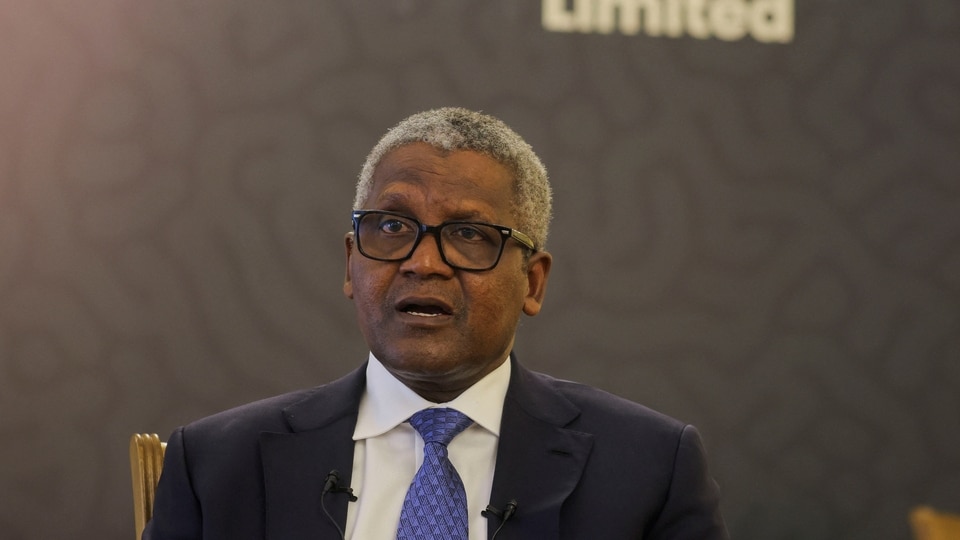
EIL will play a major role in the project under a contract worth over $450 million, covering all aspects from engineering and procurement to construction management, Bloomberg reported. The refinery, to be built on Kenya's coast in Lamu, will be able to handle up to 700,000 barrels of crude oil per day.
If it is constructed to that standard, it would surpass Dangote's existing 650,000-barrel-a-day refinery near Lagos. It will be designed to meet the region's fuel production needs and reduce dependence on imported refined petroleum products.
Also Read | Africa bigger, US smaller - UN adopts new map
The Kenyan project is another step in an enduring partnership between the Indian company and Dangote, who has engaged the engineering firm as a consultant on his flagship refinery in Lagos and has also involved it in its expansion plans. Once the expansion is complete, the facility will be capable of doubling its crude oil production to 1.4 million barrels per day.
The billionaire stated that construction on the refinery would begin this month and take less than four years to complete. Dangote's Lamu project is a venture to expand his energy business footprint across Africa. Costing is estimated at around $15.5-$16 billion. The refinery's services will not be limited to Kenya but will also extend across the East African market. The initiative is part of a broader pipeline of planned connections, and connections are also being made with Lamu and Djibouti.
The project is not without its hurdles, as Kenya does not currently have commercial-scale crude production, and the refinery will be dependent, at least initially, on seaborne imports. Imports from Uganda or South Sudan may be an option, but developing cross-border infrastructure and supply chains will be necessary.
Also Read | UN adopts resolution to correct Africa's size on world maps over US objections
The project's progress is also linked to not only engineering and supply, but the matter of financing. Dangote has stated that around 70% of the refinery's cost is expected to be financed through debt, with the remaining 30% backed by equity. Beyond raising the capital, there is also a challenge of competing with cheaper imported fuel. It has been said that some degree of protection from such imports would be necessary for the refinery to gain a foothold in Kenya's market.
The proposed refinery is more than an investment in terms of refining capacity. It could alter how the country sources and processes fuel and create a potential connection among East Africa's energy markets. It will depend on whether questions around crude supply, cross-border infrastructure, financing and competition with imported fuel can be worked through.