
 E-Paper



Noah’s Ark's resting place ‘100% confirmed’? New scans detect possible tunnels underground
The latest radar surveys reportedly detected structural layers, straight lines, right-angle intersections and large cavity-like spaces at different depths.

 Prefer HTon Google


The mystery surrounding a boat-shaped formation in Turkey, which some researchers believe could be the remains of Noah’s Ark, has taken a new turn after fresh underground scans reportedly detected possible tunnels, chambers and multiple structural layers.
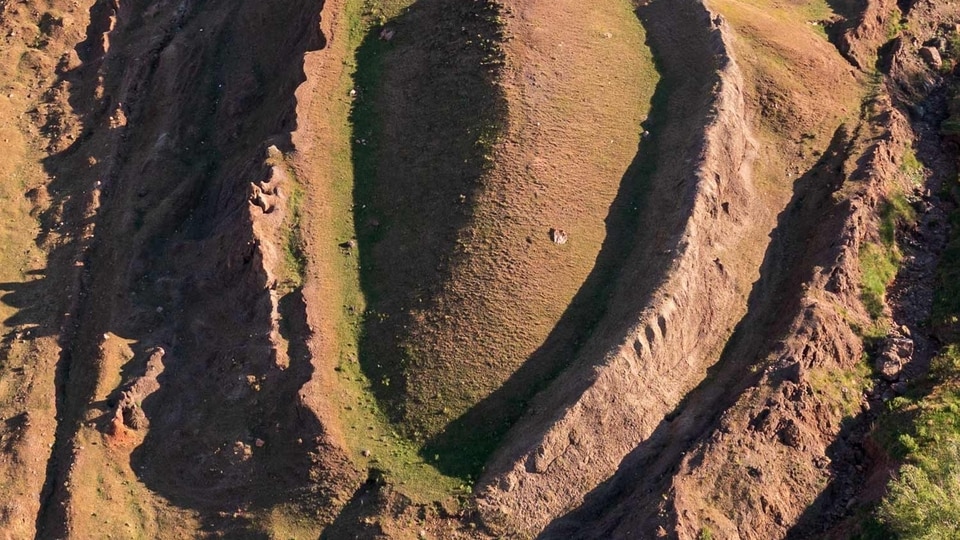
The findings come from an international team investigating the Durupınar Formation near Mount Ararat. The Daily Mail, which reported the findings exclusively, said researchers now claim they have “100 percent confirmed” that the formation is a “man-made object”.
However, the findings have not established that the site is the biblical Ark. Researchers say the radar readings and material recovered through drilling require further physical and scientific testing.
According to the Bible, Noah’s Ark saved humanity and every kind of animal from a catastrophic flood. Some biblical chronologies place the flood more than 4,300 years ago.
What new radar scans reveal?
The latest radar surveys reportedly detected structural layers, straight lines, right-angle intersections and large cavity-like spaces at different depths.
Researchers said the scans showed potential chambers, corridors and tunnels. They also identified a thick underground layer that appeared to divide into three parts, which the team compared with the biblical description of the Ark being built with three decks.
A deeper investigation conducted in 2026 by Dr Khosrow Bakhtar used an advanced radar system developed through US Air Force research and capable of probing significantly deeper than earlier equipment.
Five prominent anomalies appeared to form a possible tunnel system stretching roughly 151 feet, with an average structural height of more than 14 feet. Other anomalies measured approximately 26 feet, 39 feet and 23 feet high.
The readings, however, are not photographs of actual rooms or passageways. They show how radar waves reacted to different materials and boundaries beneath the ground. Researchers say the anomalies must be physically investigated to determine what produced them.
Drilling finds organic material
Physical core drilling also found a layer rich in organic material, which researchers are testing to determine whether it contains decayed wood.
Andrew Jones, founder of Noah's Ark Scans, told the Daily Mail that neither the radar surveys nor drilling conducted inside the formation detected limestone or solid bedrock.
Jones acknowledged that the evidence has not definitively identified the formation as the biblical vessel.
“I firmly believe the Durupınar Formation represents the buried remains of Noah's Ark,” he said.
Lauren Witzke, director of marketing and fundraising for Noah's Ark Scans, said the uppermost section of the formation is deteriorating.
Researchers have not confirmed that the material is wood or scientifically dated anything recovered through drilling to 4,300 years ago. The organic material will need to undergo radiocarbon dating to determine its age.
Also Read: Noah’s Ark found, says Christian group
Pottery clue
Researchers have also found pottery outside the formation dating from the Chalcolithic, or Copper Age, through the Iron Age.
The team said the pottery indicates that people occupied or visited the mountainside over a long period of ancient history.
Witzke said it was “quite possible” the pottery was used to store food and supplies on the Ark and by Noah’s family after they exited it. Jones, however, acknowledged that pottery alone cannot establish that the formation is the Ark or connect the artifacts to it.
The Durupınar Formation lies about 18 miles south of Mount Ararat. It was formally identified in 1959 after Turkish Army Captain İlhan Durupınar spotted its ship-like outline in aerial survey photographs.


